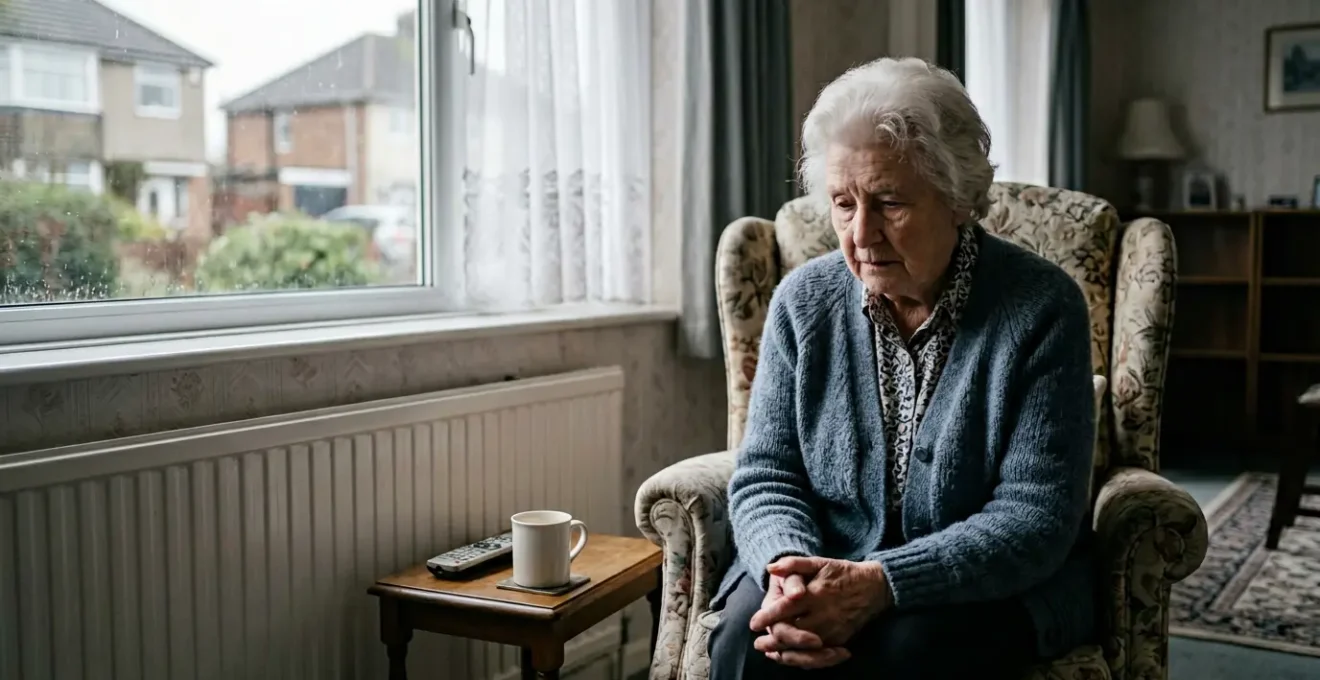
Tackling loneliness is one of the most powerful preventative health measures a retiree can take, with a greater impact on wellbeing than many realise.
- Research shows social isolation directly increases physical health risks, while specific UK systems like NHS Social Prescribing are designed to help.
- Overcoming the initial fear of joining new groups is often the biggest hurdle, but practical strategies and self-referral options exist to bypass common barriers.
Recommendation: Use the hyper-local search strategies in this guide to find one new group or activity near you this month and take the first small, manageable step.
The quiet in the house can become a presence in itself. For many British retirees, especially after a spouse has passed or old friends have moved away, the days can feel long and the silence, deafening. Well-meaning family and articles often chime in with the same advice: “You should join a club,” or “Why don’t you try volunteering?”. While the sentiment is kind, it rarely acknowledges the enormous courage it takes to walk into a room full of strangers, or the simple fact of not knowing where to even begin looking.
This isn’t another article that will simply state the problem. We know loneliness is a painful, often invisible, epidemic. Instead, we’re going to reframe the entire issue. What if building and maintaining social connections wasn’t just a ‘nice thing to do’, but a crucial, proactive health strategy – as vital as managing blood pressure or eating a balanced diet? What if you had a practical playbook, specifically for the UK, to navigate the system and find your people, even when your own motivation is low?
This guide is that playbook. We will explore the very real health impacts of isolation, but more importantly, we will provide concrete, actionable steps to find local groups right on your doorstep. We’ll look at the pros and cons of digital versus real-world connection, tackle the ‘first meeting fear’ head-on, and show you how to access NHS support systems you may not even know exist. This is your guide to taking control and building a resilient, connected, and healthier future.
To help you navigate this essential topic, this guide breaks down the challenge of loneliness into manageable, actionable sections. You’ll find practical advice and clear explanations to empower you on your journey towards greater connection.
Summary: Why Loneliness Kills More UK Pensioners Than Smoking Each Year?
- Why Does Living Alone After 75 Raise Your Heart Attack Risk by 29%?
- How to Find a Local Walking Group, Book Club, or Choir Within 3 Miles of Your Postcode?
- Video Call Coffee Mornings vs In-Person Day Centres: Which Reduces Loneliness More Effectively?
- The First Meeting Fear: How to Walk Into a Bereavement Support Group When You Would Rather Stay Home
- When Should You Start Building Your Social Network to Avoid Crisis Loneliness After 80?
- Why Did the NHS Start Prescribing Social Activities Like Medication?
- How to Get a Referral to NHS Talking Therapies When Your GP Says Sadness Is Normal at Your Age?
- Why Does Your GP Never Ask About Loneliness Even Though It Predicts Dementia Better Than Genetics?
Why Does Living Alone After 75 Raise Your Heart Attack Risk by 29%?
The headlines linking loneliness to poor health can often feel abstract and alarming. But the connection is deeply practical and, in many ways, quite simple. It’s not that the feeling of loneliness itself directly causes a heart attack. The risk comes from the circumstances surrounding it. When you live alone, you are often your own first responder, and in a critical health emergency, every second counts. This is the stark reality behind the statistics.
Researchers have pinpointed this as a key factor. As a comprehensive analysis of UK health data published in The Lancet Public Health notes: “social isolation substantially increases the risk that the first such event is fatal before reaching hospital, particularly among people who live alone, perhaps because of the absence of immediate help in responding to an acute heart attack or stroke”. It’s the lack of a spouse, a flatmate, or even a neighbour hearing a fall and calling 999 that turns a treatable medical event into a tragedy.
Understanding this shifts the perspective entirely. Building a social network isn’t just about having someone to chat with; it’s about creating a safety net. A neighbour who knows your routine and would notice if your curtains aren’t drawn, a friend from a walking group who calls if you miss a meet-up, or a family member you speak to daily – these are the links in a chain that can provide life-saving support. The goal is to reduce the time you are truly ‘alone’ and without potential support, thereby directly mitigating this very serious health risk.
How to Find a Local Walking Group, Book Club, or Choir Within 3 Miles of Your Postcode?
Knowing you should “get out more” is one thing; knowing exactly where to go is another entirely. The good news is that your local community is likely teeming with activities, but they aren’t always advertised on Google. The key is to know the “analogue” places where this information lives. Think of it as a treasure map: the ‘X’ might be on a handwritten card on a corkboard, not on a slick website. These hubs of community information are your best starting point.
As the image above suggests, traditional noticeboards are still a vibrant source of local life. From GP surgeries to the local library, these spaces are where grassroots groups with small budgets choose to advertise. Instead of feeling overwhelmed by endless online searches, focusing your energy on these physical locations can yield much faster and more relevant results. It’s a targeted approach that connects you directly with what’s happening in your immediate vicinity, often run by people just like you.
To make this search truly effective, it requires a plan. Don’t just hope to stumble upon something. The next time you have to go to the Post Office or the supermarket, build in an extra five minutes specifically to check these community hubs. Taking a systematic approach transforms a vague wish into a concrete, manageable project.
Your Hyper-Local Activity Finder: A Practical Checklist
- GP Surgery & Pharmacy: Start at your GP’s waiting room. Check every noticeboard for flyers and leaflets about local health walks, patient participation groups, and support services.
- Library & Post Office: Ask the librarian about book clubs and check the community boards. Post Office notice areas are classic spots for parish magazines and local club adverts.
- Supermarket Community Champion: Go to the customer service desk at a large Tesco, Asda, or Sainsbury’s and ask to speak to the ‘Community Champion’. They are paid to maintain lists of local groups they support.
- Council Website & Local Paper: Visit your local council’s website and search for the ‘What’s On’ or ‘Community Directory’ section. Pick up a copy of your local free paper, which is often filled with event listings.
- Specialist Websites: For specific interests, use dedicated search tools. The Ramblers website (ramblers.org.uk) has a postcode search for walking groups of all difficulty levels, and a quick search for “local choir network” will bring up regional associations.
Video Call Coffee Mornings vs In-Person Day Centres: Which Reduces Loneliness More Effectively?
During the pandemic, technology like Zoom and FaceTime became a lifeline, connecting us with loved ones when we couldn’t meet. For many, especially those with mobility issues, these tools remain a vital link to the outside world. But as we look for sustainable solutions to loneliness, it’s important to ask: are digital connections a true substitute for the real thing? The evidence suggests they play a valuable, but distinct, role.
The deep link between loneliness and general unhappiness is stark. An Age UK report found that a staggering nine in 10 older people who are often lonely are also unhappy or depressed. Digital tools can certainly help alleviate the acute sting of isolation on a difficult day. A video call provides immediate social contact and a friendly face. However, it’s the nature of this contact that matters. It’s often scheduled, structured, and lacks the spontaneous, multi-sensory richness of being in a room with other people.
The most effective approach, it seems, is a hybrid one. Digital contact is not a poor replacement, but a powerful supplement. It helps maintain the “weak ties” – the acquaintances and friendly faces that make up the fabric of a rich social life – in between less frequent, but more nourishing, in-person events.
Case Study: Age UK’s Telephone Friendship Service
Age UK’s Telephone Friendship Service, which provides regular scheduled calls between volunteers and isolated older adults, offers a powerful insight. An evaluation found that while these calls were highly effective at combating day-to-day loneliness and maintaining a sense of connection, they worked best as part of a ‘complementary system’. Participants who combined the regular phone contact with even occasional in-person activities, like a monthly lunch club or a trip to a day centre, reported the most significant and lasting improvements in their overall wellbeing. The phone calls kept them going, but the in-person events gave them something to look forward to and talk about.
The First Meeting Fear: How to Walk Into a Bereavement Support Group When You Would Rather Stay Home
You’ve done the research. You’ve found a group – a local book club, a walking group, or perhaps a bereavement support session. You’ve written the time and date in your calendar. And now the day has come, and every fibre of your being is screaming at you to stay home. The television is familiar. The armchair is safe. The thought of walking into a room of strangers, of making small talk, of potentially having to explain your life story, feels utterly overwhelming. This feeling is not a weakness; it is a profound and common barrier we call the ‘First Meeting Fear’.
The moment captured above, of a hand reaching for the door, is the critical juncture. It’s a moment of pure courage. Acknowledging this fear is the first step to conquering it. Remember, everyone in that room felt the same way the first time they came. The group’s organiser is acutely aware of this and is prepared to welcome newcomers. They will have strategies to help you settle in, perhaps by introducing you to one or two friendly regulars or giving you a simple task to do.
To make this moment easier, try these small, practical strategies. First, phone the organiser beforehand. Having a friendly chat with one person before you go transforms the experience. You’re no longer walking into a room of strangers; you’re going to meet ‘Susan’. Second, set a very small goal for your first visit. Your goal is not to make five new best friends. Your goal is simply to walk through the door, stay for 20 minutes, and drink one cup of tea. That’s it. If you stay longer, that’s a bonus. Give yourself permission to leave early. By setting a low bar, you make the task feel achievable. Finally, remember that you are in control. Taking that first step is a powerful act of self-care and a testament to your own resilience.
When Should You Start Building Your Social Network to Avoid Crisis Loneliness After 80?
For many, the thought of actively “building a social network” feels unnatural, something for business people or university students. But waiting until a crisis hits – such as the loss of a spouse, a significant health diagnosis, or friends moving away – is the equivalent of waiting for your house to be on fire before you look for the fire extinguisher. The most effective approach to avoiding chronic loneliness in your 80s and beyond is to start treating your social life as a vital piece of infrastructure in your 60s.
Think of it as the ‘decade of social investment’. This is the period when you may still be working or newly retired, with more energy and mobility. It’s the time to proactively plant the seeds of community that will flourish later on. This isn’t just a nice idea; it’s backed by data. Analysis of UK government loneliness data shows that while loneliness can happen at any age, the risk factors – such as widowhood or living alone – often begin to appear in the 55-65 age bracket. Building a diverse social portfolio during this time provides a crucial buffer against future losses.
The scale of the potential problem is significant, with projections suggesting that without intervention, the number of lonely older people in England could swell. This proactive approach means diversifying your connections beyond just your partner and a few close friends. It means nurturing a mix of relationships: close confidantes, sure, but also a walking group acquaintance, the friendly cashier at the local shop, and members of a choir. Each of these connections provides a different kind of support and a reason to leave the house. Starting this process early, when you have the most resources, is the single best strategy for ensuring a connected, resilient, and supported life in your later years.
The Proactive Principle: Insights from UK Biobank
Longitudinal analysis from the UK Biobank confirms this strategic view. Research highlights that the circumstances putting people at the greatest risk of loneliness in older age, such as being a woman, living alone, or being widowed, often begin to manifest in the 55-65 age bracket. This identifies this period as a critical ‘decade of social investment’. The study implies that proactively building a diverse social network before significant health or mobility constraints emerge is far more effective than trying to build one from scratch during a period of crisis or grief.
Why Did the NHS Start Prescribing Social Activities Like Medication?
For decades, the GP’s prescription pad has been reserved for medication. But in recent years, a quiet revolution has been taking place in clinics across the UK: ‘social prescribing’. A GP might now ‘prescribe’ a course of gardening, joining a walking football team, or attending a community choir. This isn’t a cost-cutting gimmick; it’s a profound, evidence-based shift in how the NHS understands health. It’s the formal recognition that a person’s social and emotional wellbeing is inseparable from their physical health.
The NHS realised that a significant portion of GP visits were not for purely medical issues. Patients were presenting with problems rooted in loneliness, debt, or poor housing, which in turn were causing or exacerbating physical symptoms like high blood pressure, anxiety, and chronic pain. Simply medicating the symptoms was a costly and ineffective sticking plaster. Social prescribing aims to address the root cause. This commitment is substantial; the NHS Long Term Plan committed to reaching 900,000 people referred to social prescribing by 2023/24.
This approach is delivered by a new type of professional: the Social Prescribing Link Worker. They are non-clinical experts who have the time – something a GP rarely has – to sit down with a person, listen to what matters to them, and connect them with relevant local services. This represents a fundamental move from asking “What’s the matter with you?” to “What matters to you?”.
This is the biggest investment in social prescribing by any national health system and legitimises non-medical community-based activities and holistic support alongside medical treatment as part of a personalised care approach.
– NHS England, NHS England Social Prescribing webpage
By connecting people to activities that give them purpose, social connection, and confidence, the NHS is making a long-term investment. It’s a strategy designed to prevent more expensive outcomes down the line, such as A&E visits and long-term care needs, by building healthier, more resilient communities from the ground up.
How to Get a Referral to NHS Talking Therapies When Your GP Says Sadness Is Normal at Your Age?
One of the most disheartening experiences is to summon the courage to talk to your GP about feeling persistently low or anxious, only to be told that it’s “just a normal part of getting older” or a “natural reaction to your circumstances.” While these feelings can be common, that does not mean you have to simply endure them. Persistent low mood that affects your daily life is not something to be dismissed. Thankfully, in most of England, you have a direct pathway to professional support that you can access yourself, without your GP’s permission.
The service is called NHS Talking Therapies (formerly IAPT), and it provides free, effective, evidence-based psychological therapies like Cognitive Behavioural Therapy (CBT). Crucially, the system is designed for self-referral. You do not need a diagnosed mental health condition or a letter from your doctor. If you are feeling low, anxious, or overwhelmed, you are entitled to access this service. As NHS England states clearly, “You do not need to have a diagnosed mental health condition to refer yourself to NHS talking therapies for anxiety and depression”. This is your right.
Navigating this for the first time can feel daunting, but it’s a straightforward process. The key is knowing where to look and what to say. Having this information empowers you to bypass any potential gatekeeping and get the support you need and deserve. The following steps provide a clear, practical script for action.
Your Action Plan for NHS Talking Therapies Self-Referral
- Find Your Local Service: Go to the official NHS website: www.nhs.uk/service-search/mental-health/find-an-nhs-talking-therapies-service. Enter your postcode.
- Initiate Self-Referral: The search will provide a phone number and/or an online form for your local service. You do not need your GP’s permission to do this.
- Complete the Referral: You will be asked for basic details and to briefly describe how you are feeling. Be honest. Mention impacts on sleep, appetite, energy, and your ability to enjoy things.
- Prepare for the Assessment: The service will contact you (usually within a couple of weeks) to arrange a telephone assessment. This is a conversation with a therapist to understand your needs and determine the right support for you.
- If a GP is a Barrier: If you do speak to a GP who is dismissive, use this phrase: “My low mood is persistent and impacting my daily functioning. NICE guidelines recommend talking therapies, and I am going to self-refer to the local service.” This shows you are informed and serious.
Key Takeaways
- Loneliness is not just an emotional issue; it’s a concrete physical health risk directly linked to higher rates of heart disease, dementia, and mortality.
- Proactively building a social network in your 60s and 70s is a critical ‘social investment’ that creates a powerful buffer against future life changes and crises.
- The UK has official systems to help: NHS Social Prescribing legitimises community activities as a health intervention, and NHS Talking Therapies are accessible via self-referral without needing a GP’s permission.
Why Does Your GP Never Ask About Loneliness Even Though It Predicts Dementia Better Than Genetics?
It’s a frustrating paradox. You read in the news about the devastating health impacts of loneliness, yet during your 10-minute GP appointment, the conversation revolves solely around blood pressure and cholesterol. Why does the medical system seem to ignore one of the most significant predictors of future health? The answer isn’t that your GP doesn’t care; it’s that the system they work in is not designed to see it. Research presented to the UK Parliament identified key systemic barriers: intense time pressure, a lack of a formal diagnostic code for ‘loneliness’, and medical training historically focused on physical symptoms, not social causes.
Your GP is working against the clock, trying to address the most pressing physical complaint. Without a simple box to tick or a clear treatment pathway in their system, loneliness, however critical, often falls off the agenda. This is despite overwhelming evidence of its importance. In fact, the link to cognitive decline is startling. In a major UK Biobank study, researchers made a profound discovery about the risk of dementia.
Loneliness was a stronger predictor of risk of all-cause dementia and AD [Alzheimer’s Disease] among individuals who did not carry any copies of the risk allele… When the genetic risk… is not present, aspects of social health, like loneliness, may be more potent predictors of poor cognitive outcomes.
– UK Biobank dementia research team, Loneliness and Risk of All-Cause Dementia Study
This is a groundbreaking insight. For people without the primary genetic risk factor for Alzheimer’s, their level of social connection is a more powerful predictor of their future brain health than their genes. This single fact should revolutionise how we approach healthy ageing. It moves social connection from the category of ‘hobby’ to ‘essential brain maintenance’. It proves that the steps you take to build and maintain relationships are a direct investment in your long-term cognitive resilience.
Don’t wait for the system to ask. Armed with this knowledge, you can become the lead coordinator of your own health portfolio. The first, most powerful step is to choose one strategy from this guide – finding your local Talking Therapies service, looking up a walking group, or phoning a community champion – and taking that action today.