Support and autonomy
Remaining independent at home as we age is something most of us hope for, yet achieving it requires far more than willpower alone. In the UK, around one in three adults over 65 will experience a fall each year, and research suggests the average senior loses meaningful independence approximately five years earlier than necessary—often due to preventable factors rather than inevitable decline.
The good news? A combination of the right support services, properly fitted mobility equipment, strategic home adaptations, and coordinated care can dramatically extend the years you spend living safely and autonomously in your own home. This resource explores the interconnected systems that make independent living possible, from navigating NHS and council services to choosing between a cane and a rollator, from installing grab rails in the right locations to understanding when smart home technology genuinely helps versus when it simply adds complexity.
Whether you’re planning ahead for yourself or helping an ageing parent, understanding these elements—and how they work together—is the foundation for making informed decisions that preserve dignity, safety, and quality of life.
Why Does Independence Slip Away Earlier Than It Should?
Independence rarely disappears overnight. Instead, it erodes gradually through a series of small compromises: avoiding the stairs, skipping the weekly shop, letting the bathroom become a no-go zone after dark. Each compromise seems minor, but collectively they shrink your world until the walls close in.
Several factors accelerate this process unnecessarily:
- Poorly fitted mobility aids that cause pain or instability rather than confidence
- Home hazards like inadequate lighting, slippery surfaces, and awkward step heights
- Fragmented care where the GP, hospital, carer, and family operate in silos
- Delayed intervention—waiting for a fall before installing rails or requesting support
- Lack of awareness about available council and NHS services
The critical insight is that most of these factors are modifiable. A proactive approach—addressing risks before incidents occur—consistently outperforms reactive crisis management in both safety outcomes and cost-effectiveness.
Navigating Care Coordination and Support Services
One of the most confusing aspects of later-life support is understanding who provides what, and how the various systems interact. In the UK, support comes from multiple sources that don’t always communicate with each other.
Local Authority vs Private Care Management
Your local council provides needs assessments and may fund certain care services, but the process can be slow. Private care managers offer faster response times and more flexibility, though at personal expense. Many families use a hybrid approach—securing council-funded basics while privately arranging additional hours or specialist services.
NHS Continuing Healthcare vs Council-Funded Care
If your needs are primarily health-related, you may qualify for NHS Continuing Healthcare, which is free. Council-funded care, by contrast, is means-tested. Understanding which to apply for first can save months of confusion. Generally, if complex medical needs dominate your care requirements, requesting a CHC assessment early makes sense.
The Value of a Care Coordinator
When someone requires input from multiple services—district nurses, occupational therapists, carers, GPs, and perhaps specialists—the coordination burden often falls on family members. A dedicated care coordinator, whether through the NHS or privately hired, can prevent the communication breakdowns that frequently result in unnecessary A&E admissions.
Care Plans: More Than a List of Medications
A proper care plan is your roadmap for staying safe at home, yet many seniors either lack one entirely or have a document that merely lists diagnoses and pills. An effective care plan should include:
- Clear escalation procedures—who to contact when symptoms change
- Specific actions for each professional involved in your care
- Regular review dates tied to new diagnoses or medication changes
- Contingency arrangements for carer illness or emergencies
Research shows that seniors managing three or more health conditions have significantly lower hospital readmission rates when following a written, regularly updated care plan. If you’re being discharged from hospital, you have the right to request a care plan meeting before leaving—exercising this right can prevent the handover gaps that leave many care actions undone.
Occupational Therapy: The Overlooked Gateway to Independence
Many people associate occupational therapists exclusively with stroke rehabilitation, but OTs offer far broader expertise. An occupational therapist sees your home through a different lens than your GP—identifying practical modifications and techniques that medical professionals often overlook.
What Can an OT Actually Do for You?
Beyond post-surgical rehabilitation, OTs can assess whether perching stools or long-handled utensils would let you continue cooking safely, recommend bathroom adaptations before problems arise, and evaluate whether your current mobility aid is helping or hindering you. Their recommendations often unlock Disabled Facilities Grants for major adaptations.
Getting a Free Assessment
You can request an OT home assessment directly through your local council without needing a GP referral. This route often proves faster than going through NHS channels, particularly for equipment and adaptation recommendations rather than post-acute rehabilitation.
Choosing and Using Mobility Aids Correctly
The mobility aid market is vast, but choosing equipment is only half the challenge—using it correctly matters equally. Surprisingly, the majority of mobility aid users make setup or technique errors that undermine the very benefits they’re seeking.
Canes and Walking Sticks
A cane set at the wrong height doesn’t just feel uncomfortable—it can add apparent frailty to your gait and cause shoulder pain within weeks. The correct height typically positions the handle at wrist level when standing straight. Equally important: using a cane on the wrong side (it should be opposite your weaker leg) increases fall risk substantially.
Rollators and Walking Frames
Rollators offer significant advantages over standard frames for outdoor mobility, yet approximately 70% of users never adjust the handle height after purchase. Proper setup—including brake tension and seat position—transforms a rollator from a cumbersome obstacle into genuine freedom.
Wheelchairs and Crutches
Self-propelling wheelchairs preserve more independence than transit chairs for part-time users, but width selection is critical: an incorrectly sized wheelchair causes pressure sores within months. Similarly, crutch users frequently develop wrist problems due to grip errors—forearm crutches demand more core strength than many seniors anticipate.
Fall Prevention: From Grab Rails to Smart Sensors
Falls are the leading cause of injury-related death in older adults, yet most falls are preventable. Effective fall prevention combines physical home modifications with technology and behavioural strategies.
Bathroom Safety Essentials
The bathroom accounts for a disproportionate share of senior falls—roughly 80% occur on surfaces homeowners believed were safe. Key interventions include:
- Grab rails positioned correctly around toilets and baths (wall material matters more than rail quality)
- Anti-slip coatings or mats rated appropriately for wet conditions
- Raised toilet seats or comfort-height toilets to reduce knee strain
- Walk-in showers rather than step-over baths where feasible
The timing question—whether to install safety features before or after an incident—has a clear answer: proactive installation reduces hip fracture risk by approximately 30% compared to waiting for a near-miss.
Stairlifts and Access Modifications
A single step can become an impassable barrier after 80, yet solutions range from simple threshold ramps to vertical platform lifts. Stairlift costs vary dramatically—curved staircases requiring custom tracks cost around £5,000 more than straight installations. Council Disabled Facilities Grants can fund these adaptations, though wait times vary significantly by area.
Technology That Actually Helps
Fall detection technology has improved considerably, but not all devices perform equally. Pendant alarms only work if worn consistently and if batteries are maintained—approximately one in four users finds their alarm unprotected due to dead batteries at any given time. Automatic fall detection offers advantages but still fails in roughly 40% of actual falls.
Smart home technology—motion-sensor lighting, voice-controlled systems, automated reminders—can reduce night-time falls by 50% when properly configured. The key is matching technology complexity to user comfort; systems that intimidate seniors into touching nothing defeat their purpose.
Home Care: Getting the Right Support
When personal care becomes difficult—dressing, bathing, cooking—the options range from brief daily visits to live-in arrangements. Each model suits different circumstances.
Understanding Care Models
Fifteen-minute visits may tick boxes but rarely provide meaningful support; research links such brief contacts with higher neglect risk. Hour-long sessions or multiple daily visits allow relationship building, while live-in care suits those with substantial night-time needs. The cost comparison between 24-hour home care and residential fees is often closer than families expect.
Hiring Safely
Private carers hired directly lack CQC (Care Quality Commission) oversight, leaving families without regulatory protection. Reading CQC inspection reports carefully—looking for patterns in complaints rather than headline ratings—helps identify reliable agencies. Carer rotation, while operationally convenient for agencies, can traumatise dementia patients; negotiating consistent staffing deserves priority.
Coordinating Everything: The Ageing-in-Place Puzzle
Keeping someone safely at home rather than in residential care typically requires coordinating seven or more separate systems: NHS services, council support, private care, equipment suppliers, home adaptation contractors, family input, and emergency response. When these systems communicate poorly—the communication breakdown between GP, carer, and family is a classic pattern—the result is often an avoidable hospital admission.
Success depends on treating ageing-in-place as a project requiring active management rather than a passive default. This means regular care plan reviews, backup arrangements for when primary carers are unavailable, and proactive equipment maintenance. The families who maintain independence longest approach it systematically, addressing small problems before they become crises.
The path to sustained independence isn’t about denying ageing but about adapting intelligently—matching support precisely to actual needs while preserving autonomy wherever possible.
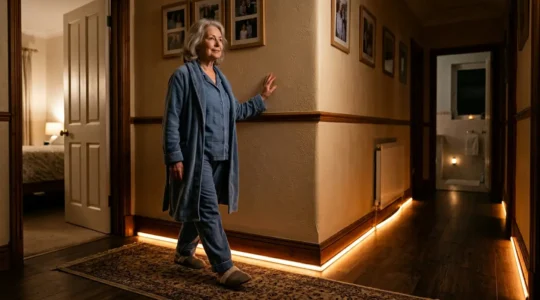
Why Can Automated Lighting Reduce Night-Time Falls by 50%?
In summary: The most effective smart home safety isn’t about complex gadgets but proactive automation that removes hazards before they become a problem. Automated pathway lighting from the bedroom to the bathroom is the single most impactful change you can…
Read more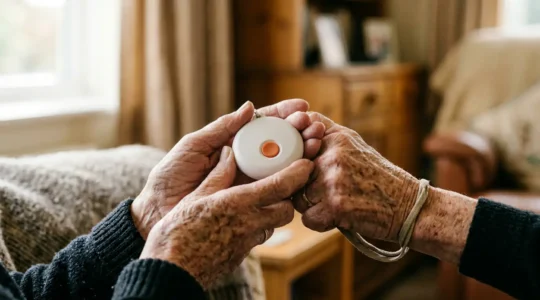
Why Does a Telecare Pendant Only Work If You Actually Press the Button?
A personal alarm’s effectiveness isn’t determined by its technology, but by the user’s trust and habits built long before an emergency. Non-use often stems from deep psychological barriers like denial and perceived stigma, not just forgetfulness. Reliability depends on an…
Read more
Why Does a Smart Home System Reduce Care Home Admissions by 30%?
A truly ‘smart’ home for seniors reduces the need for residential care by shifting from reactive alarms to a proactive, data-driven wellness system that anticipates needs before they become crises. Passive ambient sensors offer a richer, more accurate picture of…
Read more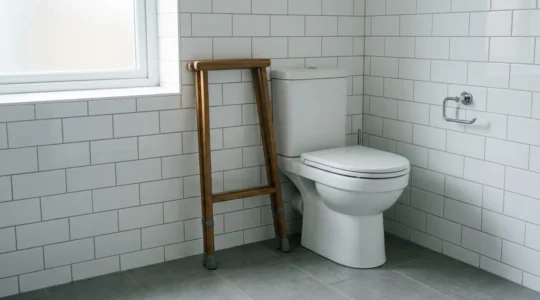
Why Does the Standard UK Toilet Height Make Rising Dangerous After Hip Surgery?
A standard UK toilet isn’t just uncomfortable after hip surgery; its low height is a biomechanical flaw that actively increases the risk of a fall. Raising the toilet height by just 2 inches can reduce knee strain by 40% by…
Read more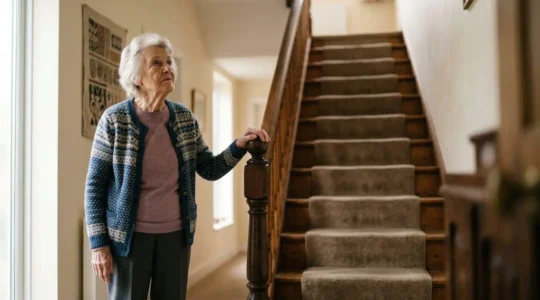
Why Does a Single Step Become an Impassable Barrier After 80?
Adapting your home is not just about buying equipment; it’s a strategic process of navigating council grants and understanding the real costs and risks *before* a crisis hits. A Disabled Facilities Grant (DFG) can cover the full cost, but success…
Read more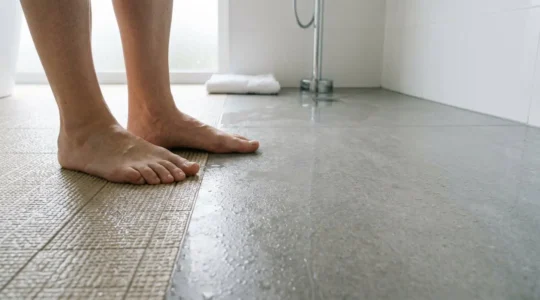
The Hidden Hazard: Why Most Bathroom Falls Happen on Surfaces Believed to Be Safe
The reassuring look of a clean, shiny bathroom is often a dangerous illusion; true safety lies in the measurable, microscopic texture of its surfaces, not its appearance. Common safety aids like rubber mats can breed mould and become slip hazards…
Read more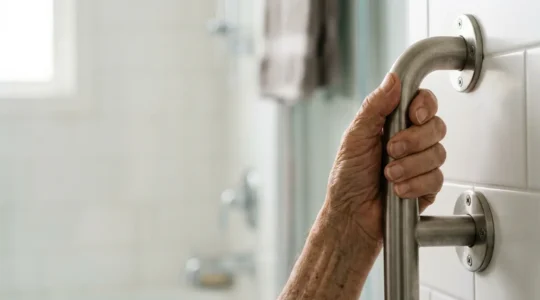
Why Does Installing a Grab Rail Reduce Hip Fracture Risk by 30%?
In summary: The strength of your wall is more critical than the quality of the grab rail itself; a weak wall means a useless rail. Correct toilet rail placement is dictated by the body’s natural sit-to-stand movement, not guesswork. Only…
Read more
Why Does Coordinating Aging in Place Require 7 Different Services to Work Together?
Successfully keeping an elderly relative at home is not about buying services, but about acting as a ‘Care Integration Manager’ to fuse seven fragmented systems into one cohesive support network. The UK’s care landscape is split between NHS health services,…
Read more
Why Does Struggling with Buttons Predict Care Home Admission Within 2 Years?
The small, often-missed difficulties with personal care—like struggling with a button—are the most reliable predictors of a senior’s future independence and need for higher levels of care. Assessing function (what a person can physically *do*) provides more actionable insight than…
Read more
Why Does Finding a Reliable Personal Carer Feel Harder Than Finding a Good Plumber?
Successfully hiring a private carer hinges less on finding the ‘perfect person’ and more on becoming a professional, prepared employer. The true cost isn’t just the hourly rate; it includes legal overheads like insurance and payroll that you, as the…
Read more