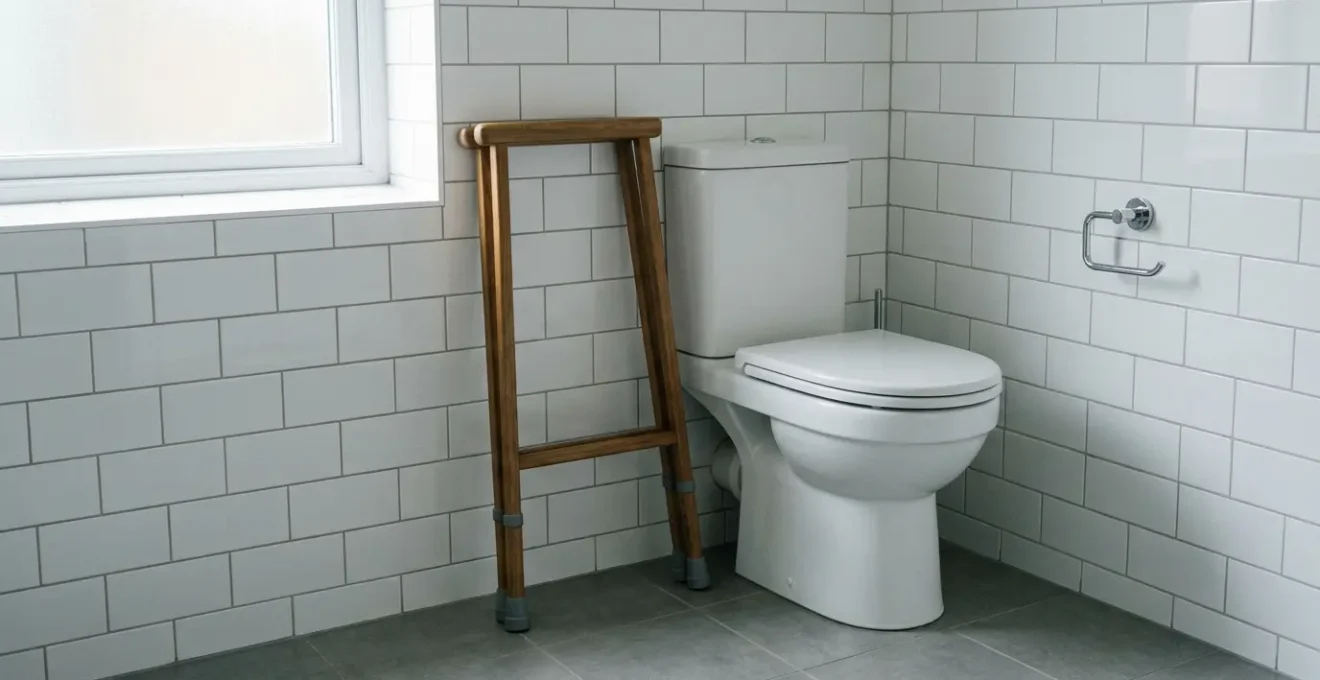
A standard UK toilet isn’t just uncomfortable after hip surgery; its low height is a biomechanical flaw that actively increases the risk of a fall.
- Raising the toilet height by just 2 inches can reduce knee strain by 40% by altering leverage and muscle engagement.
- Permanent « comfort-height » toilets offer vastly superior stability and hygiene compared to temporary plastic risers, which can become unstable failure points.
Recommendation: Assess your bathroom for these hidden biomechanical risks and make proactive changes *before* a fall occurs, not as a reaction to one.
For anyone recovering from hip surgery or experiencing a gradual decline in mobility, the bathroom transforms from a private sanctuary into a high-risk environment. The familiar act of getting up from the toilet suddenly becomes a daunting challenge, fraught with strain and instability. Many assume the solution is simply to add a few grab bars or a temporary raised seat. While these are common suggestions, they often overlook the fundamental problem: the design of standard bathroom fixtures is inherently at odds with the body’s needs during recovery and ageing.
The standard UK toilet, typically around 15-16 inches high, forces the hips and knees into a deep flexion angle. Rising from this low position requires significant quadriceps strength and a complex balancing act that can be painful, or even impossible, after surgery. This article moves beyond the generic advice. We won’t just list products; we will dissect the biomechanics of bathroom safety. We will explore why a few inches in height can dramatically alter forces on your joints and why the stability of a fixture is more critical than its appearance.
This is a designer’s perspective on creating a genuinely safe space. By understanding the principles of leverage, stability, and proactive design, you can make informed choices that not only aid recovery but also preserve independence and dignity for years to come. We will examine the specific physics that make certain fixtures safer and expose the hidden traps in common accessibility aids, empowering you to prevent the first fall, rather than just reacting to it.
To help you navigate these crucial decisions, this guide breaks down the most critical aspects of accessible bathroom design. From the precise science behind toilet height to the strategic placement of grab rails, each section provides the expert knowledge needed to create a truly safe and functional space.
Summary: A Designer’s Guide to a Safer Bathroom Post-Surgery
- Why Does a 2-Inch Higher Toilet Seat Reduce Knee Strain by 40% When Standing?
- Walk-In Shower vs Walk-In Bath: Which Keeps Seniors Safer and Cleaner?
- Raised Toilet Seat vs Comfort-Height Toilet: Which Is More Stable for a Wobbly Senior?
- The Shower Chair Trap That Prevents Seniors from Washing Properly
- When Should You Convert Your Bathroom for Accessibility: Before or After the First Bathroom Fall?
- Where Exactly Should Grab Rails Go Around a Toilet to Prevent a Fall Getting Up?
- When Is the Right Moment to Consider Knee Replacement Instead of Managing Pain?
- Why Does Installing a Grab Rail Reduce Hip Fracture Risk by 30%?
Why Does a 2-Inch Higher Toilet Seat Reduce Knee Strain by 40% When Standing?
The difference between safely standing up and collapsing back down can be a matter of inches. A standard toilet forces your body into a deep squat, placing maximum stress on the knee and hip joints precisely when they are most vulnerable. The act of rising isn’t just about leg strength; it’s about biomechanical leverage. When you sit lower, the angle of your knee joint is more acute, requiring your quadriceps to generate significantly more force to initiate the upward movement. This is why it feels like such an effort.
Raising the seat height by as little as two inches fundamentally changes this equation. It opens the angle of the knee and hip, shifting your centre of gravity forward and higher. This new starting position allows your larger muscle groups—glutes and hamstrings—to engage more effectively, assisting the quadriceps. It’s the difference between doing a deep squat and a half-squat; the latter is exponentially easier. A case study confirmed that a 40% reduction in knee strain was observed with elevated seats, transforming a high-risk motion into a manageable one.

As you can see, the less acute angle reduces the torque on the knee joint. This isn’t just about comfort; it’s about stability. When a joint is under less strain, the muscles around it can focus on balance rather than pure force generation. This reduces the wobble and hesitation that often precede a fall, making the entire process of sitting and standing smoother and safer.
Ultimately, a higher toilet seat isn’t a luxury; it’s a modification that respects the new mechanical limits of the body, creating an environment that supports, rather than challenges, your independence.
Walk-In Shower vs Walk-In Bath: Which Keeps Seniors Safer and Cleaner?
The choice between a walk-in shower and a walk-in bath is one of the biggest decisions in an accessible bathroom conversion. While both aim to eliminate the high step of a traditional tub, they offer vastly different experiences in terms of safety, hygiene, and long-term usability. The primary appeal of a walk-in bath is the ability to soak, but this comfort comes with significant, often-overlooked risks.
The most critical issue is temperature exposure. As noted by accessibility experts at American Bath and Shower, the user must be seated inside the tub while it fills and drains, a process that can take several minutes. This exposes the body to cold air, increasing the risk of chills or even hypothermia, especially for frail individuals. Furthermore, access for a caregiver is severely limited by the enclosed design, making assisted washing nearly impossible. A walk-in shower, with its open-plan and zero-threshold entry, allows for immediate warmth from the water and provides a caregiver 360-degree access if needed.
The following table breaks down the key differences, revealing that while a walk-in bath reduces the risk of falling while inside, its other features introduce new dangers and limit its future adaptability.
| Safety Factor | Walk-In Shower | Walk-In Bath |
|---|---|---|
| Entry Threshold | Zero to 1-inch (wheelchair accessible) | 3-5 inch step required |
| Fall Risk During Use | Higher on wet floor after exiting | Lower while seated inside tub |
| Temperature Exposure | Immediate warmth, no waiting | Potential hypothermia risk while waiting for fill/drain |
| Caregiver Accessibility | Easy access from multiple angles | Difficult to assist due to enclosed design |
| Future Mobility Adaptation | Accommodates wheeled commode, progressive needs | Fixed utility, limited adaptation |
| Hygiene Maintenance | Quick rinse, immediate exit | Must sit wet while draining |
For long-term safety and adaptability, the walk-in shower is almost always the superior choice. It better accommodates progressive mobility decline, supports caregiver assistance, and avoids the health risks associated with waiting in a draining tub. It prioritizes practical safety over the perceived luxury of a soak.
Raised Toilet Seat vs Comfort-Height Toilet: Which Is More Stable for a Wobbly Senior?
Once the need for a higher toilet is established, the next choice is between a temporary raised toilet seat and a permanent comfort-height toilet. While a plastic riser seems like a quick and affordable fix, it introduces significant risks in stability and hygiene. For a senior experiencing wobbliness or balance issues, this choice is critical. A comfort-height toilet is a purpose-built fixture, typically 17-19 inches high, that is bolted securely to the floor. A raised seat is an aftermarket addition clamped onto a standard-height bowl.
The core issue is the failure point. The clamps on a plastic riser can loosen over time with the lateral (sideways) pressure exerted during transfers. This creates a subtle wobble that can destroy a user’s confidence and, in a worst-case scenario, lead to the seat shifting or dislodging during use. According to EA Mobility accessibility experts, these temporary seats require weekly checks to ensure the clamps are tight and secure. A comfort-height toilet has no such failure point; its stability is integrated into its design.
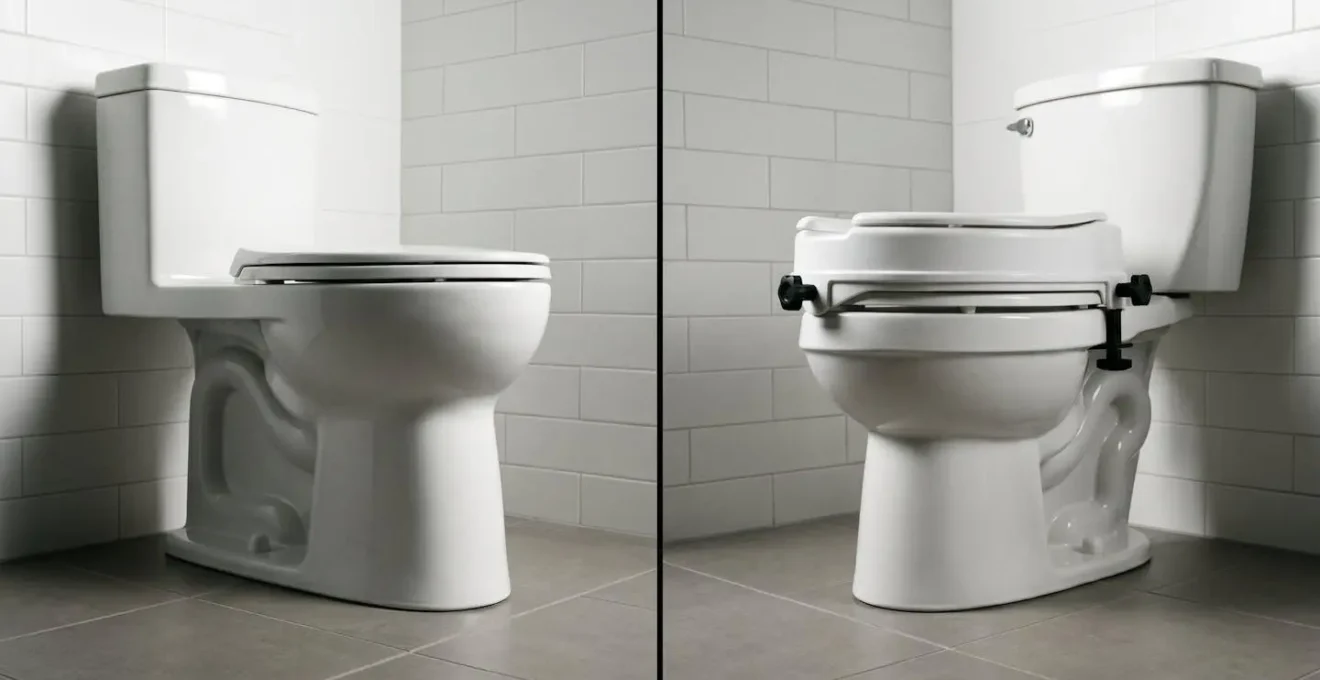
Beyond stability, hygiene is a major concern. The design of plastic risers creates what can be called hygiene dead zones. As EA Mobility Bathroom Accessibility Specialists note, « Plastic risers have clamps and crevices that are difficult to clean. They can trap urine and bacteria, leading to odours. » A one-piece ceramic comfort-height toilet has a smooth, non-porous surface with no extra parts, making it far easier to keep clean and sanitary, which is crucial for preventing infections.
While a raised seat may be a suitable short-term solution for immediate post-operative recovery, a comfort-height toilet is a superior long-term investment in safety, stability, and health. It eliminates the risk of mechanical failure and promotes a more hygienic environment, providing true peace of mind.
The Shower Chair Trap That Prevents Seniors from Washing Properly
A shower chair is one of the most common safety aids, intended to reduce the risk of falling by allowing a person to sit while bathing. However, a poorly chosen chair can create a dangerous paradox: it makes showering safer from falls but harder for maintaining personal hygiene. This « shower chair trap » can lead to serious health consequences if not addressed.
The problem lies in the design of most basic, solid-surface shower chairs. When a person is seated, their body weight compresses their tissues, making it nearly impossible to properly clean the perineal area. This difficulty can cause individuals to either avoid washing these areas altogether or to attempt unsafe twisting and lifting motions to gain access, which can destabilize the chair and cause a fall. According to the West Hartford Health & Rehabilitation Center, this reduced bathing effectiveness can directly lead to skin irritation, breakdown, and an increased risk of urinary tract infections (UTIs).
The solution is not to abandon the shower chair but to choose one designed with hygiene in mind. A chair with an open-aperture or split-seat design provides the necessary access for personal care without requiring the user to shift their weight. Combining this with the right tools and techniques transforms the experience from a risky chore into a safe and effective routine.
Action Plan: Ensuring Proper Hygiene While Seated
- Choose a shower chair with a split or open-aperture seat that allows unobstructed access for hygiene.
- Position a detachable handheld showerhead within arm’s reach before sitting to eliminate dangerous twisting motions.
- Use a long-handled brush or sponge specifically designed for seated bathing to reach all areas without shifting weight off-centre.
- Keep all soap and supplies in a shower caddy mounted at seated arm level to prevent reaching and side-loading the chair.
- For maximum stability and hygiene, consider a sliding transfer bench that allows you to sit outside the shower and slide in.
By consciously selecting equipment that facilitates both safety and cleanliness, you can prevent the unintended negative health outcomes of a poorly designed shower setup and ensure that bathing remains a dignified and healthy part of daily life.
When Should You Convert Your Bathroom for Accessibility: Before or After the First Bathroom Fall?
The most common trigger for a bathroom accessibility conversion is a fall. An incident occurs, and the family scrambles to install grab bars and a raised toilet seat in response. This reactive approach is a mistake. The goal should always be proactive conversion—making the changes before an injury forces your hand. A fall is not just a physical event; it’s a deeply traumatic one that can shatter confidence and accelerate a decline in independence. The right time to convert is when the first warning signs appear, not after the first 999 call.
These warning signs are often subtle. They are the small adaptations a person makes to compensate for decreasing strength or balance. Recognizing them is the key to acting proactively. Are you or a loved one using the towel rack for support? Is there a hesitation before stepping into the shower? These are not minor habits; they are indicators that the current environment is no longer safe.
Consider these pre-fall warning signs a critical checklist:
- Using walls or furniture to « cruise » or steady yourself while moving.
- Experiencing frequent « near misses » where you catch yourself from falling.
- A new medication lists dizziness or balance issues as a side effect.
- Feeling anxious about using the bathroom alone, especially at night.
- Avoiding showering as frequently due to fear or the physical effort required.
- Needing to hold the sink or toilet to lower yourself down or push yourself up.
Acting proactively is also a sound financial decision. While a full walk-in shower conversion may seem expensive, it is often a fraction of the cost associated with a fall. The medical bills, rehabilitation services, and potential need for long-term care following a hip fracture can be financially and emotionally devastating. A proactive conversion is an investment in sustained health and independence.
Waiting for a fall is a gamble with life-altering stakes. By recognizing the early warning signs and choosing to act, you are not just renovating a bathroom; you are preserving quality of life and ensuring a safer future at home.
Where Exactly Should Grab Rails Go Around a Toilet to Prevent a Fall Getting Up?
Installing grab rails is not guesswork. Placing them in the wrong position can be ineffective or even create new hazards. The correct placement is based on the biomechanics of standing—providing leverage where the body naturally needs it. For a toilet, this means creating a system of support for the three key phases of movement: lowering, sitting, and rising. The goal is to create a « stability tripod » where your two feet on the floor and one hand on a secure rail provide a solid, three-point base.
Forget simply placing one bar on the nearest wall. A strategic installation involves multiple rails in specific locations and orientations. A horizontal rail to the side is used for pushing up, while a vertical rail in front is used for pulling. The height and distance must be tailored to the user for maximum effectiveness. For instance, a rail placed too high or too far away is useless, as it forces the user to lean and lose balance to reach it.
Proper installation is just as critical as placement. A grab rail is a safety device that must be able to support several times a person’s body weight. Securing it into plasterboard or drywall alone creates a deadly false sense of security; it is a critical failure point waiting to happen. All rails must be anchored into solid wall studs or reinforced blocking.
Your Action Plan: Auditing Toilet Grab Rail Placement
- Primary Side Rail: Check for a horizontal rail on the side wall, mounted 33-36 inches from the floor and within 12 inches of the toilet bowl’s front edge. This is for pushing up.
- Primary Front Rail: Look for a vertical rail on the wall in front of the toilet, positioned where the user’s hand naturally reaches to pull themselves up.
- « Landing Zone » Rail: Verify there is a rail on the wall opposite the toilet, providing an immediate handhold upon entering the room, crucial for nighttime stability.
- Leverage Customization: For optimal placement, a horizontal rail should be at a distance from the seated user equal to their forearm length (elbow to palm) to ensure maximum leverage.
- Installation Integrity: Confirm that all rails are secured into solid wall studs, not just plasterboard. A rail that moves even slightly under pressure is a hazard.
By treating grab rail installation as a technical science rather than a decorative task, you create a truly reliable support system that actively prevents falls by providing leverage and stability exactly when and where it’s needed most.
When Is the Right Moment to Consider Knee Replacement Instead of Managing Pain?
The decision to undergo knee replacement surgery is complex, often seen as a last resort when pain becomes unmanageable. However, pain is subjective. A more objective indicator for when to consider surgery is the loss of functional independence. And one of the most powerful, yet often overlooked, litmus tests for this is your ability to use the bathroom safely and independently.
When you find that even with aids like a raised toilet seat and grab bars, the simple acts of sitting, standing, and showering are still difficult, painful, or frightening, it signals that conservative pain management may no longer be preserving your quality of life. This is the moment when the conversation with your doctor about surgery should become serious. The bathroom, with its series of complex movements in a confined space, exposes the true limits of your mobility in a way that walking on a flat surface does not.
Case Study: Bathroom Function as a Pre-Operative Indicator
Guidance from the MedlinePlus Medical Encyclopedia directly links bathroom modification to knee surgery outcomes. It highlights pre-operative planning, stating, « Raising the toilet seat height will keep you from flexing your knee too much. » This positions bathroom accessibility not as an afterthought for recovery, but as a critical component of surgical success. The implication is clear: if your knee is so compromised that even a modified bathroom remains a challenge, it’s a strong sign that the joint’s functional decline is severe enough to warrant surgical evaluation.
Therefore, your daily bathroom routine becomes a diagnostic tool. If you are unable to get off the toilet without significant help, or if the fear of falling in the shower is causing you to bathe less, these are not just inconveniences. They are concrete data points indicating that your mobility has crossed a critical threshold. They are your body’s way of telling you that managing the pain is no longer enough; it’s time to consider restoring the function.
By viewing your bathroom struggles through this clinical lens, the decision to pursue knee replacement becomes less about an abstract level of pain and more about a clear, evidence-based assessment of your ability to live safely and independently at home.
Key Takeaways
- A standard toilet’s low height creates dangerous biomechanical strain; a « comfort height » (17-19″) toilet is a crucial safety upgrade.
- For long-term safety and adaptability, a zero-threshold walk-in shower is superior to a walk-in bath, which poses risks like hypothermia.
- Grab rails must be strategically placed based on leverage principles and anchored into solid wall studs to be effective.
Why Does Installing a Grab Rail Reduce Hip Fracture Risk by 30%?
A simple grab rail can seem like a minor addition to a bathroom, but its impact on preventing one of the most devastating injuries for seniors—a hip fracture—is profound. The bathroom is the most common site for falls at home, which contribute to over 90,000 hospital admissions in England annually. A significant percentage of these falls result in hip fractures. The reason a grab rail is so effective is that it interrupts the mechanics of a fall at its most critical moment.
Most falls are not simple vertical drops; they involve a loss of balance combined with a twisting motion as the person tries to regain stability. It is this twisting force that often leads to a fracture. A securely mounted grab rail provides an immediate, fixed point for the hand to grasp. This single action achieves two things: it stops the body’s downward momentum and, more importantly, it prevents the dangerous rotational twist. The body is stabilized before the catastrophic force can be applied to the hip joint.
Case Study: The « Three Points of Contact » Principle
A 2024 scoping review published by the PMC analyzed toilet transfer safety and explained the science behind this effect. Researchers found that having access to grab bars created a « tripod » of stability: two feet on the floor and one hand on a rail. This three-point system is exponentially more stable than standing on two feet alone. The study demonstrated that a grab rail provides a crucial stabilization point that interrupts the fall sequence before the dangerous twisting motion can occur. Psychologically, its presence also reduces the fear of falling, leading to less tentative movements and paradoxically improving a person’s natural balance.
This principle of creating a stability tripod is the core of bathroom fall prevention. It is a proactive measure that gives the user a tool to arrest a fall mid-sequence. The 30% risk reduction figure often cited is a statistical representation of thousands of incidents where a well-placed rail was the difference between a minor slip and a life-changing injury. It turns a reactive stumble into a controlled, safe recovery.
Therefore, a grab rail is not just a handhold. It is an active safety device that fundamentally alters the physics of a potential fall, making it one of the single most effective investments you can make in long-term bathroom safety.