In summary:
- The most effective smart home safety isn’t about complex gadgets but proactive automation that removes hazards before they become a problem.
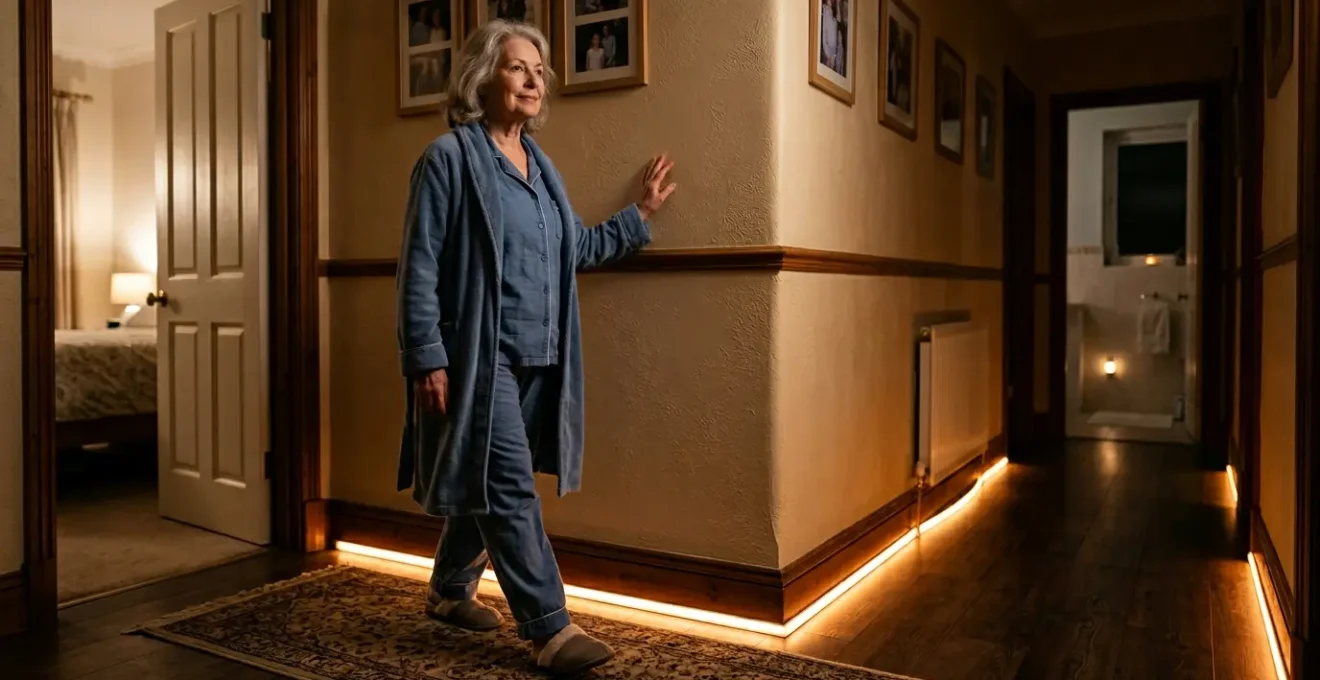
- Automated pathway lighting from the bedroom to the bathroom is the single most impactful change you can make, preventing disorientation and trips in the dark.
- For tasks like turning off appliances, timer-based smart plugs offer greater safety than voice commands, as they require no memory or action from the user.
- The key is to introduce these simple automations early, as a way to support independence, not as a reaction to a crisis.
The fear of a loved one falling in the middle of the night is a heavy weight for many families. A trip to the bathroom in the dark can quickly turn into a trip to the hospital. Well-intentioned advice often involves adding a simple night light or reminding them to be careful. While helpful, these solutions rely on a senior remembering to act or being fully alert when they are drowsy and disoriented. This approach misses the fundamental point of failure: human error, especially when half-asleep.
But what if the home itself could remove the risk entirely, without anyone having to think about it? The promise of a « smart home » often brings to mind complex gadgets and voice commands. The real breakthrough for senior safety, however, lies in something far simpler: proactive automation. This isn’t about adding technology for technology’s sake; it’s about building a ‘cognitive ramp’—an environment that automatically compensates for unsteadiness, forgetfulness, or disorientation, making safety the effortless default.
This guide moves beyond the gadgets to focus on the principles of effective, senior-friendly automation. We will explore which features genuinely prevent falls, provide a step-by-step plan for installing the most critical one—automated lighting—and determine when to implement these changes to preserve independence for as long as possible. We will show you how a few thoughtful adjustments can transform a home from a place of potential hazards into a true sanctuary.
To help you navigate these solutions, this article breaks down the most critical aspects of creating a safer, smarter home for seniors. The following sections provide practical advice on everything from lighting and automated appliances to the foundational safety measures that support them.
Summary: A Senior-Friendly Guide to Smart Home Safety
- Which Smart Home Features Actually Prevent Falls vs Which Are Just Convenient Gadgets?
- How to Install Motion Sensor Lights from Bedroom to Bathroom to Prevent 3am Falls?
- Smart Plugs vs Voice Commands: Which Is Easier for a Senior Who Forgets to Turn Off the Iron?
- The Over-Automation Mistake That Makes Seniors Stop Thinking for Themselves
- When Should You Start Automating Tasks to Maintain Independence Before Struggles Begin?
- Where Exactly Should Grab Rails Go Around a Toilet to Prevent a Fall Getting Up?
- Why Poor Lighting in Your Hallway Could Be the Reason for Your Next Hospital Stay?
- Why Does a Smart Home System Reduce Care Home Admissions by 30%?
Which Smart Home Features Actually Prevent Falls vs Which Are Just Convenient Gadgets?
The smart home market is flooded with devices, but for senior safety, a clear distinction must be made between what is critical and what is merely convenient. A voice assistant that plays music is a fun gadget; a motion-activated light that prevents a fall is a lifeline. The key is to prioritise proactive safety features—those that work automatically to remove a hazard without requiring any action from the user. These tools form the foundation of a home that actively supports its resident.
True safety features address the direct causes of falls and accidents: poor visibility, forgetfulness, and physical instability. Examples include automated pathway lighting that illuminates a route to the bathroom, smart plugs that automatically turn off a hot iron after 30 minutes, or a smart thermostat that maintains a safe ambient temperature. These systems reduce the « cognitive load » on a senior, meaning they don’t have to remember to flip a switch or worry if an appliance was left on. They work quietly in the background, making the environment inherently safer.
In contrast, many popular smart devices are merely conveniences. Voice-controlled blinds, smart refrigerators that track groceries, or complex app-controlled systems, while modern, can add a layer of technological complexity that becomes a barrier. If a senior has to remember a specific voice command or navigate a smartphone app, the technology can create more frustration than help. A recent study confirms the power of this targeted approach, finding that a well-designed package of smart home technologies can lead to a 28% reduction in fall incidence among older adults. The focus must always be on simplicity and autonomous function.
How to Install Motion Sensor Lights from Bedroom to Bathroom to Prevent 3am Falls?
Of all the smart home automations, creating an automated light path from the bedroom to the bathroom is the most impactful for preventing night-time falls. When a senior wakes up in the dark, they are often disoriented, and their eyes have not adjusted. Fumbling for a light switch increases the risk of tripping or losing balance. A motion-activated system removes this danger entirely by illuminating the path automatically, providing a clear and safe route the moment they get out of bed.
The goal is to create a seamless « runway » of light. This doesn’t require complex wiring or an electrician. Modern, battery-powered LED motion sensor strips or puck lights are incredibly easy to install. They use adhesive backing and can be placed along baseboards, under the bed frame, or on the wall. For optimal visibility, lighting experts recommend that fixtures provide at least 800-1000 lumens, but it’s equally important that the light itself isn’t harsh. Choose lights with a warm white glow (around 2700K) to avoid the jarring, sleep-disrupting effect of bright blue light.
The placement of the sensors is what makes the system truly « smart » and effective. You need to ensure there are no dark spots along the entire path. This visual guide shows the simple, hands-on process of installing these life-saving lights.
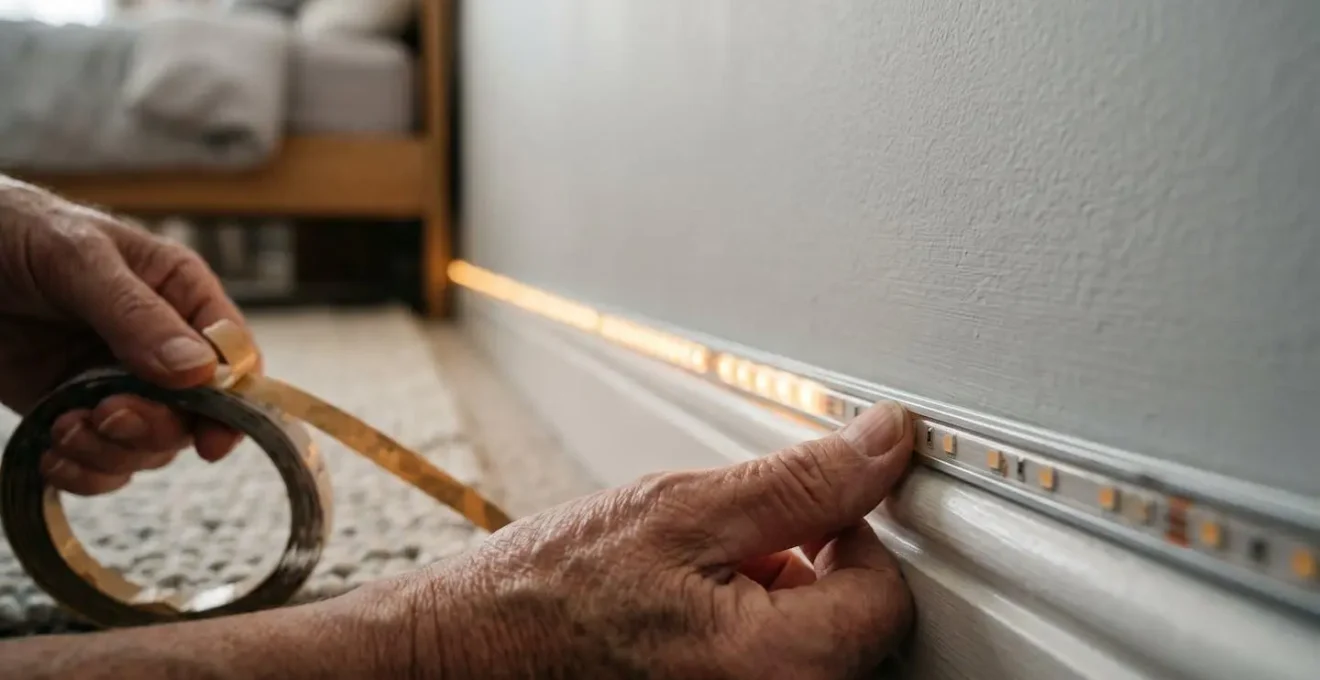
As you can see, the installation is straightforward. By following a strategic placement plan, you create a chain reaction of light that guides the user safely from one room to the next. The system should be so intuitive that it feels like the house is anticipating their needs.
Your Action Plan: Creating a Safe Night-Time Light Pathway
- Bedside Activation: Place a motion sensor light near the bedside so it activates the moment the senior sits up or puts their feet on the floor. Under-the-bed-frame strips are ideal for this.
- Hallway Connection: Add another sensor light in the hallway, positioned to activate as soon as someone steps out of the bedroom door.
- Bathroom Arrival: Install a third sensor near the bathroom entrance to ensure the final destination is well-lit before they enter.
- Sensor Calibration: Ensure sensors detect movement within a 10-15 foot radius and have a wide activation angle (110-120°) to prevent any unlit gaps.
- Choose Warm Light: Use warm white LED lights (2700K-3000K) to provide clear visibility without disrupting natural sleep cycles with harsh blue light.
Smart Plugs vs Voice Commands: Which Is Easier for a Senior Who Forgets to Turn Off the Iron?
Forgetfulness is a common concern, and an appliance like an iron or a stove left on can be a serious fire hazard. Smart technology offers two popular solutions: voice commands (« Alexa, turn off the iron ») and automated smart plugs. While both can solve the problem, their suitability for a senior depends entirely on their cognitive load—the amount of mental effort required to use them. As Cognitive Systems Research notes in a study on technology adoption, when seniors encounter difficulties early on, they are likely to abandon the technology; in fact, their research indicates over 77% of older adults require assistance setting up new technology.
A voice command seems simple, but it has hidden complexities. The senior must: 1) remember that the feature exists, 2) remember the exact command phrase, 3) speak clearly enough for the device to understand, and 4) be in the same room as the smart speaker. If any of these steps fail, the solution is useless. This places the burden of action and memory squarely on the user.
An automated smart plug, particularly one set on a timer, is a far more robust solution because it operates with zero cognitive load. Once programmed, it works autonomously. For example, a smart plug connected to an iron can be set to automatically cut the power after 30 minutes of use. The senior doesn’t have to do or remember anything. The safety net is built-in and functions regardless of their memory or actions. This is a perfect example of a « cognitive ramp » that makes safety the default.
The following table, based on principles of cognitive systems design, breaks down the key differences to help you choose the most appropriate and least stressful solution.
| Solution Type | Cognitive Load Score | Setup Complexity | Best For | Maintenance Required |
|---|---|---|---|---|
| Automated Timer Smart Plug | 0 (No user action needed) | Low (One-time setup) | Pure forgetfulness, dementia | Minimal (occasional schedule adjustment) |
| Voice Command (Alexa/Google) | 2 (Must remember command) | Moderate (Initial pairing) | Mobility issues with intact memory | Moderate (troubleshooting voice recognition) |
| Smartphone App Control | 5 (Interface navigation required) | High (App installation & learning) | Tech-savvy seniors only | High (app updates, password resets) |
The Over-Automation Mistake That Makes Seniors Stop Thinking for Themselves
In our eagerness to make a home safer, there is a subtle but significant danger: over-automation. The goal of a smart home should be to support independence, not eliminate it entirely. Technology should act as a safety net for challenging or hazardous tasks, but it should not remove the small, daily activities that provide gentle physical and cognitive engagement. When we automate everything, we risk creating a passive environment that discourages a senior from thinking and acting for themselves.
Consider the difference between automating a dangerous task and automating a beneficial one. A smart plug that turns off a stove is an excellent safety measure because it prevents a potentially catastrophic oversight. However, automating the blinds to open every morning, while convenient, removes a simple daily routine: getting up, walking to the window, and physically opening them. This small act involves movement, decision-making (how much to open them), and interaction with the environment. These are the very things that help maintain mobility and cognitive function, following the « use it or lose it » principle.
The key is to strike a balance. The « cognitive ramp » should make difficult tasks easier, not remove all tasks. A healthy level of engagement is crucial for mental and physical well-being. Before automating a task, ask a simple question: « Does this task pose a significant risk, or is it a safe, routine activity that contributes to daily engagement? » Automate the risks, but preserve the routines. A home that does everything for its resident can inadvertently foster dependency and a decline in functional ability.
When Should You Start Automating Tasks to Maintain Independence Before Struggles Begin?
The ideal time to introduce smart home automation is not after a fall or a serious incident has already occurred. By then, you are reacting to a crisis. The most effective approach is to be proactive and begin implementing simple automations as soon as the very first signs of struggle appear. This allows the senior to adapt to the technology gradually and maintain their sense of control and independence for much longer.
Look for the small, subtle cues. Is your loved one starting to hesitate before walking down a dimly lit hallway at dusk? Are they occasionally forgetting to turn off lights in a room? Have you found the television left on all night more than once? These are not yet crises, but they are indicators that certain tasks are becoming a bit more challenging. This is the perfect moment to introduce a solution. For instance, installing motion-activated lights in that hallway isn’t a comment on their inability; it’s simply « making the house a little smarter. »
Framing is everything. Introducing these tools early and as « home upgrades » rather than « disability aids » removes any stigma. It normalizes the technology and allows the senior to get comfortable with it while they are still fully capable. Starting small with a single, high-impact solution, like pathway lighting, is far more effective than trying to overhaul the entire home at once. This gradual approach builds a supportive environment over time, creating that ‘cognitive ramp’ that smooths out difficulties before they become insurmountable obstacles. Waiting for a crisis is a strategy of last resort; acting on the early signs is a strategy for long-term independence.
Where Exactly Should Grab Rails Go Around a Toilet to Prevent a Fall Getting Up?
While smart technology offers powerful new ways to enhance safety, it should always complement, not replace, foundational physical supports. Before any high-tech solution is considered, the analogue safety of the home must be addressed. Nowhere is this more critical than in the bathroom, where hard, slippery surfaces make falls particularly dangerous. The simple grab rail is a non-negotiable, low-tech tool that provides essential stability.
The act of sitting down on and getting up from a toilet involves complex movements that can challenge balance, strength, and blood pressure regulation. A fall in this situation can be severe. Correctly placed grab rails provide a stable anchor point, allowing a person to use their arm strength to assist and steady themselves. However, their effectiveness depends entirely on precise placement. A poorly positioned rail can be useless or even create a new hazard.
Accessibility standards provide clear, evidence-based guidelines for installation. The goal is to provide support throughout the entire motion—lowering, sitting, and rising. This typically requires a combination of horizontal and vertical rails.
- Horizontal Rail: A horizontal rail should be placed on the wall alongside the toilet. It should be mounted at a height of 33-36 inches (84-91 cm) from the floor. This bar is used for leverage when lowering onto or rising from the seat.
- Vertical Rail: A vertical rail is often installed at the front of the horizontal bar. This rail provides a handhold for pulling oneself up from a seated position and for steadying oneself before and after.
- Fold-Down Rails: If there is no side wall available, a fold-down rail that pivots from the back wall is an excellent alternative. It can be lowered for use and folded away to save space.
The rails must be securely screwed into wall studs or solid blocking, not just into drywall, to ensure they can support a person’s full body weight in an emergency.
Why Poor Lighting in Your Hallway Could Be the Reason for Your Next Hospital Stay?
We often underestimate how much our eyes degrade with age. A hallway that seems adequately lit to a 40-year-old can be a treacherous landscape of shadows and low contrast for a 75-year-old. This isn’t just an inconvenience; it’s a primary contributor to falls, which are a grave danger. According to the Centers for Disease Control and Prevention, falls are the leading cause of injury-related death among adults aged 65 and older. Many of these falls begin in a poorly lit transitional space like a hallway.
The problem with poor lighting is twofold. First, there is the issue of insufficient brightness. As we age, our pupils react more slowly and our lenses yellow, meaning we need significantly more light to see clearly. Second, and perhaps more dangerous, is the problem of high contrast and shadows. A single, harsh overhead light can create long, disorienting shadows that can be mistaken for obstacles or steps. It can also make it difficult to perceive the edge of a rug or a change in flooring, which are common tripping hazards.
This image perfectly illustrates how problematic lighting creates a visually confusing environment, increasing the risk of a fall.
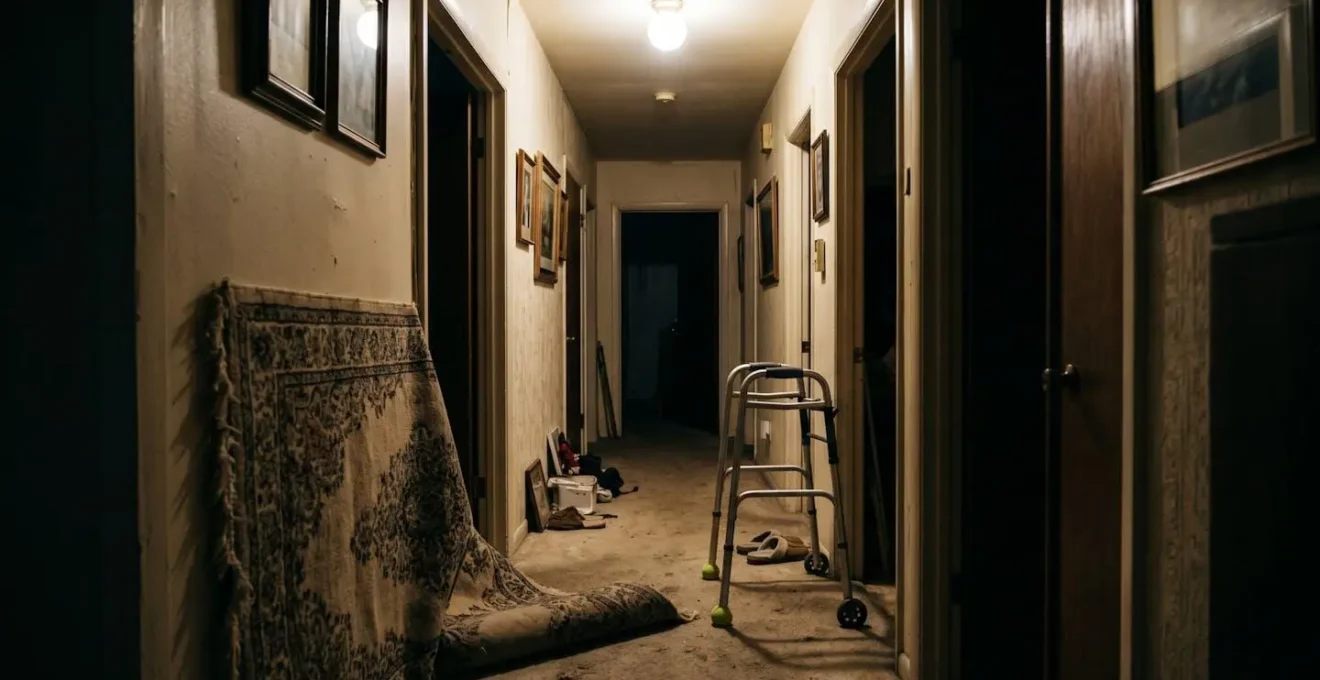
The solution is not just more light, but better light. This means using multiple light sources to create an even, diffuse illumination that eliminates shadows. Wall sconces, low-level lighting along the baseboards, and ensuring there is a light switch at both ends of the hallway are all critical steps. The goal is to create a space where depth perception is clear and every potential obstacle is plainly visible. Ignoring the lighting in your hallway is ignoring one of the most significant and preventable fall risks in the entire home.
Key Takeaways
- Focus on proactive automation that removes hazards (like automated lights) over reactive gadgets that require user action.
- The single most effective change is creating an automated light pathway from the bedroom to the bathroom to prevent night-time falls.
- When choosing technology, always prioritise the solution with the lowest cognitive load; timer-based plugs are often safer than voice commands for forgetfulness.
Why Does a Smart Home System Reduce Care Home Admissions by 30%?
The question of how a smart home can significantly delay or prevent the need for residential care is not about a single magical device. Instead, the answer lies in the cumulative effect of a well-designed system. By systematically addressing the primary drivers of care home admission—falls, medication mismanagement, social isolation, and caregiver burnout—a smart home creates a robust ecosystem of support. It’s this holistic safety net that allows seniors to live independently and safely in their own homes for longer.
As we’ve explored, proactive fall prevention through automated lighting and hazard mitigation is the cornerstone. Beyond this, a smart home can provide automated medication reminders, ensuring critical prescriptions are taken on time. It can facilitate easy video calls with family, combating the loneliness that can lead to a decline in both mental and physical health. For family caregivers, it offers peace of mind through discreet monitoring—alerts if a door is left open at night or if there has been no movement for an unusual length of time—reducing stress and enabling them to provide support more sustainably.
Ultimately, a smart home system achieves this remarkable outcome by shifting the paradigm from reactive crisis management to proactive independence preservation. It builds a « cognitive ramp » that doesn’t just help a senior navigate their home, but also supports the entire network of family and caregivers. It’s this powerful combination of enhanced safety, reduced cognitive load, and strengthened social connection that underpins the ability to age in place, turning a house into a true partner in care.
To begin creating this safer environment, start with the most critical risk: night-time falls. Implementing a simple, automated lighting pathway is a practical first step that delivers immediate and significant benefits for peace of mind and independence.