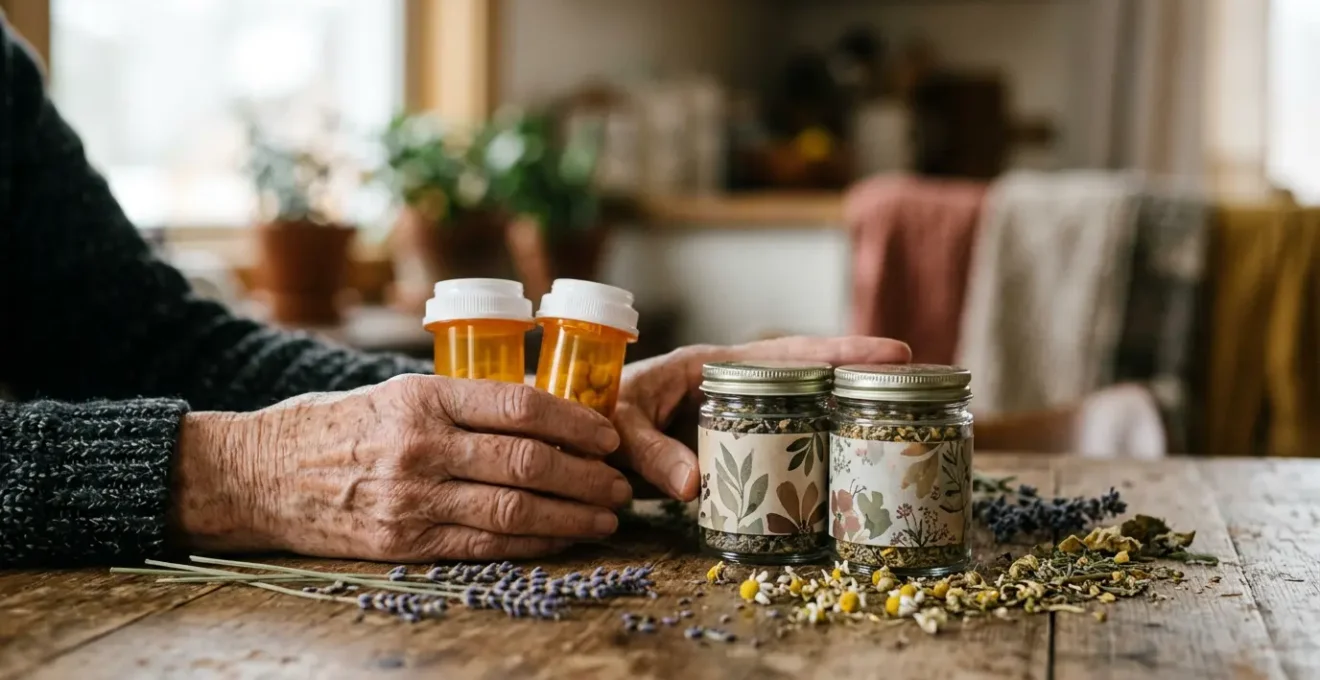
Contrary to the belief that ‘natural’ means safe, the primary risk for seniors is the cumulative metabolic load from mixing herbs with prescriptions, not the herbs themselves.
- The aging body, particularly the liver and kidneys, processes substances less efficiently, increasing interaction risks.
- Common herbs can dangerously alter the effects of vital medications like blood thinners, statins, and blood pressure drugs.
Recommendation: Conduct a full audit of everything you take—prescriptions, supplements, and herbs—and discuss this complete list with your GP or pharmacist before starting anything new.
For many seniors, managing the aches, pains, and sleepless nights that can accompany aging is a daily reality. It’s no surprise that many turn to herbal remedies, seeking a natural path to relief. The perception is often that if a product comes from a plant, it must be gentler and safer than pharmaceuticals. Yet, this comforting thought masks a complex and potentially dangerous reality, especially for the one in four older adults in the UK who may be taking these remedies alongside their prescribed medications.
The conversation around this topic often circles back to a few general warnings: « talk to your doctor » or « herbal doesn’t mean harmless. » While true, this advice lacks the depth needed to make genuinely informed decisions. It fails to explain *why* an aging body is more susceptible, *how* a simple herb can derail a life-saving medication, or what the crucial difference is between a supermarket supplement and a practitioner-grade product. The issue isn’t just about a single herb interacting with a single drug; it’s about the total burden, or ‘metabolic load’, placed on a system that may already be processing multiple prescriptions.
This article moves beyond the platitudes. As a clinical herbalist, my goal is to provide a clear, safety-focused framework for evaluating these risks. We will not just list potential dangers; we will explore the mechanisms behind them. We will look at the evidence for common remedies, examine how quality varies, and discuss the critical point at which the number of medications and supplements becomes more harmful than beneficial. This is not about fear, but about empowerment—giving you the knowledge to navigate the world of herbal medicine safely and effectively, in partnership with your healthcare providers.
To help you navigate this important topic, this article is structured to build your understanding step-by-step. Below is a summary of the key areas we will cover, from the evidence behind popular herbs to the critical reasons for discussing their use with your GP.
Summary: Navigating Herbal Remedies and Medication for Seniors
- Which Herbal Remedies Actually Have Clinical Evidence for Insomnia, Joint Pain, or Anxiety in Seniors?
- Which Common Herbal Supplements Interact Dangerously With Blood Pressure or Diabetes Medications?
- Supermarket Herbal Supplements vs Practitioner-Grade Products: Does the Source Actually Matter?
- The Deadly Assumption That Herbal Means Harmless for Elderly Livers and Kidneys
- When Should You Discuss Herbal Remedies With Your GP vs When Can You Safely Self-Treat?
- The 8-Medication Threshold Where Drug Interactions Start Causing More Harm Than Benefit
- Which Common Supplements Interfere With Blood Thinners, Statins, or Blood Pressure Medications?
- Why Do 35% of UK Seniors Use Complementary Therapies Without Telling Their GP?
Which Herbal Remedies Actually Have Clinical Evidence for Insomnia, Joint Pain, or Anxiety in Seniors?
The search for relief from persistent conditions like insomnia, chronic pain, and anxiety is a primary reason many seniors explore herbal options. With chronic sleep problems affecting a significant portion of the elderly population, it’s understandable to seek alternatives to prescription hypnotics. However, the marketing claims for herbal products often outpace the scientific evidence. It is vital to distinguish between what feels helpful and what is clinically proven to be effective, especially when your health is on the line.
Take Valerian root, one of the most popular herbal sleep aids. Many users report it helps them feel calmer and sleep better. Yet, the scientific picture is more nuanced. As a major review of clinical trials concluded, the herb’s perceived benefits are often subjective. This is highlighted in a comprehensive meta-analysis of multiple studies.
valerian’s effectiveness had not been demonstrated with quantitative or objective measures although valerian could improve subjective sleep quality
– Meta-analysis of 18 randomized placebo-controlled trials, Sleep Medicine Meta-Analysis (2010)
This doesn’t mean Valerian is useless, but it underscores a critical point: a remedy’s effect might be subtle or work similarly to a placebo, which can still be valuable. For other conditions like joint pain, herbs such as Turmeric (curcumin) and Boswellia have a growing body of evidence supporting their anti-inflammatory properties. Similarly, for anxiety, herbs like Lemon Balm and Passionflower show promise. However, the strength of this evidence varies, and « effective » does not automatically mean « safe for everyone. » The real challenge begins when these active compounds enter a system already managing other medications.
Which Common Herbal Supplements Interact Dangerously With Blood Pressure or Diabetes Medications?
The benign image of herbal supplements can be dangerously misleading. Once ingested, the body treats their active compounds no differently than it does a pharmaceutical drug. They are processed by the same organs and can interfere with the same metabolic pathways. This creates a significant risk of interactions, a problem that is far from rare. In fact, a cross-sectional UK survey found that 32.6% of older adults taking both herbal supplements and prescription drugs were at risk for a potential adverse interaction.
This is particularly hazardous for individuals managing conditions like hypertension or diabetes, where medication consistency is paramount. For example, Ginseng, often taken for energy, can lower blood sugar. When combined with diabetes medications like metformin or insulin, it can create an additive effect, leading to dangerously low blood sugar levels (hypoglycemia). Similarly, licorice root, found in some teas and supplements for digestive health, can raise blood pressure and reduce potassium levels, directly counteracting the effects of many blood pressure medications and diuretics.
The visual separation between what we consider ‘natural’ and ‘medical’ can create a false sense of security, but internally, they share the same biological stage.
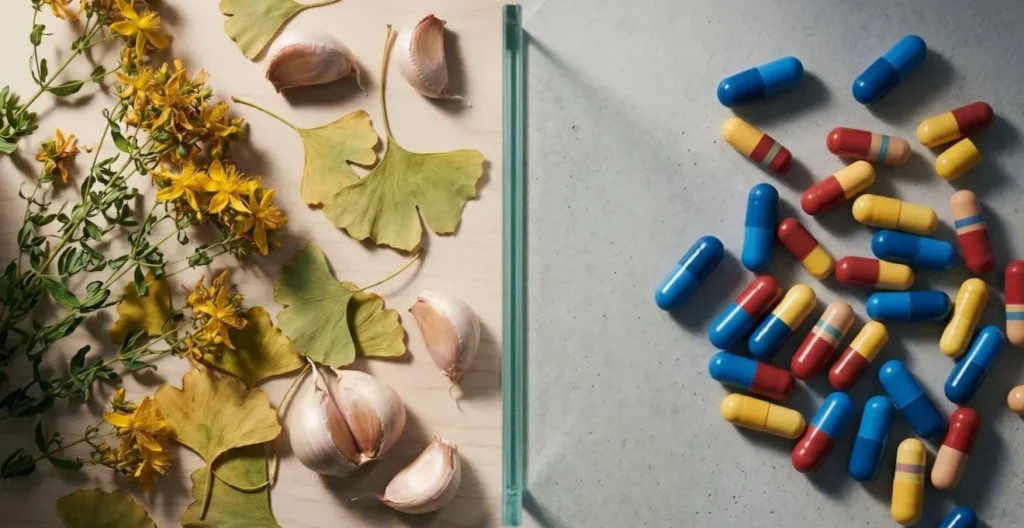
Other common culprits include St. John’s Wort, which can render blood pressure medications less effective, and Hawthorn, which, while studied for heart health, can dangerously amplify the effects of drugs like beta-blockers and digoxin. These interactions are not minor side effects; they can undermine the management of chronic, life-threatening conditions. The assumption that a plant-based product is inherently safe is a gamble many seniors are taking without even knowing it.
Supermarket Herbal Supplements vs Practitioner-Grade Products: Does the Source Actually Matter?
When you purchase an herbal supplement, you are placing your trust in the manufacturer. You trust that the bottle contains the correct herb, in the stated amount, and is free from harmful contaminants. Unfortunately, in the largely unregulated world of dietary supplements, this trust can be misplaced. The source of your supplement absolutely matters, as quality can vary dramatically between a cheap, mass-market product and one sourced from a reputable, professional-grade supplier.
Supermarket and online marketplace supplements are often produced with a focus on low cost, which can lead to several problems. First, there’s the issue of potency and standardisation. A product might not contain enough of the active ingredient to be effective, or the amount could vary wildly from batch to batch. Second, and more alarmingly, is the risk of contamination and adulteration. Products can be contaminated with heavy metals, pesticides, or even undeclared pharmaceutical drugs. While not specific to herbs, a shocking investigation into a different supplement category highlights the scale of the problem: Consumer Reports testing revealed that 70% of protein powders contained detectable levels of heavy metals like lead and cadmium.
In contrast, practitioner-grade products, typically available through qualified herbalists, naturopaths, or specialised health stores, are usually held to a higher standard. These companies often engage in rigorous third-party testing to verify the identity, purity, and potency of their ingredients. They can provide a Certificate of Analysis (CoA) for their batches, proving they are free from contaminants. This quality control is not about creating a « stronger » product; it’s about ensuring safety and consistency. For a senior whose system is already sensitive, introducing unknown substances or heavy metals is an unacceptable risk.
The Deadly Assumption That Herbal Means Harmless for Elderly Livers and Kidneys
As we age, our body’s internal machinery for processing and eliminating substances—our pharmacokinetics—naturally becomes less efficient. The two most important organs in this process are the liver and the kidneys. The liver acts as the primary metabolic factory, using enzymes to break down everything from your morning toast to your evening medications. The kidneys then work to filter the byproducts out of your bloodstream. This system, which works seamlessly for decades, starts to slow down in later life.
This physiological reality is why the « natural is harmless » assumption is so dangerous for seniors. Every pill, whether it’s a prescription drug or an herbal supplement, adds to the ‘metabolic load’ on these vital organs. When an older adult is already taking multiple medications, adding several herbal remedies to the mix can overwhelm the system. This is an incredibly common scenario. The vast majority of older adults use these products, compounding the potential burden on their bodies. This is a critical consideration for a demographic where supplement use is widespread.
The texture and form of a supplement can obscure the potent biochemicals within, which must be processed by the body’s aging filtration systems.
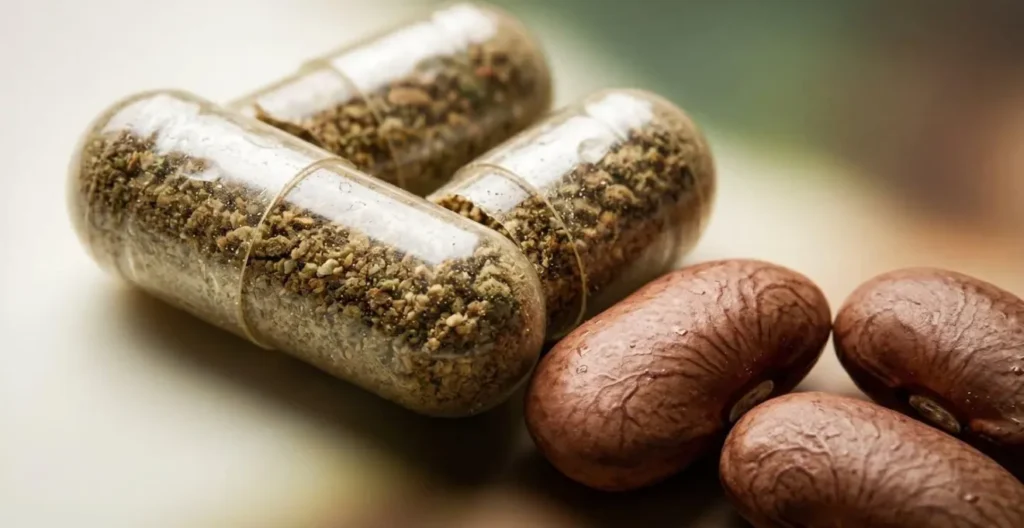
Certain herbs are known to be particularly taxing on the liver (hepatotoxic), such as Kava and Comfrey. But even seemingly benign herbs can contribute to the cumulative strain. If liver or kidney function is already compromised—a common condition in older age—the body may struggle to clear these substances, allowing them to build up to toxic levels or interact in unpredictable ways. This is why a dosage that is safe for a 40-year-old may be risky for an 80-year-old. It’s not about the herb being ‘bad’; it’s about the context of the body it’s entering.
When Should You Discuss Herbal Remedies With Your GP vs When Can You Safely Self-Treat?
Navigating the world of herbal supplements requires a clear understanding of when it’s safe to self-manage and when professional guidance is non-negotiable. Given that a significant number of seniors are mixing prescriptions with supplements, often without professional oversight, having a mental framework for risk is crucial. In fact, a cross-sectional survey of UK older adults found that 33.6% were concurrently using herbal remedies with their prescription medicines, highlighting the scale of this unmonitored practice.
A simple « traffic light » system can help you stratify the risk and decide on the appropriate course of action. This isn’t a substitute for medical advice, but rather a tool to help you think through the variables. You can apply this logic by performing a quick personal safety audit before taking any new supplement.
Your 5-Step Herbal Safety Self-Audit
- List Your Full Intake: Before anything else, create a comprehensive list. This includes all prescription medications, over-the-counter drugs (like aspirin or ibuprofen), vitamins, and any herbal teas or supplements you take, even if only occasionally. This is your complete « intake profile. »
- Inventory Your Health Profile: Alongside your intake list, write down all your diagnosed health conditions, paying special attention to any pre-existing liver or kidney issues, blood clotting disorders, or upcoming surgeries. This provides the essential context for your body’s current state.
- Check for Absolute Red Flags: Review your lists against the highest-risk factors. If you are on ANY prescription medication—especially blood thinners (e.g., warfarin), heart medications (e.g., digoxin), immunosuppressants, or antidepressants—you are automatically in a « Red Light » zone. Any self-treatment is unsafe.
- Evaluate the Evidence vs. the Risk: Consider the specific herb. Is it for a minor, temporary issue (e.g., ginger tea for nausea) or a chronic condition? Is it a well-researched, high-quality product for which you have clear information, or a generic bottle from the supermarket with vague claims? A low-risk situation involves a single, well-understood herb for a minor issue when on no other medications.
- Define Your Action Plan: Based on your audit, decide your next step. If you identified any Red Flags, the only action is to book a GP consultation before proceeding. If you’re in a « Yellow Light » zone (e.g., taking an over-the-counter drug, have a stable pre-existing condition), your first stop should be a discussion with your local pharmacist. Safe self-treatment (« Green Light ») is reserved only for very low-risk scenarios.
The core principle, as advised by NHS guidance, is proactive communication. When in doubt, the safest option is always to ask a healthcare professional. Your GP or pharmacist can provide personalised advice based on your complete health picture, turning a potential risk into a safe and informed choice.
The 8-Medication Threshold Where Drug Interactions Start Causing More Harm Than Benefit
The term polypharmacy refers to the use of multiple medications at once, a situation that is increasingly common among older adults. While each prescription may be necessary to manage specific conditions, the cumulative effect of these drugs can create a cascade of unforeseen problems. Research suggests that as the number of medications increases, the risk of adverse drug reactions and interactions grows exponentially. A threshold is often cited around five to eight medications, where the potential for harm can begin to outweigh the intended benefits.
Herbal remedies and dietary supplements must be counted in this total. They are not inert substances; they contain biologically active compounds that add to the body’s overall « medication load. » When you add one or two herbs to a regimen of six prescription drugs, you are effectively taking eight different substances that can all interact. This is a significant issue, yet it often goes undiscussed in the clinic.
physicians rarely initiate discussions about their use with older patients
– Systematic review on supplement use and drug interactions, Annals of Internal Medicine (2016)
This communication gap is a critical failure point in patient safety. It leaves the patient—who may be unaware of the risks—solely responsible for managing a complex biochemical balancing act. The consequences can be severe, leading to symptoms like dizziness, confusion, falls, or even organ damage, which are often mistakenly attributed to « old age » rather than to a preventable drug-herb interaction. Counting every single pill, capsule, and tincture is the first step toward recognising when your personal medication total has entered the high-risk zone.
Which Common Supplements Interfere With Blood Thinners, Statins, or Blood Pressure Medications?
For seniors, medications that manage cardiovascular health and cholesterol are among the most common and most critical. Blood thinners like warfarin, statins like atorvastatin, and various blood pressure drugs are literal lifesavers. They are also among the most susceptible to interactions with herbal supplements, because their therapeutic windows are often very narrow, meaning even a small change in their concentration can have a big effect.
St. John’s Wort is perhaps the most notorious interactor. It induces, or speeds up, a key group of liver enzymes known as the cytochrome P450 (CYP3A4) system. These enzymes are responsible for metabolising over half of all pharmaceutical drugs. By accelerating their activity, St. John’s Wort can cause the body to break down and clear medications like statins and calcium channel blockers too quickly, rendering them ineffective. The Mayo Clinic explicitly warns of its wide-ranging effects, stating that « St. John’s wort interacts with many medicines and can cause serious side effects. »
Other herbs pose different risks. Ginkgo biloba and Garlic have blood-thinning properties of their own. When taken with an anticoagulant like warfarin, they can create an additive effect, dramatically increasing the risk of uncontrolled bleeding. The following table summarises some of the most critical interactions a senior might encounter.
| Drug Class | Interacting Herb | Mechanism | Clinical Risk |
|---|---|---|---|
| Blood Thinners (Warfarin) | St. John’s Wort, Ginkgo, Garlic | Altered metabolism / Additive effect | Increased bleeding or clotting risk |
| Statins (Atorvastatin, Simvastatin) | St. John’s Wort | Accelerated breakdown via CYP3A4 | Reduced cholesterol control |
| Blood Pressure Medications | Licorice, Hawthorn | Duplicator effect / Electrolyte imbalance | Dangerous hypotension or hypertension |
| Diabetes Medications | Ginseng, Fenugreek | Additive blood sugar lowering | Hypoglycemia risk |
This table, based on data from clinical interaction databases, is not exhaustive but illustrates the core mechanisms at play. Understanding these specific, high-stakes combinations is essential for anyone on these common long-term medications.
Key Takeaways
- ‘Natural’ does not equal ‘safe’, especially when combined with prescription medications.
- Aging reduces the liver and kidneys’ ability to process substances, increasing the risk of interactions and toxicity.
- Always count supplements as part of your total ‘medication load’ to avoid overwhelming your system.
Why Do 35% of UK Seniors Use Complementary Therapies Without Telling Their GP?
The fact that so many older adults use herbal remedies without informing their doctors is not a sign of carelessness, but rather a reflection of a complex communication gap. There are several powerful reasons why a patient might choose to stay silent. Many fear a dismissive or judgemental reaction from their GP, who may view herbal medicine as unscientific or foolish. This can lead patients to feel that their desire for a more ‘natural’ approach will be disrespected.
Another significant factor is the fundamental misconception that these products are not ‘real medicine’. If a person believes an herbal tea or a vitamin supplement is more akin to food than a drug, they may not think it’s relevant information to share with their doctor. They simply don’t realise that the active compounds can and do have potent pharmacological effects. This silence creates a dangerous blind spot in their medical care, leaving the GP to make prescribing decisions based on incomplete information.
Bridging this gap is arguably the single most important step in ensuring safety. It requires a shift in perspective from both patients and doctors. The ultimate strategy for preventing harmful herb-drug interactions is not a database or a warning label, but open and honest dialogue. This is a view strongly supported by leading medical bodies.
the most important strategy for detecting herb-drug interactions is to develop a trusting relationship that encourages patients to discuss their dietary supplement use
– American Academy of Family Physicians, AAFP Clinical Review on Herbal Supplement-Drug Interactions
For patients, this means seeing your GP and pharmacist as partners in your overall wellbeing. It means having the confidence to present your full list of medications and supplements, framed not as a confession, but as crucial data for your safety. For a healthcare system, it means fostering an environment where these conversations are encouraged, not dismissed.
Ultimately, taking control of your health means being an active, informed participant in your own care. Armed with an understanding of metabolic load, polypharmacy, and the specific risks of interactions, you are no longer a passive consumer of pills. You are an empowered manager of your own wellbeing. The next time you consider a new supplement, you can approach the decision with a clear-eyed assessment of the risks and benefits. The logical next step is to take this knowledge and use it to initiate a proactive, comprehensive medication review with your trusted healthcare provider.