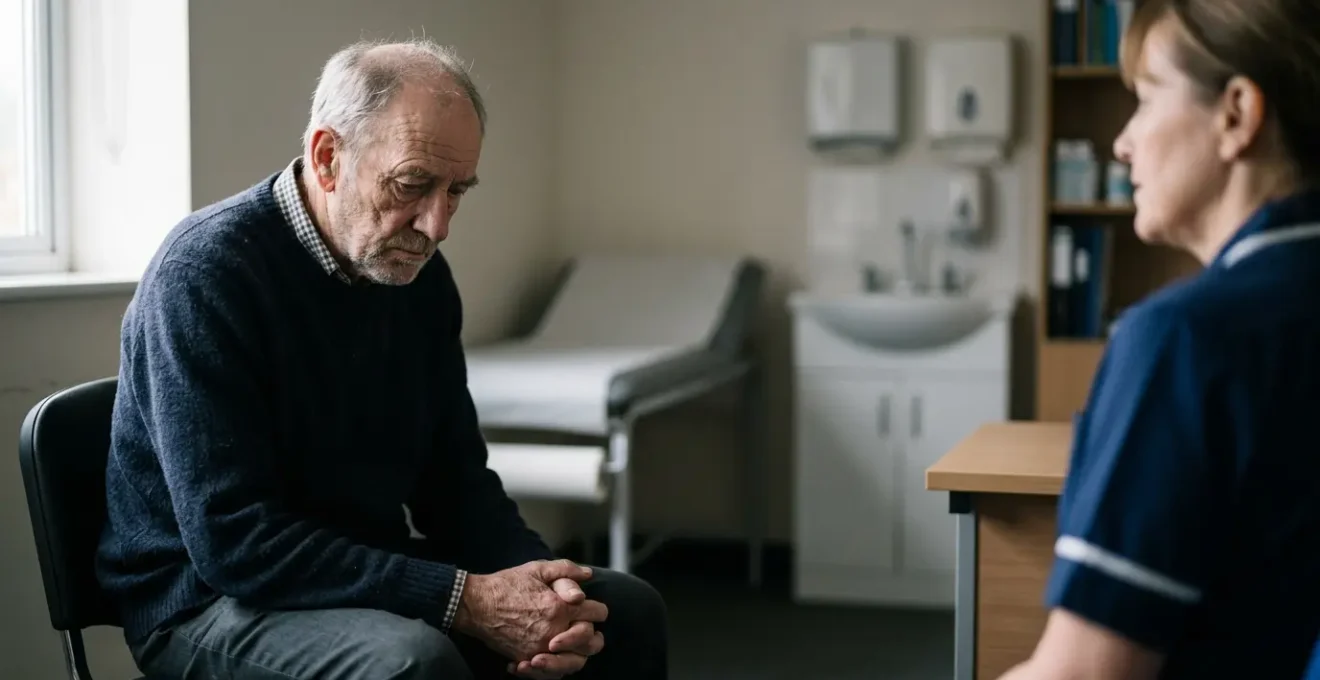
Contrary to the common belief that persistent low mood and fatigue are a ‘normal’ part of ageing, they are often signs of a treatable medical condition that is systematically overlooked in UK primary care.
- Depression in seniors often manifests as physical complaints (somatic symptoms) like fatigue and pain, masking the underlying psychological distress.
- GPs may exhibit ‘therapeutic nihilism’, avoiding diagnoses of loneliness or depression because they feel they lack effective, prescribable solutions.
Recommendation: Proactively preparing for your GP appointment with objective data (like a completed GAD-7/PHQ-9 form) and specific requests for NHS Talking Therapies or a Social Prescribing referral is the most effective strategy to secure the care you need.
If you’re over 65, you may be familiar with a certain kind of fatigue that settles deep in your bones, a new ache that appears without explanation, or sleep that no longer feels restorative. Often, these are dismissed by ourselves, our families, and sometimes even our GPs, as an inevitable part of getting older. The common refrain is that a certain amount of sadness, particularly after a bereavement or a change in health, is to be expected. We’re told to ‘keep a stiff upper lip’ and carry on.
While resilience is a virtue, this perspective masks a critical public health issue. A significant portion of what is labelled ‘just old age’ is, in fact, treatable depression or anxiety. The problem is that these conditions in older adults often don’t look like the textbook definitions we see in younger people. They wear a disguise, a physical one, leading to a cascade of misdiagnosis, under-treatment, and missed opportunities for reclaiming a good quality of life. According to 2017 YouGov research commissioned by Age UK, nearly half of adults aged 55+ in the UK have experienced depression or anxiety, yet a staggering number never receive help.
But what if the key wasn’t simply to ‘feel better’, but to understand this disguise? What if, by learning to recognise the subtle, physical language of late-life depression, you could become your own best advocate within the NHS system? This isn’t about challenging your GP’s expertise, but about forming a better therapeutic alliance. It’s about translating vague feelings of being ‘off’ into a clear case for assessment and support.
This article will provide you with the clinical insights and practical tools to do just that. We will explore why your symptoms might be overlooked, how to effectively communicate with your GP, understand the real-world risks and benefits of treatments after 70, and discover NHS pathways that you can often access directly. This is your guide to navigating the system and demanding the standard of care you are entitled to.
This article provides a comprehensive overview of the challenges and solutions related to mental health in older adults in the UK. The following sections will guide you through understanding the symptoms, navigating the NHS, and finding the right support for you.
Summary: Overcoming the Underdiagnosis of Depression in Seniors
- Why Does Depression in Seniors Look Like Physical Illness Instead of Sadness?
- How to Get a Referral to NHS Talking Therapies When Your GP Says Sadness Is Normal at Your Age?
- SSRIs vs CBT After 70: Which Treatment Has Fewer Side Effects and Better Adherence?
- The Common Painkiller Combination That Doubles Confusion Risk in Anxious Seniors
- How Early Should You Seek Help for Low Mood to Avoid Psychiatric Admission Later?
- How Can Someone with Weekly Visitors Still Be Clinically Isolated?
- The First Meeting Fear: How to Walk Into a Bereavement Support Group When You Would Rather Stay Home
- Why Does Your GP Never Ask About Loneliness Even Though It Predicts Dementia Better Than Genetics?
Why Does Depression in Seniors Look Like Physical Illness Instead of Sadness?
One of the primary reasons depression is missed in older adults is due to its “somatic presentation.” This clinical term means the distress manifests not as overt sadness or crying, but as a constellation of physical complaints. You might report persistent fatigue, disturbed sleep, new or worsening aches and pains, loss of appetite, or a general feeling of ‘slowing down’. These symptoms are real and debilitating, but because they overlap so significantly with other chronic conditions common in later life—like arthritis, heart disease, or diabetes—they are often attributed solely to those physical illnesses.
A GP managing a patient with multiple health issues may focus on optimising their blood pressure or pain management, inadvertently missing the underlying depressive component that is exacerbating those physical feelings. This is not necessarily negligence; it’s a diagnostic challenge. The classic “affective” symptoms of depression, such as low mood and loss of pleasure (anhedonia), may still be present, but they are not what the patient leads with in the consultation. Instead, the chief complaint is “I just feel so tired all the time, Doctor.”
This phenomenon is backed by robust research. A 2023 study confirmed that in older adults, somatic complaints like ‘everything was an effort’ showed stronger predictive relationships with a depression diagnosis than purely emotional symptoms. This is what I refer to as Somatic Masking: the psychological distress is wearing a physical mask, and unless both patient and doctor are prepared to look behind it, the true cause of the suffering remains hidden. Recognising this is the first step toward getting the right diagnosis and treatment.
How to Get a Referral to NHS Talking Therapies When Your GP Says Sadness Is Normal at Your Age?
It can be profoundly invalidating to summon the courage to speak to your GP about low mood, only to be told that it’s a “normal part of ageing” or an “understandable reaction” to your circumstances. While there is truth in the latter, it should be the beginning of a conversation about support, not the end. The reality is that older adults are significantly under-represented in psychological therapy services. In fact, under 2% of clients accessing NHS Talking Therapies are over 65, a figure far below the government’s own target of 12%. This gap highlights a systemic barrier that you, as a patient, may need to actively overcome.
The key is to shift the conversation from subjective feelings to objective impact. Instead of just saying “I feel sad,” frame it in terms of function: “My low mood is affecting my sleep, which is making my joint pain worse,” or “I no longer have the energy or motivation to do the food shopping.” This language of functional impairment is much harder for a clinician to dismiss. You must become a proactive advocate for your own care, armed with the right tools and language.
This image of quiet determination is what we are aiming for. Taking control of your health information is an empowering first step. Many of the tools required, such as health questionnaires, are now available online, allowing you to prepare in advance and present your GP with clear, structured information that aligns with their own diagnostic processes.
Your Action Plan: Accessing NHS Talking Therapies
- Turn Subjective to Objective: Before your appointment, find and complete a PHQ-9 (for depression) or GAD-7 (for anxiety) questionnaire online. These are the standard tools used by the NHS. Bring your score to the appointment. This turns “I feel low” into “I scored 14 on the PHQ-9, which indicates moderate depression.”
- Use the NHS Constitution: During your appointment, use this specific script: “Under the NHS Constitution, I have the right to choose the most appropriate treatment for me. I would like to discuss a referral to NHS Talking Therapies as an option, as my quality of life is being significantly affected.”
- Bypass the Gatekeeper: If your GP is still unhelpful, remember that in most parts of England, you can self-refer to NHS Talking Therapies. Use the official NHS service finder online to locate your local service and contact them directly, completely bypassing the need for a GP referral.
SSRIs vs CBT After 70: Which Treatment Has Fewer Side Effects and Better Adherence?
Once a diagnosis of depression or anxiety is made, the conversation turns to treatment. The two primary evidence-based options offered within the NHS are antidepressant medications, most commonly Selective Serotonin Reuptake Inhibitors (SSRIs), and talking therapies, such as Cognitive Behavioural Therapy (CBT). For older adults, the choice between them is not straightforward and requires careful consideration of the specific risks and benefits unique to this age group.
SSRIs like Sertraline or Citalopram are often a GP’s first-line recommendation due to their accessibility. However, polypharmacy—the use of multiple medications—is a major concern in seniors. Older bodies metabolise drugs differently, and adding an SSRI to a regimen that may already include tablets for blood pressure, cholesterol, and pain can increase the risk of drug interactions and side effects. These can range from nausea and dizziness to more serious issues like low sodium levels (hyponatremia) or an increased risk of falls. Adherence can become a problem if side effects are burdensome.
On the other hand, CBT is a structured talking therapy that teaches you to identify and challenge negative thought patterns and behaviours. Its primary advantage is the absence of physical side effects and drug interactions. It empowers you with lifelong skills to manage your mood. However, it requires significant commitment—typically a one-hour session every week for 12-20 weeks, plus ‘homework’. For those with mobility issues, cognitive impairment, or low energy, this can be a barrier. Fortunately, many NHS services now offer telephone or video-based CBT, which can improve access. For many seniors, a ‘stepped-care’ approach, starting with a non-pharmacological intervention like CBT, is the safest and often most effective long-term strategy.
Clinical Evidence: The Underestimated Fall Risk of Antidepressants
It’s a common misconception that only sedating medications cause falls. A major review by the Agency for Healthcare Research and Quality (AHRQ) challenged this. They analysed 19 randomised controlled trials and found that duloxetine, a common SNRI antidepressant, significantly increased the risk of falls in older adults compared to a placebo. As a direct result of this and similar evidence, the official 2019 Beers Criteria—a key clinical guideline—now recommends that clinicians use SSRIs and SNRIs with extreme caution in older adults who have a history of falls or fractures. This highlights the critical need to weigh the mood benefits of a medication against its potential to cause physical harm.
The Common Painkiller Combination That Doubles Confusion Risk in Anxious Seniors
In old age psychiatry, we are acutely aware of the dangers of polypharmacy. One of the most hazardous, yet surprisingly common, combinations is the concurrent prescription of an opioid painkiller and a benzodiazepine. You might be taking an opioid like co-codamol for arthritis pain and a benzodiazepine like diazepam (Valium) to help with anxiety or sleep. While each may be prescribed for a valid reason by different doctors, their combined effect can be devastating.
Both drug classes act as central nervous system depressants. When taken together, their effects are not just additive, but synergistic, meaning the combined impact is greater than the sum of its parts. This significantly increases the risk of excessive sedation, cognitive impairment (confusion), falls, and respiratory depression (dangerously slowed breathing). For a senior who may already have some level of frailty or cognitive change, this combination can be the tipping point into a state of delirium or a serious, fall-related injury. It’s a risk that is often underestimated in busy primary care settings.
The responsibility for managing this risk shouldn’t fall solely on you, but being an informed patient is your best defence. Many people are unaware of what is in their medications; for example, they may not realise that co-codamol contains an opioid (codeine). Before accepting any new prescription, especially for anxiety or sleep, you must become an active participant in a medication review. Questioning your GP or pharmacist is not a sign of mistrust; it is a vital act of self-preservation.
Your Checklist: Questions Before Taking Concurrent Prescriptions
- “Does this new medication interact with my current opioid painkiller (like co-codamol) or benzodiazepine (like diazepam)?” Don’t wait to be told. Ask directly. Request a Structured Medication Review (SMR) from your GP practice or a free Medicines Use Review (MUR) from your community pharmacist.
- “What are the specific signs of confusion or excessive sedation that my family should watch for?” You may not notice the changes in yourself. Ask for clear, written instructions to share with a spouse, child, or carer.
- “Are there non-pharmacological alternatives we can try first?” Before adding another pill, push for a stepped-care approach. This could be physiotherapy for pain or, as discussed, talking therapy for anxiety.
- “Can we schedule more frequent monitoring if I must take both?” If the combination is deemed clinically essential, insist on a clear plan for regular follow-up appointments to check for adverse effects.
How Early Should You Seek Help for Low Mood to Avoid Psychiatric Admission Later?
There is a dangerous misconception that seeking help for mental health is a sign of weakness or a last resort. In reality, early intervention is the single most effective way to prevent a mild-to-moderate issue from escalating into a crisis that requires hospitalisation. The stark truth is that the vast majority of older people struggling with depression in the UK receive no professional support whatsoever. Shockingly, 85% of older people with depression receive no help at all from the NHS. This is not just a statistic; it represents millions of people whose suffering is prolonged and deepened by inaction.
Waiting until you are at a breaking point is a high-risk strategy. By the time mood and motivation have deteriorated to that level, the ability to engage with treatment, whether it’s therapy or medication, is severely compromised. A severe depressive episode can impair cognition, making it difficult to learn the skills of CBT, and can reduce appetite and energy to the point where starting a new medication feels overwhelming. Early intervention, when you still have cognitive and physical reserves, provides a crucial “scaffolding” of support to prevent a more serious collapse. The question isn’t “Am I sick enough to get help?” but rather “Could I benefit from support to prevent things from getting worse?”
This image of withdrawal is a powerful visual representation of what happens when help isn’t sought. It’s a quiet fading away that family members or friends might notice. It is crucial to act when these early, subtle signs appear, rather than waiting for an undeniable crisis. There are specific behavioural changes that serve as urgent red flags, indicating that the time for ‘watchful waiting’ is over and professional help is needed immediately.
Three Red Flags Demanding Urgent Action
- Sudden Self-Neglect: An abrupt and noticeable decline in personal hygiene, not eating properly, or letting household tasks slide. This is distinct from a gradual, age-related slowing down and signals a significant shift in mental state.
- Stopping Essential Medication: If you or a loved one starts to “forget” or deliberately stops taking prescribed medication for a serious physical condition like diabetes or heart disease, it can be a sign of profound hopelessness or cognitive decline linked to depression.
- Abrupt Social Withdrawal: Not just wanting more quiet time, but a complete cessation of contact. Suddenly not answering the phone, refusing all visitors, and dropping out of previously enjoyed activities (like a weekly club, church service, or family calls) is a serious warning sign.
How Can Someone with Weekly Visitors Still Be Clinically Isolated?
One of the most painful paradoxes in later life is the experience of feeling profoundly lonely even when surrounded by people. Many families ensure a parent or grandparent receives weekly visits, believing they have solved the problem of isolation. Yet, clinically, the person can remain just as isolated as someone who sees no one at all. This is because we must distinguish between loneliness (the subjective feeling of being alone) and social isolation (the objective lack of quality social connection).
A weekly 30-minute visit from a well-meaning but busy family member can easily become a superficial, “tick-box” exercise. The conversation skims the surface—”Have you taken your pills? Are you eating?”—without ever touching on the deeper emotional connection that provides true sustenance. This is a point reinforced by clinical experts.
Weekly family visits can become a ‘tick-box’ exercise with superficial conversations that fail to provide genuine emotional connection. The visitors, while well-intentioned, do not replace the sense of purpose and identity that came from work or being a spouse.
– Clinical guidance from the Royal College of Psychiatrists, Depression in Older Adults – Mental Health Resource
Furthermore, there is the crucial concept of “functional isolation,” where physical barriers prevent connection despite physical presence. A person may be in a room full of family but be unable to participate in the conversation, leading to a profound sense of being on the outside looking in.
Case Study: Hearing Loss as a Driver of Functional Isolation
Research from the Mental Health Foundation highlights untreated hearing loss as a major, overlooked driver of isolation. Consider a grandfather at a weekly family Sunday lunch. The room is full of laughter and overlapping conversations. Despite being physically present, his significant hearing impairment means he can only catch snippets. He smiles and nods, but cannot follow the stories or contribute. He is functionally isolated. His family sees him there and assumes he is included, while he feels more alone than ever. The availability of free NHS hearing tests is widely publicised, yet uptake remains low, particularly among older men who often dismiss hearing loss as an irreversible part of ageing rather than a treatable condition that unlocks social connection.
The First Meeting Fear: How to Walk Into a Bereavement Support Group When You Would Rather Stay Home
After the loss of a loved one, especially a long-term partner, the resulting grief and loneliness can be overwhelming. Well-meaning friends or your GP might suggest joining a bereavement support group, an evidence-based way to process grief. But for many, the thought of walking into a room of strangers to talk about their most painful feelings is utterly terrifying. This “first meeting fear” is a formidable barrier. The anxiety about being forced to speak, of crying in front of others, or simply not knowing what to expect, can be so intense that it’s easier to just stay home, perpetuating the very isolation the group is designed to alleviate.
The key to overcoming this is to reframe the task. Don’t think of it as a single, monumental hurdle (“I have to go to this group”). Instead, break it down into a series of small, manageable steps, a clinical technique known as staged exposure. The goal of the first step is not to share your soul, but simply to make a phone call. The goal of the next is not to stay for a whole session, but perhaps for just 15 minutes. By creating a series of achievable mini-goals, you gradually reduce the anxiety and build the confidence needed to engage fully.
This approach puts you in complete control. At every stage, you have the power to decide whether to proceed or to pause. It transforms a daunting leap of faith into a gentle, planned progression. Many organisations, like Cruse Bereavement Support or Age UK, understand this fear and have structured their services to accommodate this gentle entry.
Your Staged Plan for Joining a Support Group
- Stage 1 (This Week): The Anonymous Call. Find the helpline for a reputable organisation (like Cruse or The Silver Line). Make an anonymous call. Your goal is simply to gather information. Ask practical questions: “How many people usually attend?” “Is there any pressure to speak on your first time?” “Can I just listen?”
- Stage 2 (Next Week): The Pre-Meeting. Ask the group coordinator if they offer a one-on-one chat with a facilitator before a group meeting. Many do. This allows you to meet one person in a quiet setting, put a face to a name, and understand the group’s culture without the pressure of an audience.
- Stage 3 (The Following Week): The 15-Minute Agreement. Attend your first group meeting with a clear, pre-agreed plan: you will stay for just 15 minutes. You can even inform the facilitator of your plan. Give yourself explicit permission to leave, no questions asked. This removes the fear of being trapped.
- Alternative Path: The Digital Foothold. If face-to-face still feels impossible, start with a moderated online community or forum run by an organisation like Mind or Age UK. This allows you to engage with others from the safety of your own home, completely anonymously, before ever considering an in-person group.
Key Takeaways
- Depression in seniors is a medical condition, not a normal part of ageing, and it often presents with physical symptoms like fatigue and pain.
- You have a right to effective care; use patient advocacy scripts and self-referral pathways to access NHS Talking Therapies if your GP is dismissive.
- Early intervention is key. Acting on red flags like self-neglect or social withdrawal can prevent a mental health crisis and potential hospitalisation.
Why Does Your GP Never Ask About Loneliness Even Though It Predicts Dementia Better Than Genetics?
It is a startling fact that chronic loneliness has been shown in major studies to be a more powerful predictor of developing late-life dementia than a person’s genetic makeup. It is also a significant risk factor for depression, heart disease, and overall mortality. Given these profound health implications, it seems logical that your GP would screen for it as routinely as they check your blood pressure. Yet, in the vast majority of consultations, the question “Are you feeling lonely?” is never asked.
The reason for this is often not a lack of awareness, but a feeling of powerlessness, a phenomenon sometimes called “therapeutic nihilism.” Many GPs know that loneliness is a problem, but they feel they have no effective tools to treat it. They cannot write a prescription for friendship. This has been exacerbated by years of austerity policies that have seen many of the community centres, lunch clubs, and local authority services that used to form the fabric of social connection get progressively defunded. As one clinical review notes, the question is avoided because the doctor has no ready answer.
GPs often feel powerless to ‘prescribe’ a solution for loneliness… They may avoid asking the question because they don’t have a readily available answer.
– Research insight from British Journal of General Practice systematic review, Management of depression and referral of older people
However, the landscape is changing. The NHS has recognised this gap and has implemented a new solution directly into primary care: Social Prescribing. Every GP practice in England is now funded to have access to a Social Prescribing Link Worker. This is a non-medical professional whose entire job is to connect patients with local, non-clinical community groups and services—from walking clubs and art classes to bereavement support and debt advice. They are the “prescription for friendship” that GPs previously lacked. The problem is, many GPs are still not proactively using this service. Once again, it falls to the informed patient to ask for it.
How to Proactively Request a Social Prescribing Referral
- Prepare Your Script: Go into your appointment with a clear request: “Doctor, I’ve read about the health impact of loneliness and the role of Social Prescribing Link Workers. Could you please refer me to our practice’s social prescriber?”
- Emphasise Function, Not Feelings: Frame the issue in medical terms. Instead of “I’m lonely,” try “I believe my social isolation is affecting my sleep and my appetite, and I’d like to address it as part of my overall health.” This helps the GP see it as a clinical issue they can act on.
- Follow Up in Writing: If your GP seems unaware of the service, don’t be deterred. The funding and mandate are in place under the NHS Long Term Plan. Send a polite follow-up email to the practice manager asking for confirmation of your referral to the Social Prescribing Link Worker.
You are not a collection of symptoms to be managed, but a whole person deserving of a life with quality and connection. By understanding the system, preparing for your appointments, and advocating for yourself with clear, specific language, you can overcome the barriers of underdiagnosis and access the support you are entitled to. The first step, and often the hardest, is recognising that you deserve to feel better, and that help is available.