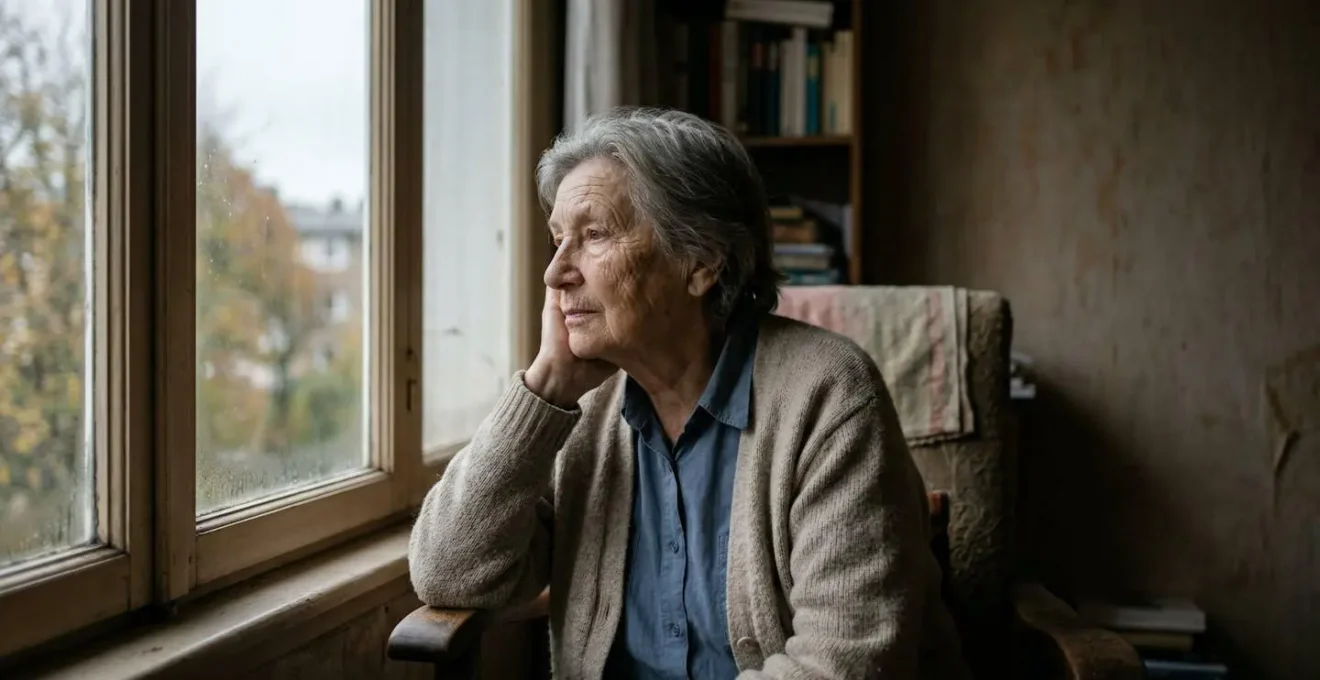
Your GP’s silence on loneliness isn’t just an oversight; it’s a gap in care that ignores one of the biggest predictors of serious illness in seniors.
- Loneliness triggers a biological cascade, increasing risks for dementia (27%), heart attacks (29%), and type 2 diabetes (twofold).
- In the UK, depression in seniors is underdiagnosed by up to 70% because it often presents as physical pain, not sadness.
Recommendation: Treat social isolation as a clinical issue. Proactively discuss it with your GP and explore structured solutions like social prescribing or befriending services.
You know the feeling. You’re in the GP’s surgery, perhaps for a blood pressure check or a repeat prescription, and you have about seven minutes. There’s a list of physical symptoms to get through, but the quiet, gnawing feeling of isolation that shadows your days doesn’t make the cut. It feels too personal, too vague, not a “real” medical problem. Your doctor doesn’t ask, so you don’t mention it. As a public health physician, I see the devastating consequences of this silence every day. The conventional wisdom is to “join a club” or “get out more,” but this advice fundamentally misunderstands the issue.
This isn’t about feeling sad; it’s about a physiological state that actively damages the body. The medical community has been slow to react, often mistaking the symptoms of profound loneliness for the inevitable aches and pains of ageing. But what if we reframed the conversation? What if we started treating social isolation not as a personal failing, but as a critical, measurable, and manageable clinical risk factor, much like high cholesterol or smoking?
This article will unpack the science behind why loneliness is a medical emergency in plain sight. We will explore why the NHS is now prescribing social activities as if they were medication, examine the biological mechanisms that link isolation to heart attacks and diabetes, and reveal why depression in seniors is so often missed. Most importantly, we will provide you with the understanding and language to turn that silence in the GP’s office into a life-saving conversation.
To navigate this crucial topic, we have structured this article to answer the most pressing questions you may have. The following summary outlines the key areas we will explore in detail.
Summary: Why Loneliness is a Clinical Emergency
- Why Did the NHS Start Prescribing Social Activities Like Medication?
- How Can Someone with Weekly Visitors Still Be Clinically Isolated?
- Befriending Services vs Day Centres: Which Works Better for Severely Isolated Seniors?
- The Vicious Cycle: How Untreated Loneliness Worsens Diabetes, Which Worsens Loneliness
- How Long Can You Live Alone Before Social Withdrawal Becomes Irreversible?
- Why Does Living Alone After 75 Raise Your Heart Attack Risk by 29%?
- Why Does Depression in Seniors Look Like Physical Illness Instead of Sadness?
- Why Are Depression and Anxiety in Over-65s Underdiagnosed by 70% in UK Primary Care?
Why Did the NHS Start Prescribing Social Activities Like Medication?
The concept of a doctor “prescribing” a walking group or a community choir might seem unusual, but it represents a profound shift in how the NHS understands health. For decades, medicine focused almost exclusively on the biological. Now, we recognise that health is created and sustained in the community, not just the clinic. Social prescribing, or community referral, is the formal mechanism for connecting patients with non-medical support to address the underlying causes of poor health.
The reason for this change is rooted in overwhelming evidence. We now know that loneliness and social isolation are not just emotionally painful; they are drivers of illness and a major burden on healthcare resources. Research from the University of Westminster shows that when individuals receive this kind of support, GP consultations reduce by an average of 28% and A&E attendances by 24%. These are not trivial numbers; they represent thousands of appointments freed up and significant cost savings, allowing GPs to focus on more complex medical cases.
The initiative has scaled rapidly. According to a 2024 report from the National Academy for Social Prescribing, there are now over 3,600 Social Prescribing Link Workers embedded in GP practices across England. These professionals act as a bridge, taking the time that a GP doesn’t have to understand a person’s life and connect them with local services. This systemic response acknowledges that a prescription for antidepressants may only numb the pain of loneliness, whereas a “prescription” for human connection can begin to heal it.
How Can Someone with Weekly Visitors Still Be Clinically Isolated?
One of the most persistent and dangerous misconceptions about loneliness is that it is the same as being alone. A senior may have family visiting every weekend and a paid carer checking in daily, yet still experience a profound sense of clinical isolation. This is because we must distinguish between quantitative social contact (the number of people one sees) and qualitative social connection (the feeling of being understood, valued, and belonging).
Clinical isolation is a deficit in the latter. It’s the feeling that there is no one with whom you can share your deepest fears or joys. The weekly family visit might be rushed, preoccupied with practical tasks like shopping or cleaning, leaving no space for meaningful conversation. A friendly carer is a comfort, but the relationship is professional, not one of reciprocal intimacy. This distinction is especially critical for people living with cognitive decline. A comprehensive review by RTI International found that while two-thirds of people living alone with dementia report feeling isolated, many who live with others feel just as disconnected.
This emotional distance, despite physical proximity, is the heart of the problem. It is a state of being disconnected from a network of mutual support and shared identity, which is fundamental to human psychological wellbeing.
As this image suggests, closeness without connection creates its own kind of void. The chairs are near each other, but they face away, occupying the same space but not sharing the same world. For a senior, this can be the difference between surviving and thriving. The lack of a trusted confidante—someone who truly “gets” them—is a silent stressor that can have significant health consequences, regardless of how many people pass through their door.
Befriending Services vs Day Centres: Which Works Better for Severely Isolated Seniors?
When seeking to bridge the gap of social isolation, families and individuals are often faced with a choice between different types of support. Two of the most common are befriending services and adult day centres. While both aim to increase social connection, they function differently and are suited to different needs, particularly for those with severe isolation or cognitive decline.
Befriending services typically involve a volunteer visiting a person in their own home for a few hours each week or making regular phone calls. The focus is on building a one-to-one relationship. This model is ideal for individuals who are housebound, find group settings overwhelming, or crave a deep, consistent personal connection. The relationship is the intervention. It provides a reliable, friendly face and a listening ear, which can be a lifeline for someone who has lost their social network.
Adult day centres, by contrast, offer a structured group environment outside the home. They provide a range of activities, meals, and the opportunity to interact with a variety of peers. This is highly beneficial for individuals who are still mobile and can benefit from the stimulation of a group setting. According to insights from RTI International, day programs are particularly effective at reducing social isolation for people with dementia by providing meaningful engagement and peer connection opportunities. They also offer crucial respite for family caregivers.
The Power of Connection: Dr. G. Allen Power on Dementia and Loneliness
As geriatrician and dementia educator Dr. G. Allen Power eloquently states, “Loneliness in dementia isn’t about being alone—it’s about feeling disconnected from the world in ways we can’t always see. A touch, a song, or simply sitting together in silence can bridge that gap when words no longer can.” This highlights that the “best” service is the one that most effectively creates that bridge. For some, it’s the quiet companionship of a befriender; for others, it’s the shared laughter in a day centre activity room.
The choice is not about which is “better” in a vacuum, but which is the best fit for the individual’s personality, mobility, cognitive state, and specific social needs. Often, a combination of both can be the most effective approach.
Action Plan: Choosing the Right Social Support
- Assess Mobility and Stamina: Can the person easily leave the house? Is a full day of activity feasible or would a short home visit be more appropriate?
- Consider Personality: Is the individual an introvert who would thrive with one-to-one connection, or an extrovert who would be energised by a group environment?
- Evaluate Cognitive Needs: Does the person require specialised dementia-friendly activities, or are they seeking simple companionship and conversation?
- Factor in Caregiver Respite: Does the primary family caregiver need a break for several hours? A day centre can be invaluable for this.
- Trial and Observe: Contact local services (your council or Age UK are good starting points) and ask about taster sessions. Observe how your loved one responds to each environment.
The Vicious Cycle: How Untreated Loneliness Worsens Diabetes, Which Worsens Loneliness
The connection between our emotional state and our physical health is nowhere more evident than in the link between loneliness and type 2 diabetes. This isn’t a vague association; it’s a well-documented biological cascade where psychological distress directly triggers metabolic disease. Understanding this cycle is crucial for grasping why loneliness is a medical issue.
It starts with stress. The human body does not differentiate between the stress of being chased by a predator and the chronic, low-grade stress of social isolation. Both trigger the release of the hormone cortisol. In short bursts, cortisol is useful. But when loneliness makes it a constant presence in the bloodstream, it wreaks havoc. Cortisol raises blood sugar levels and, over time, promotes insulin resistance—the hallmark of type 2 diabetes. The evidence for this is stark: a landmark Norwegian study published in Diabetologia demonstrated that individuals who felt most lonely had a twofold higher risk of developing type 2 diabetes over a 20-year follow-up.
This creates a vicious cycle. The diagnosis of a chronic illness like diabetes can itself be isolating. The demands of managing the condition—monitoring blood sugar, dietary restrictions, frequent appointments—can limit social activities and increase feelings of being “different.” As the authors of the Norwegian study note, “Loneliness may also lead to depressive symptoms and/or sleep disturbances, which alter cortisol and glucose levels and increase the risk of type 2 diabetes.” The loneliness fuels the disease, and the disease deepens the loneliness. This is why a GP who only prescribes Metformin without asking about a patient’s social life is only treating half the problem.
How Long Can You Live Alone Before Social Withdrawal Becomes Irreversible?
This is a question that haunts many families, and while there is no definitive timeline, the evidence is clear: the longer social isolation continues, the higher the risk of significant, and potentially irreversible, cognitive harm. The primary concern is dementia. Social engagement is a powerful form of cognitive exercise. It forces the brain to process facial expressions, interpret tone of voice, retrieve memories, and formulate responses in real-time. When this daily “workout” stops, the brain’s functional capacity begins to decline.
Research from Johns Hopkins published in 2023 provided a stark quantification of this risk. The study found that socially isolated older adults have a 27% higher chance of developing dementia than those who are not. The danger is not living alone, but being isolated within those four walls. Over time, social withdrawal can become self-perpetuating. A person loses social skills and confidence, making future interactions more daunting. The world shrinks, and the motivation to engage with it fades. At this point, re-engagement becomes incredibly difficult, though not necessarily impossible.
There isn’t a specific number of months or years where the damage becomes “irreversible.” Rather, it’s a progressive decline. The key takeaway, as stated by study author Dr. Thomas Cudjoe, is that “Social connections matter for our cognitive health, and the risk of social isolation is potentially modifiable for older adults.” The word “modifiable” is a message of hope. It means that intervention at any stage can help. The goal is to act before withdrawal becomes so entrenched that the person has lost the will or the cognitive capacity to reconnect. This is why early detection and intervention are not just helpful; they are critical to preserving long-term brain health.
Why Does Living Alone After 75 Raise Your Heart Attack Risk by 29%?
The image of the lonely senior with a “broken heart” is a cultural trope, but modern science shows it is a physiological reality. The link between social isolation, loneliness, and cardiovascular disease is now as well-established as the link between cholesterol and heart attacks. It’s a public health crisis hiding in plain sight.
The American Heart Association (AHA) took a definitive stance on this in 2022, publishing a scientific statement after reviewing decades of data. Their conclusion was unambiguous. The evidence shows a 29% increase in the risk of heart attack and/or heart disease death, and a 32% increased risk of stroke, for older adults experiencing social isolation. As the chair of the AHA writing group, Dr. Crystal Wiley Cené, stated, “Over four decades of research has clearly demonstrated that social isolation and loneliness are both associated with adverse health outcomes. Given the prevalence of social disconnectedness… the public health impact is quite significant.”
The mechanisms are twofold. First, there’s the direct biological impact. As with diabetes, chronic loneliness increases inflammation and stress hormones like cortisol, which directly damage blood vessels and raise blood pressure. Second, there are the indirect behavioural effects. Someone who is isolated is less likely to eat well, exercise, or adhere to medication schedules. Critically, they have no one to call for help in an emergency or to notice subtle but worrying changes in their health. This combination is lethal.
Case Study: The Stark Reality of Isolation and Heart Failure
The impact is most visible in those already diagnosed with heart conditions. A major study highlighted the dramatic difference in outcomes for heart failure patients based on their social connections. Five-year survival rates were a startling 79% for those who were socially connected and not depressed. This plummeted to just 60% for those who were socially isolated. For an older person living alone, a lack of social connection is a risk factor as dangerous as any clinical metric a doctor might measure.
Why Does Depression in Seniors Look Like Physical Illness Instead of Sadness?
One of the greatest barriers to diagnosing and treating depression in older adults is that it rarely looks like the textbook image of sadness. A younger person might talk about feeling low or crying spells. An older person is far more likely to go to their GP complaining of unexplained pain, crippling fatigue, poor appetite, or insomnia. This phenomenon is known as somatic masking, where psychological distress manifests as physical symptoms.
There are several reasons for this. The “stiff upper lip” generation was often raised to believe that discussing emotions is a sign of weakness. Admitting to psychological pain can feel more shameful than admitting to physical pain. Therefore, a complaint of “a bad back” or “feeling tired all the time” can be a more socially acceptable way to seek help. As researchers noted in the BMC Journal, “Older people can present with nonspecific symptoms such as malaise, tiredness, or insomnia rather than disclosing depressive symptoms.”
This creates a diagnostic nightmare for a busy GP. It is far easier and quicker to investigate a physical complaint—to order a blood test for fatigue or prescribe a painkiller for an ache—than it is to gently probe for the underlying emotional distress. The result is a cycle of investigations and treatments that never address the root cause, leaving the patient feeling unheard and the depression to worsen. The problem is systemic. A shocking 2019 multi-site study of 766 patients in England revealed that 82.3% of older patients admitted to acute hospitals had no record of any assessment for depression in their notes. The focus was entirely on the physical, leaving the mind to suffer in silence.
Key Takeaways
- Loneliness is a clinical risk factor with direct biological consequences, not just a social issue.
- The NHS’s “social prescribing” initiative is an evidence-based response to the high healthcare costs of isolation.
- Depression in seniors often manifests as physical pain and fatigue (somatic masking), leading to massive underdiagnosis in the UK.
Why Are Depression and Anxiety in Over-65s Underdiagnosed by 70% in UK Primary Care?
The fact that depression and anxiety are missed so frequently in older people is a systemic failure with deep roots. The figure of 70% is not an exaggeration; in some cases, the reality is worse. It stems from a convergence of patient behaviour, physician constraints, and ageist attitudes that are baked into the healthcare system.
As we’ve seen, seniors often present with physical symptoms. But the problem is compounded on the clinical side. A foundational UK primary care study found that GPs were aware of depression in only 36 (51%) of 70 depressed patients aged over 65, even when validated assessment tools confirmed the diagnosis. This isn’t because GPs don’t care. It’s because the 7-10 minute appointment structure is ill-suited to unpacking complex, somatised presentations. There’s also the problem of “diagnostic overshadowing,” where a doctor attributes symptoms like fatigue or apathy to a known physical illness (like heart disease or arthritis) or simply to “old age,” without considering that depression could be a co-existing or even primary cause.
This is happening on a massive scale. According to NIHR-funded research, about one in seven people over the age of 75 are clinically depressed. If the recognition rate is only around 50%, we are leaving hundreds of thousands of seniors to suffer without support. The situation is no better in hospitals. As one UK research team concluded bluntly, “Depression is often not recognised or treated among older adults admitted to acute hospitals and national guidelines regarding treatment of inpatients with depression are not being followed.” The system is simply not designed to see it.
This clinical invisibility is the central tragedy. We have effective treatments, from talking therapies to medication to social prescribing. But they cannot be deployed if the problem is never identified. It falls to patients and their families to become advocates, to learn the language of risk, and to insist that their mental and social wellbeing are treated with the same urgency as their physical health.
The next time you or a loved one is in the GP’s office, you can change the conversation. Instead of waiting to be asked, state clearly: “I’m concerned about the health risks of social isolation. Can we make a plan to manage this risk?” By framing it in clinical terms, you are speaking the language the system understands. You are no longer a person with a feeling; you are a patient with a modifiable risk factor, demanding proactive care. This is how the silence is broken.