
The struggle to rise from a chair isn’t an inevitable part of aging, but a treatable condition called sarcopenia, driven by a biological shift known as ‘anabolic resistance’.
- Your body becomes less efficient at using protein to build muscle, requiring higher intake and targeted exercise to see results.
- Even short periods of inactivity (like 10 days of bed rest) can cause significant, rapid muscle loss that is hard to regain.
Recommendation: Focus on progressive resistance training and distributing 25-30g of high-quality protein evenly across your meals to actively combat muscle decline.
The feeling is unnervingly common. You go to stand up from your favourite armchair, and for a moment, your body doesn’t respond as it once did. It requires a push, a second effort, a conscious thought for what was once an automatic movement. This experience, while often dismissed as a simple sign of getting older, is a key indicator of a specific medical condition: sarcopenia, or age-related muscle loss. It’s not just about feeling weaker; it’s a gradual erosion of independence that affects a startling number of individuals, particularly in the UK.
Many will tell you the solution is simply to « eat more protein » or « get some exercise. » While well-intentioned, this advice misses the fundamental biological shift occurring within the body. The rules of muscle maintenance change dramatically as we age. Your body isn’t just losing muscle; it’s actively resisting your efforts to build it back. This phenomenon, known as anabolic resistance, is the real enemy. It means the same meal and the same walk that maintained your strength at 55 are no longer sufficient at 75.
But what if the key wasn’t just to do more, but to do things differently? What if by understanding the precise reasons your body is changing, you could adopt a smarter, more targeted strategy to fight back? This isn’t about chasing the fitness levels of a 30-year-old. It’s about understanding the science of your own body to reclaim function, preserve independence, and turn the tide against weakness. It’s about learning to work with your body, not just against the calendar.
This guide, written from the perspective of a sarcopenia researcher and physiotherapist, will walk you through the essential science and practical steps. We will explore why your body changes, how to train safely and effectively, and what nutritional strategies truly make a difference. The following sections provide a clear roadmap to understanding and combating age-related muscle loss.
Summary: Reclaiming Strength and Defeating Age-Related Muscle Loss
- Why Does Your Body Start Breaking Down Muscle Faster Than It Builds After 60?
- How to Start Strength Training at 75 Without Risking Injury or Embarrassment?
- Resistance Bands at Home vs Gym Machines: Which Builds More Muscle in Over-70s?
- The 10-Day Bed Rest Mistake That Costs Seniors 10% of Their Leg Muscle
- When Should You Eat Protein After Exercise to Maximise Muscle Building After 70?
- Why Do You Need More Protein at 75 Than at 55 Even Though You Eat Less Overall?
- Why Does Walking on Painful Knees Reduce Pain More Than Staying in Your Chair?
- Why Does Resting Your Arthritic Joints Actually Make Them Worse?
Why Does Your Body Start Breaking Down Muscle Faster Than It Builds After 60?
The core reason you lose muscle faster as you age is a two-pronged attack at the cellular level: your muscles become less responsive to growth signals, and their power stations begin to fail. The first part is a phenomenon called anabolic resistance. Think of your muscle cells as having « ears » that listen for protein from your food. After 60, these ears become hard of hearing. It takes a louder « shout » of protein to get the same muscle-building response. In fact, research demonstrates a three-fold smaller muscle protein synthesis response to a meal in older adults compared to younger ones. This means the same portion of chicken or fish that once efficiently repaired muscle now has a diminished effect.
The second, simultaneous issue is mitochondrial dysfunction. Mitochondria are the tiny engines inside every cell, including muscle cells, that produce energy. With age, these engines become less efficient and fewer in number. This not only leaves you feeling generally more fatigued but directly starves your muscles of the energy needed for contraction and repair. A 2019 study in Nature Communications highlighted that key genetic signals for mitochondrial health and energy production are significantly downregulated in the muscles of older men. This cellular energy crisis accelerates the breakdown of muscle tissue, as the body struggles to maintain these « expensive » energy-demanding tissues.
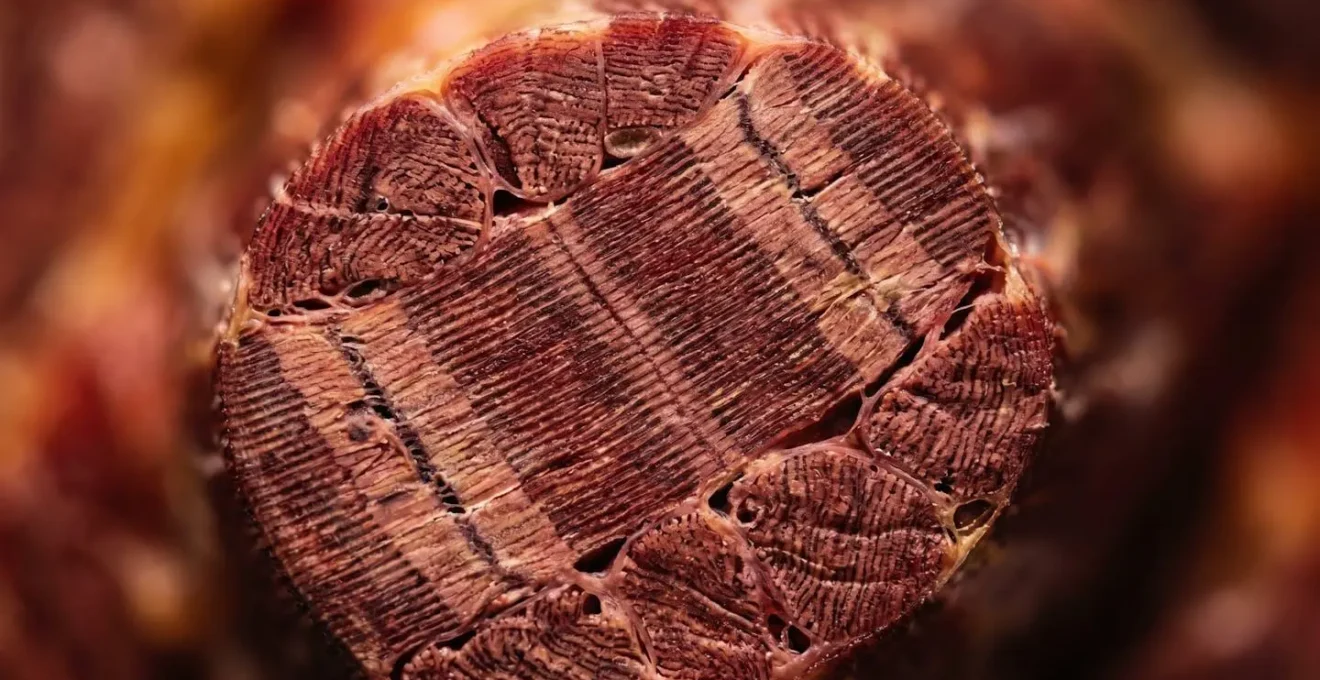
As this microscopic view shows, the internal architecture of your muscles is changing. It’s not a personal failing or a lack of effort; it’s a fundamental biological shift. Understanding these two concepts—anabolic resistance and mitochondrial decline—is the first and most critical step in creating an effective strategy to counteract them.
How to Start Strength Training at 75 Without Risking Injury or Embarrassment?
The thought of starting « strength training » at 75 can be intimidating, conjuring images of heavy weights and crowded gyms. The reality, however, is far more accessible and crucial for your health. The goal isn’t to become a bodybuilder; it’s to perform functional movements that build the strength needed for daily life, like getting out of a chair, carrying shopping, or climbing stairs. The key is to start slowly, focus on proper form, and listen to your body. You don’t need a gym membership; you can begin effectively and safely in the comfort of your own home.
The most important principle is progressive overload. This simply means gradually making the exercises more challenging as you get stronger. You start with your own body weight or very light resistance. A crucial partner to strength work is balance training. As we build muscle, we also need to retrain the connection between our brain and our body to prevent falls. In fact, a systematic review provides evidence that balance exercises reduce the rate of injurious falls by improving your ability to stay stable. Simple exercises like standing on one leg (holding onto a sturdy chair for support) can be incorporated into your daily routine.
Forget about embarrassment. This is your personal journey to better health. Start where you are, with what you have. A physiotherapist can provide a personalised plan, but the foundational principles are straightforward and can be implemented at home with minimal equipment. The focus is on consistency and safety, not intensity.
Your 5-Step Plan to Begin Strength Training Safely
- Begin with bodyweight exercises (like sit-to-stands from a chair) or light resistance bands, performing them 2-3 times per week on non-consecutive days.
- Start with just one set of 5 repetitions for each exercise, focusing on large muscle groups (legs, back, chest). Prioritise perfect, pain-free form over quantity.
- Gradually progress over 8-12 weeks towards a goal of 3 sets of 10 repetitions. Increase repetitions before you increase weight or resistance.
- Increase the challenge (load) progressively only when the current level feels manageable. This could mean using a thicker resistance band or holding a small weight.
- Combine resistance exercises with daily balance training, such as standing on one leg for 30 seconds or practicing walking heel-to-toe.
Resistance Bands at Home vs Gym Machines: Which Builds More Muscle in Over-70s?
When it comes to building muscle after 70, the debate isn’t about which tool is « best » overall, but which is best for your specific needs, goals, and circumstances. Both gym machines and resistance bands can be effective, but they work in fundamentally different ways, with resistance bands often holding a distinct advantage for home-based, functional fitness.
Gym machines are designed to isolate specific muscles. They guide your movement, which can feel safe and straightforward. However, this guidance also means that the small but crucial stabiliser muscles around your joints don’t have to work. In real life, when you lift a bag of groceries or catch your balance, these stabiliser muscles are essential. Resistance bands, on the other hand, force these stabilisers to engage throughout the entire movement, building more functional, real-world strength.
Furthermore, bands offer what’s known as accommodating resistance. The tension increases as you stretch the band, meaning the resistance is greatest at the end of the movement, where you are typically strongest. This often feels more natural on the joints compared to a machine’s fixed weight, which can place peak stress on a joint when it’s in its most vulnerable position. For accessibility, cost, and direct translation to daily activities and fall prevention, resistance bands are a superior starting point for most seniors.
The following table, based on an analysis of different resistance types, breaks down the key differences to help you make an informed choice for your fitness journey.
| Characteristic | Resistance Bands | Gym Machines |
|---|---|---|
| Resistance Pattern | Accommodating (increases through range of motion) | Fixed (constant throughout movement) |
| Stabiliser Muscle Activation | High (requires active stabilization) | Low (machine provides stabilization) |
| Joint Stress | Lower at weakest point of movement | Can be higher at vulnerable joint angles |
| Power Development | Superior for rapid force application | Better for maximal strength (slow force) |
| Accessibility | Home-based, portable, low cost | Requires gym membership, fixed location |
| Fall Prevention Benefit | Directly translates to balance improvement | Less functional transfer to daily activities |
The 10-Day Bed Rest Mistake That Costs Seniors 10% of Their Leg Muscle
While we often focus on the benefits of activity, it’s equally important to understand the profound and rapid damage caused by inactivity. A common cold, a hospital stay for a minor procedure, or even just a week of feeling « off » can trigger a catastrophic loss of muscle mass in an older adult. This isn’t a gradual decline; it’s a physiological freefall. The body, sensing a lack of use, initiates a rapid decommissioning of muscle tissue. This process is so swift that research shows a blunted muscle-building response can be induced in young, healthy adults after as little as 10 days of muscle unloading. For a senior already battling anabolic resistance, the effect is magnified dramatically, with some studies showing up to a 10% loss of leg muscle mass in that short timeframe.
Regaining this lost muscle is exponentially harder than it was to lose. Each period of forced rest digs a deeper hole, making the climb back to baseline strength longer and more arduous. This creates a vicious cycle: an illness leads to bed rest, which causes muscle loss and weakness, increasing the risk of a fall, which can lead to further hospitalisation and more devastating muscle loss. As researchers studying this mechanism state, this cycle is a primary driver of age-related frailty.
Short successive periods of muscle disuse, because of sickness or recurrent hospitalisation, may be at the root of the age-related loss of muscle mass.
– Researchers studying anabolic resistance mechanisms, Physiopedia: Anabolic Resistance
The crucial takeaway is that « rest » should not equal « total inactivity. » Even during illness, simple actions like sitting up in a chair for meals, performing gentle leg extensions in bed, or walking to the bathroom can send the necessary signals to your body to preserve precious muscle tissue. Active recovery, not passive rest, is the key to breaking the cycle.
When Should You Eat Protein After Exercise to Maximise Muscle Building After 70?
For years, fitness culture has been obsessed with the « anabolic window »—a supposed 30-60 minute period after exercise where you must consume protein to maximise gains. While this might have some relevance for elite young athletes, for adults over 70, the science tells a different, more liberating story. The frantic rush to drink a protein shake the moment you finish your exercises is unnecessary. For seniors, what matters far more is not the precise timing, but the overall daily amount and distribution of protein.
Due to anabolic resistance, your body needs a sufficient amount of protein at each meal to trigger muscle protein synthesis (MPS). A little sprinkle of protein here and there won’t work. The research points to a target of 25-30g of protein per meal, distributed evenly throughout the day, as the most effective strategy. This ensures your muscles receive a consistent, strong signal to build and repair, rather than one big spike and long periods of nothing. Spreading your intake across breakfast, lunch, and dinner is more important than worrying about a post-workout window.
Furthermore, the *quality* of the protein is paramount. Not all proteins are created equal. The amino acid leucine acts as the primary « on switch » for MPS. This is particularly important for older adults. As researchers have found, a higher concentration of leucine is needed to get the muscle-building machinery started.
A high proportion of leucine is required for optimal stimulation of the rate of muscle protein synthesis by essential amino acids in the elderly.
– Katsanos et al., FASEB Journal
This means focusing on leucine-rich foods like whey protein, lean meats, fish, eggs, and dairy can provide a more potent muscle-building stimulus for the same amount of protein consumed. So, relax about the clock. Focus on consistent, high-quality, leucine-rich protein at every meal.
Why Do You Need More Protein at 75 Than at 55 Even Though You Eat Less Overall?
It seems like a paradox: as your appetite and overall calorie needs may decrease with age, your requirement for one specific nutrient—protein—actually increases. This counter-intuitive reality is a direct consequence of the anabolic resistance we’ve discussed. Because your muscle cells are less sensitive to the growth signals from protein, you need to consume more of it to achieve the same muscle-building effect you had at a younger age.
The standard Recommended Daily Allowance (RDA) for protein has long been set at 0.8 grams per kilogram of body weight. However, a growing body of evidence strongly suggests this is inadequate for older adults. As a 2024 systematic review confirms, the current recommended daily protein intake of 0.8 g protein/kg/day is insufficient for older adults to maintain, let alone build, muscle mass. Following this outdated guideline can inadvertently accelerate sarcopenia.
So, what is the right amount? Evidence-based nutritional guidelines for seniors now recommend a significantly higher intake. For healthy older adults, the target is closer to 1.0-1.3 grams of protein per kilogram of body weight daily. For an 80kg (approx. 12st 8lb) person, this translates to 80-104 grams of protein per day, compared to the old recommendation of just 64 grams. If you have a chronic illness or are recovering from hospitalisation, this need can be even higher. This increased need, often coupled with a reduced appetite or difficulty preparing meals, creates a significant nutritional challenge that must be proactively managed to preserve strength and function.
This isn’t about simply eating more food; it’s about shifting the composition of your diet to prioritise protein. This might mean smaller, more frequent, protein-dense meals and snacks, focusing on sources like eggs, Greek yoghurt, cottage cheese, lean meats, and fish to meet this elevated daily requirement.
Why Does Walking on Painful Knees Reduce Pain More Than Staying in Your Chair?
When your knees ache with arthritis, every instinct tells you to rest them. The idea of walking, putting pressure on a painful joint, seems illogical. Yet, from a physiological standpoint, staying in your chair is one of the worst things you can do. Gentle, consistent movement is one of the most effective non-pharmaceutical treatments for osteoarthritis pain, thanks to several key mechanisms.
Firstly, your joint cartilage is like a sponge. It has no direct blood supply and gets its nutrients from the synovial fluid within the joint capsule. The only way to circulate this fluid and « feed » the cartilage is through movement. When you walk, the gentle compression and decompression of your knee joint pumps this nutrient-rich fluid into the cartilage, helping to keep it as healthy as possible. When you sit still, this process stagnates, effectively starving the joint.
Secondly, movement activates a principle known as the Gate Control Theory of Pain. Your nervous system can only process so much information at once. The sensations of movement—pressure, stretch, muscle contraction—travel along large, fast nerve fibres. Pain signals travel on smaller, slower fibres. The signals from movement effectively « close the gate » on the pain signals, preventing them from reaching the brain with the same intensity. This is why rubbing a bumped elbow immediately makes it feel better; you are overriding the pain signal with a different sensation.
Finally, walking strengthens the muscles that support the knee, such as the quadriceps and hamstrings. Stronger muscles act as shock absorbers, taking a significant load off the joint itself. A weak muscle system forces the bone and cartilage to absorb all the impact of walking, increasing wear and pain. By building a stronger support structure, you protect the joint from further damage and reduce pain during daily activities.
Key Takeaways
- Anabolic Resistance: After 60, your body needs more protein and targeted exercise to trigger the same muscle-building response.
- Inactivity is Costly: Even 10 days of bed rest can cause rapid, significant muscle loss that is difficult to regain. Active recovery is essential.
- Strategy Over Timing: Distributing 25-30g of high-quality, leucine-rich protein evenly across meals is more effective than focusing on a post-exercise « anabolic window. »
Why Does Resting Your Arthritic Joints Actually Make Them Worse?
Extending the principle from painful knees, the idea that « rest is best » for arthritic joints in general is a dangerous myth. While you should avoid activities that cause sharp, intense pain, complete inactivity is a direct path to increased stiffness, greater pain, and accelerated functional decline. The adage « motion is lotion » is not just a quaint saying; it’s a physiological imperative for joint health. When you don’t use your joints, they become « stuck, » and the muscles supporting them wither away, compounding the problem.
This muscle withering, or atrophy, is a critical and often overlooked part of the arthritis cycle. Longitudinal studies demonstrate that while you begin to lose muscle mass annually in your 30s, this process accelerates to 1-2% loss per year in your 50s, and even faster when inactivity is a factor. As the muscles around an arthritic hip, shoulder, or hand weaken, the joint loses its dynamic support system. This forces the already compromised bone and cartilage to bear the full brunt of every movement, leading to more inflammation, more pain, and a greater reluctance to move—creating a vicious downward spiral.
Inactivity also leads to a shortening of the ligaments and tendons around a joint. Your body cleverly adapts to what you ask of it; if you never fully extend your arm or bend your knee, the surrounding soft tissues will physically shorten to accommodate this new, limited range of motion. This is why stiffness is often worst in the morning; the tissues have settled into a shortened state overnight. Gentle, regular movement through a full, pain-free range of motion is essential to maintain flexibility and combat this debilitating stiffness.
Not using muscles is one of the most common reasons for sarcopenia, leading to faster muscle loss and increasing weakness.
– Healthline Medical Review Team, Healthline: How to Manage Sarcopenia
Therefore, the goal is not to stop moving, but to find the *right* kind of movement. Activities like swimming, cycling, or tai chi, along with targeted strengthening exercises, can maintain joint health and muscle support without causing undue impact. By embracing movement, you actively fight against the twin threats of sarcopenia and arthritis.
The journey to reclaiming your strength begins not with a monumental effort, but with a single, informed step. Start today by choosing one small change—a breakfast rich in protein, a few chair squats during a television advert, or a short walk around the block. Your body has an incredible capacity to adapt and rebuild. By providing it with the right signals through targeted nutrition and consistent movement, you can actively fight back against muscle loss and forge a path to a stronger, more independent future.