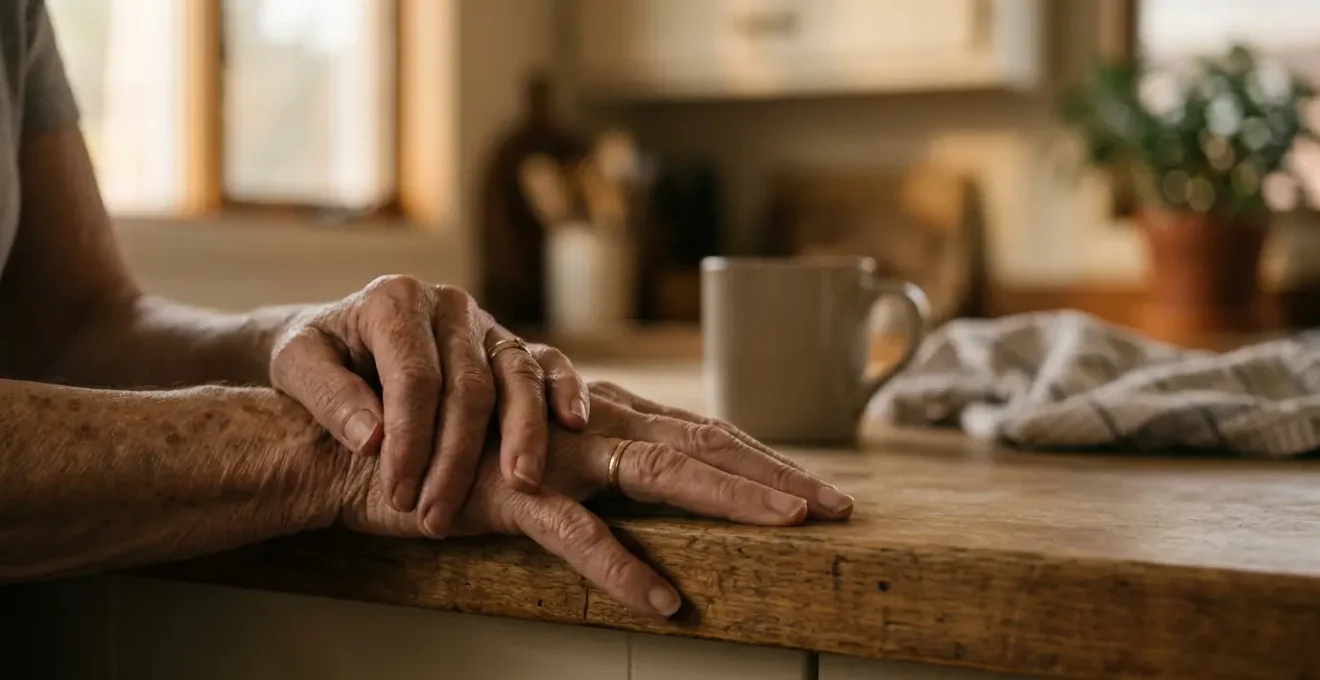
Stopping cooking is a major predictor of hospital admission for seniors, often signalling a nutritional crisis before medical tests do.
- The cause of cooking cessation—whether safety concerns, physical difficulty, or cognitive decline—dictates the correct solution.
- Relying solely on basic ready meals or unmanaged supermarket deliveries often worsens nutritional deficits in protein and vegetables.
Recommendation: Identify the specific barrier to cooking and implement a targeted « nutritional scaffolding » approach, from simple kitchen aids to a fully managed meal delivery service.
The kitchen, once the heart of the home, slowly goes quiet. The familiar scent of a Sunday roast is replaced by the faint beep of a microwave. For many families, this transition marks a poignant moment when an older parent stops cooking. It’s often viewed as a practical problem of ageing, met with well-intentioned but often mismatched solutions like setting up a supermarket delivery or dropping off a few batch-cooked meals. We assume the problem is simply getting food into the house. But what if this change is something more? What if the cessation of cooking isn’t the problem, but a symptom of a much deeper issue?
This isn’t just about convenience; it’s a critical health indicator. The act of giving up cooking is a powerful predictor of decline, signalling a nutritional tipping point that can lead to frailty, falls, and hospital admission within months. The key isn’t just to replace the meals, but to correctly diagnose the underlying reason for stopping. Is it the physical strain of arthritis? The memory lapses that make using a gas hob dangerous? Or the overwhelming fatigue that turns a simple recipe into an impossible task? Only by understanding the ‘why’ can we implement the right ‘how’.
This guide moves beyond the generic advice. We will explore why stopping cooking is such a profound warning sign, examine the specific challenges of memory loss and physical limitations, and critically compare the real-world nutritional outcomes of popular meal solutions in the UK. We will equip you to move from simply providing food to building a sustainable and safe nutritional scaffold that truly supports a senior’s health and independence.
Summary: Decoding the Link Between Cooking Cessation and Senior Malnutrition
- Why Does Giving Up Cooking Predict Hospital Admission Better Than Many Medical Tests?
- How to Keep Cooking Safely with Memory Problems Using Induction Hobs and Timers?
- Meals on Wheels vs Supermarket Delivery vs Batch Cooking by Family: Which Keeps Seniors Best Fed?
- The Ready Meal Rut That Leaves Seniors Short on Protein and Vegetables
- When Should You Stop Trying to Keep Mum Cooking and Switch to Complete Meal Delivery?
- Long-Handled Utensils vs Perching Stools: Which Keeps Arthritic Seniors Cooking Safely?
- Wiltshire Farm Foods vs Cook vs Supermarket Ready Meals: Which Delivers Most Nutrition Per Portion?
- How Can You Pack a Day’s Nutrition Into 1,200 Calories for a Senior Who Barely Eats?
Why Does Giving Up Cooking Predict Hospital Admission Better Than Many Medical Tests?
The act of preparing a meal is more than just a daily chore; it is a complex symphony of cognitive, physical, and executive functions. When a senior stops cooking, it’s rarely a single, isolated decision. Instead, it’s a powerful signal that one or more of these fundamental systems are failing. This « cooking cessation » becomes a canary in the coal mine for underlying health issues, often flagging a risk of decline long before a formal medical diagnosis. It reflects a loss of dexterity, strength, memory, or organisational skill, all of which are precursors to frailty and increased dependency. The kitchen, in this sense, is an unrecognised diagnostic tool.
The nutritional impact is swift and severe. Once home cooking ceases, reliance on less-nutritious alternatives like toast, biscuits, or low-quality ready meals often follows. This immediate drop in nutrient intake, particularly protein, accelerates muscle loss (sarcopenia), weakening the body and increasing the risk of falls. The data paints a stark picture: the inability to perform daily activities like cooking is a direct pathway to malnutrition. Furthermore, compelling research links this decline directly to severe health outcomes. For instance, a 2023 study found that seniors with low cooking skills had a 2.50 times higher mortality risk than their proficient peers.
This decline culminates in a higher likelihood of hospitalisation. Malnourished individuals have weaker immune systems, slower wound healing, and less resilience to fight off infections. Once hospitalised, their recovery is slower and more complicated. This is confirmed by recent data, where research revealed that malnourished older adults have a 3.23 times higher risk of prolonged hospitalization. Therefore, noticing that a loved one has stopped cooking isn’t just an observation about their lifestyle; it’s a critical, early warning of an impending health crisis that demands an immediate and thoughtful response, not just a quick fix.
How to Keep Cooking Safely with Memory Problems Using Induction Hobs and Timers?
For a senior experiencing memory problems or the early stages of dementia, the kitchen can transform from a place of creativity into a landscape of hazards. The primary fear for many families is fire, often linked to a pan left on a gas hob or an oven not turned off. However, completely removing the ability to cook can be a blow to independence and self-worth. The goal is to create a « fail-safe » environment that mitigates the most significant risks while preserving autonomy. Technology and thoughtful design are the keys to achieving this balance, transforming the kitchen into a safer space.
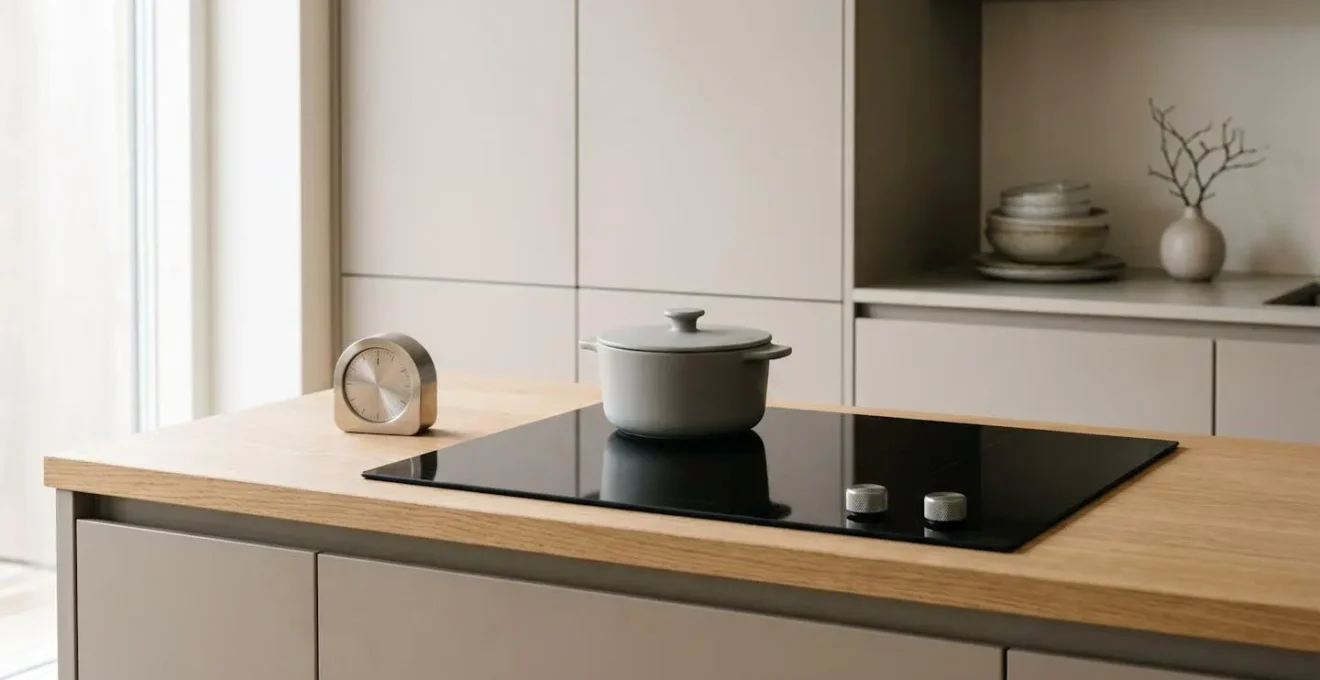
The single most effective change is replacing a gas or traditional electric hob with an induction cooktop. Induction hobs heat the pan directly and the surface itself remains relatively cool, drastically reducing the risk of burns. Crucially, most models have a built-in safety feature that automatically switches the hob off when the pan is removed. This simple feature prevents the hob from being left on indefinitely. Paired with a large, highly visible timer with an audible alarm, this setup provides a powerful safety net. The timer acts as an external cognitive aid, prompting the user that a cooking task is complete and needs attention.
The setup below illustrates how simplicity is the ultimate safety feature. An uncluttered workspace with clear, analogue controls reduces confusion and the cognitive load required to operate appliances.
Building on this, other appliances can be selected for their safety features. It’s about removing points of failure and simplifying decision-making. Here are some essential features to look for when adapting a kitchen for someone with memory challenges:
- Choose induction cooktops with simple knob controls rather than complex touchscreen interfaces.
- Install automatic shut-off features on stoves and ovens that power down after periods of inactivity.
- Use visible, large-number timers with loud, clear alarms to prompt when cooking is finished.
- Select electric kettles with auto shut-off to prevent them from boiling dry.
- Opt for toaster ovens and air fryers with preset programs to eliminate multi-step decisions.
Meals on Wheels vs Supermarket Delivery vs Batch Cooking by Family: Which Keeps Seniors Best Fed?
When home cooking is no longer a viable option, families are faced with a crucial decision. The three most common solutions—Meals on Wheels, supermarket deliveries, and family batch cooking—all seem practical, but they serve very different needs and have vastly different impacts on a senior’s nutrition, social well-being, and autonomy. Choosing the right one requires looking beyond the logistics of food delivery and matching the solution to the specific situation of the senior. There is no single « best » answer; the optimal choice depends entirely on the individual’s health, social support system, and financial resources.
Meals on Wheels is often more than just a meal; it’s a vital welfare check. The brief social interaction with a volunteer can be a lifeline for isolated seniors, providing crucial human contact. The service is incredibly widespread; for context, according to Meals on Wheels America, its network delivers 244 million meals annually in the US alone, with similar models operating across the UK. While nutritionally balanced to meet basic requirements, the meals offer little choice or customization. On the other hand, a supermarket delivery offers maximum choice and independence but provides zero social contact or nutritional oversight. It assumes the senior is still capable of unpacking, storing, and preparing—or at least reheating—the food safely, an assumption that often fails with cognitive or physical decline. Family batch cooking offers the highest potential for nutritional quality and personalisation, but it carries a high risk of caregiver burnout and can be difficult to sustain long-term.
To make an informed decision, it’s essential to compare these options across key criteria. The following table breaks down the strengths and weaknesses of each approach.
| Meal Solution | Nutritional Quality | Social Contact | Autonomy/Choice | Typical Cost | Best For |
|---|---|---|---|---|---|
| Meals on Wheels | Balanced, meets 1/3 daily nutrients; limited customization | Daily/weekly volunteer visit (welfare check) | Low (preset menus) | Donation-based to low-cost ($0-£8/meal) | Homebound seniors, limited income, social isolation |
| Supermarket Delivery | Variable (depends on selections) | Minimal (delivery drop-off only) | High (full choice) | Grocery cost + delivery fee | Seniors who can prep simple meals, value independence |
| Family Batch Cooking | High (customizable, fresh ingredients) | High (family connection during delivery) | Medium (input on preferences) | Ingredient cost + caregiver time/burnout risk | Seniors with close family, specific dietary needs |
The Ready Meal Rut That Leaves Seniors Short on Protein and Vegetables
For many seniors who stop cooking, the supermarket ready meal becomes the default solution. It seems perfect: it’s convenient, requires minimal effort, and offers a semblance of a complete dinner. However, this convenience often masks a significant nutritional pitfall. Falling into the « ready meal rut »—relying exclusively on these products day after day—can quietly accelerate the slide into malnutrition. The core problem is that most standard ready meals are designed for the general market, prioritising taste, cost, and shelf-life over the specific nutritional needs of an older, more sedentary adult.
The two most common deficiencies in a diet of ready meals are protein and vegetables. Protein is crucial for maintaining muscle mass, and seniors actually require more protein per kilogram of body weight than younger adults to prevent sarcopenia. Yet, many ready meals contain less than 15g of protein, falling far short of the 25-30g recommended per meal for an older adult. Similarly, while the box might show vibrant vegetables, the actual quantity is often minimal and over-processed, reducing its fibre and micronutrient content. This creates a diet that is often high in salt, sugar, and saturated fat but critically low in the building blocks the body needs to stay strong and healthy.
The solution isn’t necessarily to banish ready meals entirely but to upgrade them strategically. With a few simple, no-cook additions, a standard ready meal can be transformed into a much more nutritionally robust plate. The focus should be on « stealth fortification »—adding nutrient-dense ingredients that don’t require cooking skills.
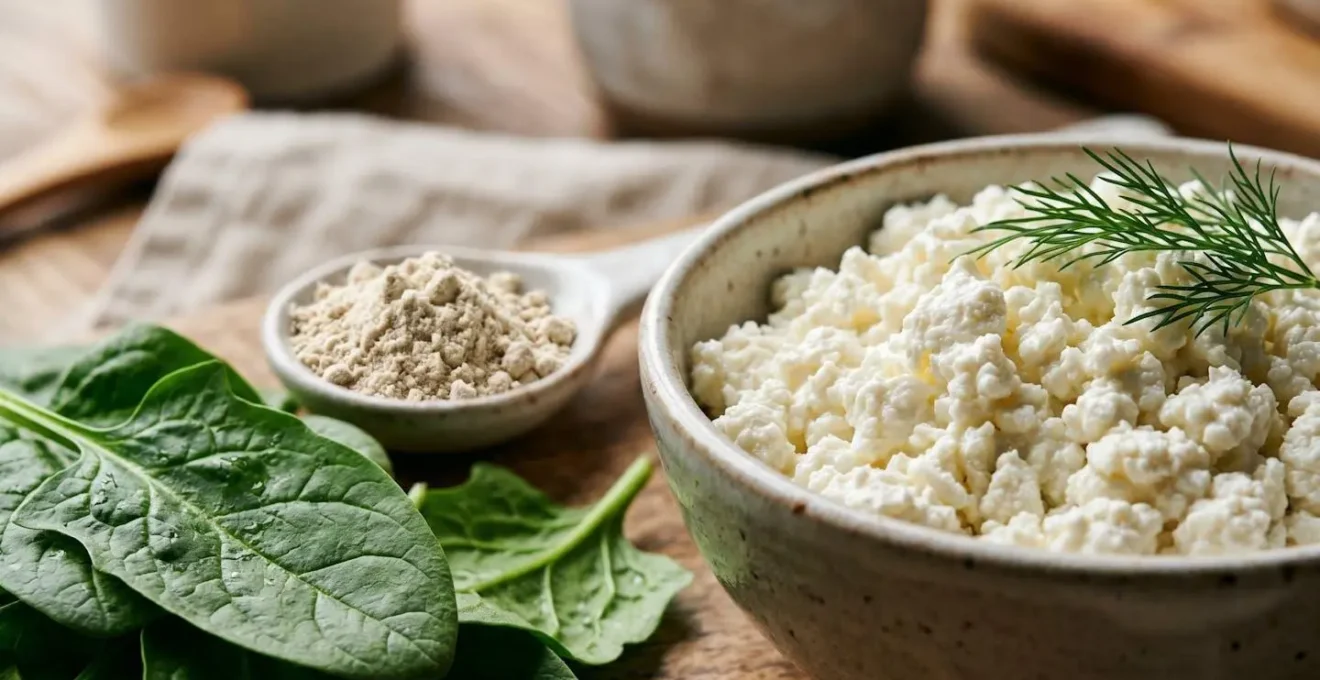
This « 60-second upgrade » technique can make a significant difference. Here are five practical ways to fortify a ready meal just before serving:
- Add a scoop of unflavored protein powder to soups, stews, or pureed meals to boost protein without changing the taste.
- Stir a handful of pre-washed fresh or frozen spinach into a hot ready meal; it will wilt instantly, adding vital greens.
- Serve any ready meal with a generous side of cottage cheese or Greek yogurt for extra protein and calcium.
- Mix skim milk powder into mashed potatoes, oatmeal, or casseroles to discreetly increase protein per serving.
- For seniors with a poor appetite who need more calories, drizzle heavy cream instead of milk over meals.
When Should You Stop Trying to Keep Mum Cooking and Switch to Complete Meal Delivery?
There is often a strong emotional desire, both from the senior and their family, to keep them cooking for as long as possible. It’s a symbol of independence, capability, and maintaining a normal life. Families may invest in kitchen aids, simplify recipes, and provide supervision. But there comes a point where these efforts, however well-intentioned, become counterproductive and even dangerous. Recognizing this tipping point is one of the most difficult but important decisions a carer has to make. The question shifts from « How can we help Mum cook? » to « Is it safe and beneficial for Mum to be cooking at all? »
The red flags are not just about forgetting to turn off the hob. They are more subtle. Look for signs of « kitchen chaos »: unexplained burns on hands or countertops, spoiled food in the fridge because fresh ingredients aren’t being used, significant and unintentional weight loss, or a diet that has shrunk to just a few « safe » items like tea and toast. These are indicators that the cognitive and physical demands of cooking are becoming overwhelming. At this stage, persisting with trying to keep them cooking can lead to fires, food poisoning, or, most commonly, a form of self-imposed starvation where the senior avoids eating to avoid the stress of cooking.
The cognitive load of cooking is often underestimated. It is not a single task but a sequence of many, requiring planning, memory, and judgment. As one expert source highlights, this complexity is precisely what makes it so challenging for someone with dementia.
Cooking involves sequencing steps, monitoring heat, and recognizing when food has spoiled. These cognitive demands can quickly exceed the abilities of someone with dementia, raising risks of both malnutrition and injury.
– Elder Law Answers, How Dementia Drives Food Insecurity for Older Adults
When you see these signs—especially a combination of cognitive difficulty and safety near-misses—it is time to make the switch. Moving to a complete meal delivery service, where nutritionally balanced meals are delivered ready-to-eat, is not an admission of defeat. It is a proactive step to ensure safety and adequate nutrition. It frees the senior from a source of stress and anxiety and gives the family peace of mind, knowing their loved one is being nourished safely and consistently.
Long-Handled Utensils vs Perching Stools: Which Keeps Arthritic Seniors Cooking Safely?
For seniors with arthritis, osteoarthritis, or other conditions causing chronic pain and stiffness, cooking can become a painful ordeal. The simple acts of chopping, stirring, and lifting can exacerbate joint pain, while bending and reaching can lead to fatigue and increase the risk of falls. The market is flooded with gadgets, from long-handled utensils to electric can openers. While these aids are helpful, they often treat the symptoms rather than the root problem. A perching stool allows for seated work at countertop height, and ergonomic knives reduce grip strain. But a more profound approach is to rethink the entire cooking process through the lens of energy conservation and task management.
The real key to safer, more comfortable cooking for someone with arthritis isn’t a single gadget, but a strategy. It’s about minimising sustained effort, reducing repetitive motions, and eliminating awkward postures. Research has consistently shown the main difficulties are not just the tasks themselves, but the physical positions required to perform them. A 2012 study on aging and cooking difficulties found that common problems arise from awkward body positions like bending to low shelves, reaching for high ones, and the strain of cleaning the cooker. A perching stool helps with standing, but a kitchen trolley that eliminates the need to carry a heavy pot is often more impactful. The goal is to create a workflow that conserves energy and protects joints.
Instead of focusing on individual tools, it’s more effective to conduct an audit of one’s cooking methods to identify the biggest points of strain and plan around them. This strategic approach provides a framework for making the entire process, from prep to clean-up, more manageable.
Your Action Plan: The Energy Conservation Cooking Audit
- Sit, Don’t Stand: Identify all tasks you can do while seated (chopping, peeling, mixing). Plan a « task-batching » session where you chop all vegetables for the week at once from a comfortable chair or perching stool to minimise strain.
- Roll, Don’t Carry: Inventory how many times you carry heavy items (pots of water, bags of shopping, ingredients). Assess if a simple kitchen trolley could be used to move these items between the fridge, counter, and hob, eliminating lifting.
- Plan One-Pot Meals: Review your weekly meal plan. Identify how many separate pans and utensils are used. Prioritise one-pot recipes like casseroles, stews, or slow cooker dishes to drastically reduce the amount of washing up, a major source of joint stress.
- Audit Your Storage: List the top 10 most-used items in your kitchen (oil, salt, favourite pan, etc.). Check if they are stored between waist and shoulder height. If not, create a plan to reorganise your cupboards to eliminate all bending and high reaching for daily essentials.
- Eliminate Pain Points: Identify the single most painful manual task in your cooking routine (e.g., opening jars, stirring a thick sauce). Research and acquire one specific electric tool (electric jar opener, automatic pot stirrer) to eliminate that task completely.
Key Takeaways
- Cooking cessation is a critical health indicator, often predicting malnutrition and hospitalisation more effectively than some medical tests.
- The right nutritional solution depends on the root cause: physical aids for arthritis, safety tech for memory issues, and full meal delivery for advanced decline.
- Standard ready meals can worsen malnutrition; they must be fortified with extra protein and vegetables to be a viable option.
Wiltshire Farm Foods vs Cook vs Supermarket Ready Meals: Which Delivers Most Nutrition Per Portion?
Once the decision is made to use a meal delivery service, a new set of choices emerges. In the UK, the landscape is dominated by specialist senior meal providers like Wiltshire Farm Foods, premium frozen meal companies like Cook, and the vast ready meal aisles of supermarkets. While they all deliver convenience, their approach to nutrition, target audience, and suitability for specific medical needs vary dramatically. The core challenge for seniors is getting adequate nutrients in a smaller caloric package, a principle expertly summarised by a registered dietician.
As people get older, they are doing less high-energy calorie-burning tasks. They need fewer calories, but the same nutrients.
– Dr. Valentina Remig, Registered Dietician, 10 Healthy Meals for Seniors That Are Quick and Easy to Make
This principle of nutrient density is where these services differ most. Supermarket ready meals are generally the lowest in cost but also the least nutrient-dense, often low in protein and high in salt. Specialist services like Wiltshire Farm Foods are designed specifically for seniors, offering a wide range of texture options (e.g., pureed, minced) for those with chewing or swallowing difficulties (dysphagia). Companies like Cook pride themselves on using high-quality ingredients for a « homemade » taste, appealing to those who have an appetite but not the ability to cook. Then there are medically-focused services, like Mom’s Meals in the US or their UK equivalents, which provide dietitian-designed meals for conditions like diabetes or kidney disease.
Choosing the right service requires matching the product to the person’s specific health needs. A senior with dysphagia has different requirements from a post-discharge patient on a renal diet. The following comparison provides a general overview of the market.
| Service Type | Protein Content | Texture Options | Best For Medical Need | Customization | Typical Cost Range |
|---|---|---|---|---|---|
| Meals on Wheels (local) | Meets 1/3 daily requirement | Regular, pureed available | General senior nutrition, dysphagia | Limited | Donation-based to £8/meal |
| Wiltshire/Specialist | Generally good (15-25g) | Extensive (minced, pureed, soft) | Dysphagia, general senior needs | High (large menu) | £4-£7/meal |
| Cook/Premium Frozen | High (often >25g) | Regular only | Appetite, taste, quality focus | Choice-based | £5-£10/serving |
| Supermarket Ready Meals | Often low (<15g/serving) | Regular only | Convenience for mobile seniors | Choice-based (label reading required) | £2.50-£6/meal |
How Can You Pack a Day’s Nutrition Into 1,200 Calories for a Senior Who Barely Eats?
One of the greatest challenges in senior care is nourishing someone with a very poor appetite. This condition, known as « anorexia of ageing, » is common and dangerous. The person may feel full after only a few bites, have a reduced sense of taste and smell, or simply lack the energy or interest to eat. When their total daily intake drops to 1,200 calories or less, every single mouthful counts. This is significantly below the general estimates from the Academy of Nutrition and Dietetics that women over 50 need 1,600-1,800 calories per day and men need more. This caloric deficit puts them at high risk of malnutrition, a condition that already affects a huge portion of the elderly population. Indeed, about one in four adults ages 65 and older in developed nations are estimated to be malnourished or at risk.
The strategy must shift from encouraging larger portions (which is often impossible) to maximising the nutrient density of the small amounts of food they do consume. This means making every calorie a « working calorie » that delivers protein, vitamins, and minerals, not just energy. The approach is called stealth fortification: adding high-impact, high-calorie, and high-protein ingredients to familiar foods without significantly increasing the volume of the meal. This method respects the person’s small appetite while secretly boosting the nutritional payload of their food.
The goal is to enrich the foods they already like and will eat. Forcing unfamiliar « healthy » foods is likely to fail. Instead, you can invisibly enhance their favourite soup, mashed potatoes, or morning porridge. Think of adding ingredients like skim milk powder, which adds protein and calcium with almost no change in taste or volume, or blending silken tofu into a soup to make it creamier and more protein-rich. It’s about being clever and consistent.
Here are some effective stealth fortification techniques:
- Add skim milk powder to mashed potatoes, cooked cereal, casseroles, or milky drinks to increase protein without changing the volume.
- Blend silken tofu or cooked white beans into soups or stews for an invisible protein and calorie boost that also adds creaminess.
- Use double cream or condensed milk instead of regular milk in coffee, tea, or recipes for a significant calorie increase in a small volume.
- Stir nut butters (like peanut or almond) into oatmeal, smoothies, or yogurt for concentrated calories and healthy fats.
- Add pasteurised egg whites to recipes that will be cooked through, such as scrambled eggs or baked goods, for a pure protein addition.
Assessing the specific reasons a senior has stopped cooking is the first and most crucial step. Once you understand the underlying challenge—be it physical, cognitive, or logistical—you can choose the most appropriate and effective nutritional support, ensuring they remain safe, healthy, and well-nourished for as long as possible.