
The shrinking appetite common after 70 isn’t just a comfort issue; it triggers accelerated muscle loss due to a metabolic shift called ‘anabolic resistance’.
- Your body needs higher protein doses (25-30g) per meal, not just more per day, to stimulate muscle growth.
- Outdated low-fat advice is dangerous for seniors, who need calorie-dense healthy fats for energy and nutrient absorption.
Recommendation: Focus on strategic ‘protein pacing’ across smaller, fortified meals and embrace healthy fats, rather than trying to eat larger volumes of food.
It’s a story I hear constantly in my practice. « Mum just isn’t eating like she used to, » a worried son tells me. « She says she’s not hungry, but she’s getting so frail. » This experience—a shrinking appetite coupled with a worrying decline in strength—is incredibly common for those over 70. Well-meaning advice often follows: « Just try to eat a bit more, » or « You need more protein. » While not wrong, this advice misses the crucial, underlying reason why this happens and why simply « eating more » is often an impossible and ineffective strategy.
The truth is, the nutritional rulebook changes dramatically in later life. Your body’s ability to process and use nutrients, particularly protein, undergoes a fundamental shift. The problem isn’t just a lack of calories; it’s a crisis of efficiency. The very same meal that would have maintained your muscle at 55 is no longer sufficient at 75. This is due to a hidden metabolic process that most general advice fails to address.
This article moves beyond the platitudes. We will not simply tell you to eat more. Instead, as a dietitian specialising in older adult nutrition, I will explain the science of what’s happening inside your body—a concept called anabolic resistance. More importantly, we will build a practical, evidence-based framework to counteract it. You’ll learn how to make every bite count more, how to strategically time your protein intake even with a small appetite, and why some long-standing dietary advice might be doing you more harm than good.
This guide provides a clear path to maintaining strength and vitality. We will explore the science behind age-related muscle loss, offer practical strategies for meal planning, debunk common myths about senior nutrition, and identify the critical warning signs that need a GP’s attention. Let’s begin.
Contents : The Dietitian’s Framework for Preserving Strength After 70
- Why Do You Need More Protein at 75 Than at 55 Even Though You Eat Less Overall?
- How to Spread 60g of Protein Across 3 Meals When Your Appetite Has Shrunk?
- Fortisip vs Ensure vs Complan: Which NHS-Prescribed Supplement Tastes Best to Elderly Palates?
- The Outdated Low-Fat Advice That Starves Seniors of Essential Calories
- At What Point Does Muscle Loss Become Too Advanced for Diet Alone to Reverse?
- Why Does Your Body Start Breaking Down Muscle Faster Than It Builds After 60?
- Why Does Taking Longer to Finish Meals Signal a Swallowing Problem Your GP Might Miss?
- Why Do 30% of UK Seniors Over 80 Lack the Strength to Rise from a Chair Without Help?
Why Do You Need More Protein at 75 Than at 55 Even Though You Eat Less Overall?
The central reason your protein needs increase with age lies in a phenomenon called anabolic resistance. Think of it like this: your muscles become slightly « deaf » to the signal that protein sends to build and repair tissue. While a younger person’s muscles react strongly to a moderate dose of protein, an older person’s muscles require a much louder « shout »—a higher dose of protein in a single sitting—to get the same message. This isn’t a disease; it’s a normal, albeit challenging, part of the aging process.
The science backs this up. Research shows that older adults can experience a significant decrease in post-meal muscle protein synthesis, the very process of building muscle. Specifically, research shows that older adults experience a 16% decrease in their muscle-building response after eating. This inefficiency means that the standard Recommended Daily Allowance (RDA) of 0.8 grams of protein per kilogram of body weight is often insufficient for seniors. Expert groups, like ESPEN, now recommend 1.0 to 1.2 grams of protein per kilogram for healthy older adults, and even more for those who are unwell or malnourished.
The mechanisms for this are complex. According to the European Society for Clinical Nutrition and Metabolism (ESPEN) Expert Group, it involves everything from reduced blood flow to the muscles after a meal to changes in how amino acids are processed by the gut and liver. A study on elderly women with sarcopenia found that increasing protein intake from 0.8 g/kg to 1.2 g/kg per day led to significant improvements in muscle mass and strength, proving that meeting this higher need is crucial for function.
Therefore, even though your overall calorie needs may decrease and your appetite may wane, your requirement for high-quality protein per meal actually goes up. The goal is no longer just to eat, but to eat strategically to overcome this natural resistance.
How to Spread 60g of Protein Across 3 Meals When Your Appetite Has Shrunk?
Knowing you need more protein is one thing; consuming it with a diminished appetite is another challenge entirely. The key is not to force large meals but to adopt a strategy of protein pacing. This involves distributing your protein intake evenly across the day to consistently stimulate muscle building. The science of anabolic resistance tells us there’s a minimum threshold of protein needed per meal to kickstart muscle protein synthesis. Trying to cram all your protein into one large evening meal is far less effective than spreading it out.
The magic number? Most studies demonstrate that approximately 25-30g of protein per meal is the optimal dose to maximally stimulate muscle growth in older adults. Consuming less than this in a sitting may not be enough to overcome the « deafness » of anabolic resistance. Consuming significantly more offers little additional benefit for muscle building in that moment. The goal, therefore, is to aim for this 25-30g target at each main meal.
This may sound daunting, but it’s achievable through smart food choices and fortification. Rather than a huge plate, focus on nutrient density. Here is a sample approach to hitting this target, focusing on smaller, more frequent, protein-rich servings:
- Breakfast (8am) Goal: 25g. Instead of just toast, try two scrambled eggs (12g) with a glass of milk (8g) and a slice of wholemeal toast (5g). Or, a pot of Greek yogurt (15-20g) with a handful of nuts (5g).
- Lunch (1pm) Goal: 25g. A small tin of tuna (20g) in a sandwich, followed by a milky coffee. Or a hearty lentil soup (15-18g) served with a side of cottage cheese (12g).
- Dinner (7pm) Goal: 25g. A palm-sized piece of chicken or fish (20-25g) is often enough. Serve with quinoa (8g per cup) instead of just potatoes.
- Snacks are crucial. A mid-morning glass of milk or a mid-afternoon yogurt can add an extra 10-15g, helping you reach your daily total without overwhelming your main meals.
The mindset shifts from « three large meals » to « a series of protein opportunities » throughout the day. It’s about making every eating occasion, no matter how small, a chance to fuel your muscles.
Fortisip vs Ensure vs Complan: Which NHS-Prescribed Supplement Tastes Best to Elderly Palates?
When appetite fails and weight loss becomes a concern, GPs often turn to prescribed oral nutritional supplements (ONS) like Fortisip, Ensure, or Complan. These are designed to be a concentrated source of calories, protein, vitamins, and minerals. However, the question of which « tastes best » is complex, as the biggest challenge is often not the specific brand but a phenomenon known as palate fatigue—an aversion to the intensely sweet, often artificial, taste of these drinks when consumed daily.
While these supplements can be a vital short-term tool for preventing malnutrition, it’s important to view them with a critical, evidence-based eye. As Dr. Michael Greger notes when reviewing the evidence, their long-term benefit for frailty can be questionable.
Though Big Pharma giants…spend millions of dollars a year…to help make these products medicine’s go-to choice, if you look at the evidence, a systematic review and meta-analysis of randomized controlled trials on such drinks for the management of frailty found no discernible benefit for any measured outcomes—muscle mass, muscle strength, muscle function, or mortality.
– Dr. Michael Greger, NutritionFacts.org
The dietitian’s approach is to use a « food first » strategy, turning to supplements only when necessary and employing tactics to make them more tolerable. Instead of simply drinking them straight, which often leads to waste, they should be treated as a base ingredient. If you or a loved one has been prescribed these, here are practical strategies to improve their intake and effectiveness:
- Serve Chilled or Over Ice: Cold temperature numbs the taste buds slightly, reducing the overwhelming sweetness.
- Dilute with Milk: Mixing a supplement with full-fat milk (not water) reduces the syrupy concentration while adding extra calories and protein.
- Use as a Smoothie Base: Blend a vanilla-flavoured supplement with sharp-tasting fruit like raspberries or a spoonful of lemon juice. The acidity cuts through the sweetness.
- Fortify Meals: Use neutral or savoury-flavoured supplements (if available) by stirring them into soups, mashed potatoes, or creamy sauces to boost calories without altering the core flavour.
- Make a Fortified « Creamer »: Add a splash of a vanilla supplement to coffee or tea instead of milk for a protein- and calorie-boosted cuppa.
The goal is to integrate these supplements into a normal diet as a fortification tool, not to rely on them as a sole source of nutrition, which is rarely sustainable or enjoyable.
The Outdated Low-Fat Advice That Starves Seniors of Essential Calories
For decades, dietary advice has been dominated by a « low-fat » mantra. While well-intentioned for a population fighting obesity, this advice is not just outdated but can be actively harmful for older adults experiencing appetite loss and unintentional weight loss. When your appetite is small, every calorie counts, and fat is the most calorie-dense nutrient available, providing 9 calories per gram compared to just 4 for protein and carbohydrates. Removing it from the diet is a recipe for undernutrition.
Insisting on skimmed milk, low-fat yogurt, and lean-only proteins for a frail senior is a profound misunderstanding of their current physiological needs. At this stage of life, the primary goal is often to prevent further weight loss and provide enough energy to fuel the body’s basic functions. Healthy fats are not the enemy; they are a vital ally.
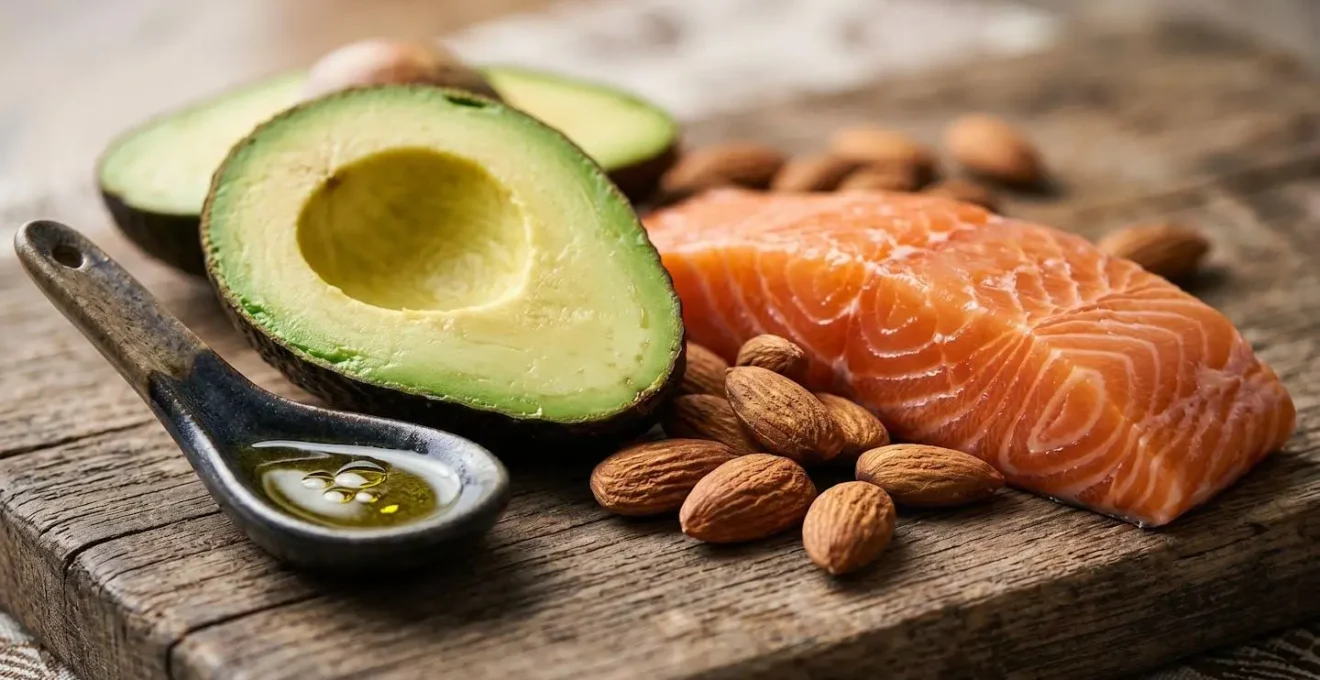
Beyond providing much-needed calories, fats play several other critical roles. They are essential for the absorption of fat-soluble vitamins (A, D, E, and K), which are crucial for immune function, bone health, and blood clotting. Fats are also a fundamental building block for hormones, including those that regulate metabolism and mood. A diet severely restricted in fat can compromise all of these systems.
The focus should shift from « low-fat » to « smart-fat. » Instead of avoiding fats, embrace nutrient-dense sources. This means:
- Switching from skimmed to full-fat milk and yogurt.
- Adding a drizzle of olive oil or a knob of butter to vegetables and potatoes.
- Incorporating foods like avocado, nuts, seeds, and oily fish (like salmon) into the diet.
- Using cream in soups and sauces to enrich them.
This is not a license to eat unlimited amounts of processed junk food. It is a strategic, evidence-based approach to food fortification. By embracing healthy, calorie-dense fats, you can significantly increase the nutritional value of smaller portions, making it easier to meet energy needs without having to consume a large volume of food.
Why Does Your Body Start Breaking Down Muscle Faster Than It Builds After 60?
The gradual loss of muscle mass, known as sarcopenia, is a hallmark of aging. It doesn’t start at 60; research from Harvard Health shows that after age 30, you begin to lose as much as 3% to 5% of your muscle mass per decade. However, after 60, this process often accelerates, and the balance tips decisively from muscle building (anabolism) to muscle breakdown (catabolism). Several interconnected biological factors drive this shift.
At a cellular level, two key processes are at play: chronic low-grade inflammation, often termed « inflammaging, » and a decline in mitochondrial function. As we age, our immune system can become dysregulated, leading to a state of persistent, low-level inflammation. This inflammatory environment sends catabolic signals that encourage the body to break down muscle tissue. Simultaneously, the mitochondria—the « power plants » inside our cells—become less efficient and fewer in number, reducing the energy available for muscle repair and growth.

Crucially, aging doesn’t just reduce muscle *mass*; it changes muscle *quality*. A critical and often overlooked aspect is the difference between muscle strength and muscle power. As researchers Reid and Fielding highlight, « Muscle power tends to decline earlier and more rapidly with age compared to muscle strength. » Strength is the ability to exert force (like lifting a heavy bag), while power is the ability to exert force quickly (like standing up from a low chair or catching yourself before a fall). This rapid decline in power is a primary reason for loss of function and increased fall risk.
This happens because we preferentially lose the « fast-twitch » muscle fibres responsible for rapid, powerful movements. Slower, more gentle activities like walking primarily use slow-twitch fibres and do not adequately stimulate these crucial fast-twitch fibres. This, combined with anabolic resistance and cellular changes, creates a perfect storm where the body breaks down muscle, particularly the most functionally important type, faster than it can rebuild it.
Why Does Taking Longer to Finish Meals Signal a Swallowing Problem Your GP Might Miss?
One of the most subtle but significant red flags for an underlying health issue in an older adult is a sudden or gradual increase in the time it takes to eat a meal. While it might be dismissed as « slowing down, » it can be a primary symptom of dysphagia, the medical term for difficulty swallowing. This condition is often underestimated because, as experts note, many people adapt their behaviour by eating slower or avoiding certain foods, masking the problem from their families and even their GP.
Dysphagia is dangerous because it significantly increases the risk of food or liquid « going down the wrong way » into the lungs, a process called aspiration. This can lead to serious complications like dehydration, malnutrition, and aspiration pneumonia. In fact, studies show that patients with dysphagia have a 3 times higher risk of pneumonia, a leading cause of hospitalisation and mortality in the elderly. The link between a wet, gurgly voice after drinking and recurrent chest infections is one that should never be ignored.
Because the initial signs are often behavioural, they can be easily missed during a standard 10-minute GP appointment. It falls to family members and caregivers to be vigilant observers at mealtimes. If you notice these signs, it is crucial to document them and present them clearly to a healthcare professional, asking for a formal swallowing assessment from a Speech and Language Therapist.
Your Action Plan: Key Swallowing Warning Signs to Watch For
- Pocketing: Do they frequently hold food in their cheeks like a squirrel, rather than swallowing it?
- Multiple Swallows: Do they need to make several attempts to swallow a single small bite of food or a sip of drink?
- Wet or Gurgly Voice: Does their voice sound « bubbly » or hoarse during or immediately after eating or drinking?
- Frequent Throat-Clearing or Coughing: Do they constantly cough or clear their throat during meals, even if it’s just a little?
- Extended Meal Duration: Has the time taken to eat a normal-sized meal stretched beyond 20-30 minutes?
These signs, especially when seen in combination with unintentional weight loss, are not a normal part of aging. They require prompt medical investigation to prevent serious health consequences.
Why Do 30% of UK Seniors Over 80 Lack the Strength to Rise from a Chair Without Help?
The ability to rise from a chair is one of the most fundamental markers of independence. It’s a movement we take for granted until it becomes difficult. When we see statistics that nearly one in three people over 80 in the UK struggle with this, it’s not just a sign of weakness; it’s a direct, functional consequence of advanced sarcopenia. While sarcopenia affects many older adults, its prevalence is stark in the oldest age groups, with sarcopenia affecting nearly 50% of adults above the age of 80.
The core of the problem lies in the distinction between muscle strength and muscle power. As leading researchers in the field explain, rising from a chair is primarily an act of power—the ability to generate force quickly. This is precisely the capability that we lose most rapidly as we age.
Muscle power tends to decline earlier and more rapidly with age compared to muscle strength. Rising from a chair requires power. We lose power at twice the rate of strength because of the preferential atrophy of fast-twitch muscle fibres, which are not stimulated by gentle walking.
– Reid and Fielding, Frontiers in Aging Research
This is a crucial insight. A person might still have enough strength to walk at a steady pace on a flat surface, an activity that uses slow-twitch fibres. However, they may lack the explosive power from their fast-twitch fibres needed to propel their body weight upwards from a seated position. This explains why someone can seem relatively mobile yet be « stuck » in a low armchair.
Diet plays an essential role in this. Without sufficient protein—delivered in the right doses as discussed—the body lacks the raw materials to even attempt to repair and maintain these fast-twitch fibres. The combination of insufficient dietary protein and a lack of specific power-building activity creates a rapid downward spiral. The muscle fibres aren’t stimulated, so they shrink; and because there isn’t enough protein, they cannot be rebuilt. This leads directly to a loss of function, increased risk of falls, and a profound decline in quality of life.
Key Takeaways
- Muscle loss accelerates after 70 due to ‘anabolic resistance,’ where muscles become less responsive to protein’s growth signals.
- The solution is ‘protein pacing’: aiming for 25-30g of protein at each meal to overcome this resistance, rather than just increasing the daily total.
- Embrace healthy fats from sources like full-fat dairy, olive oil, and avocado; they provide essential, dense calories crucial for maintaining weight with a small appetite.
At What Point Does Muscle Loss Become Too Advanced for Diet Alone to Reverse?
Diet is the cornerstone of managing age-related muscle loss. Without the fundamental building blocks of protein and sufficient calories for energy, no other intervention can succeed. However, it’s also crucial to recognise the point at which diet, while still essential, is no longer sufficient on its own. This stage is often reached when sarcopenia co-exists with other conditions, most notably obesity, creating a complex clinical picture known as sarcopenic obesity.
The European Society for Clinical Nutrition and Metabolism (ESPEN) provides a clear definition: « Sarcopenic obesity is a deficiency of skeletal muscle tissue mass relative to fat tissue. » This is the challenging state of being « over-fat and under-muscled. » In this scenario, the primary goal of management must shift. According to the ESPEN guidelines, the top priority becomes sustaining muscle strength and function, with weight loss being a secondary goal focused only on losing fat, not more precious muscle.
This is the point where diet needs a partner: resistance exercise. While a high-protein diet provides the bricks, resistance exercise provides the builders—it is the signal that tells the body where to put those bricks. Activities like lifting light weights, using resistance bands, or even performing repeated sit-to-stand movements from a sturdy chair are necessary to stimulate the fast-twitch muscle fibres and trigger muscle growth. Without this stimulus, even a perfect diet will be fighting an uphill battle.
Therefore, muscle loss becomes too advanced for diet alone when functional limitations appear—such as the inability to rise from a chair, a noticeable decline in walking speed, or a loss of grip strength. At this stage, a high-protein, nutrient-dense diet is non-negotiable, but it must be combined with a safe, appropriate, and consistent resistance exercise programme, ideally designed with input from a physiotherapist.
If you are experiencing unintentional weight loss, a noticeable decline in strength, or have concerns about your nutritional intake, the most important step is to start a conversation. Your GP can rule out underlying medical issues and refer you to the right specialists, such as a registered dietitian and a physiotherapist, to create a personalised and safe plan to rebuild your strength and safeguard your independence.