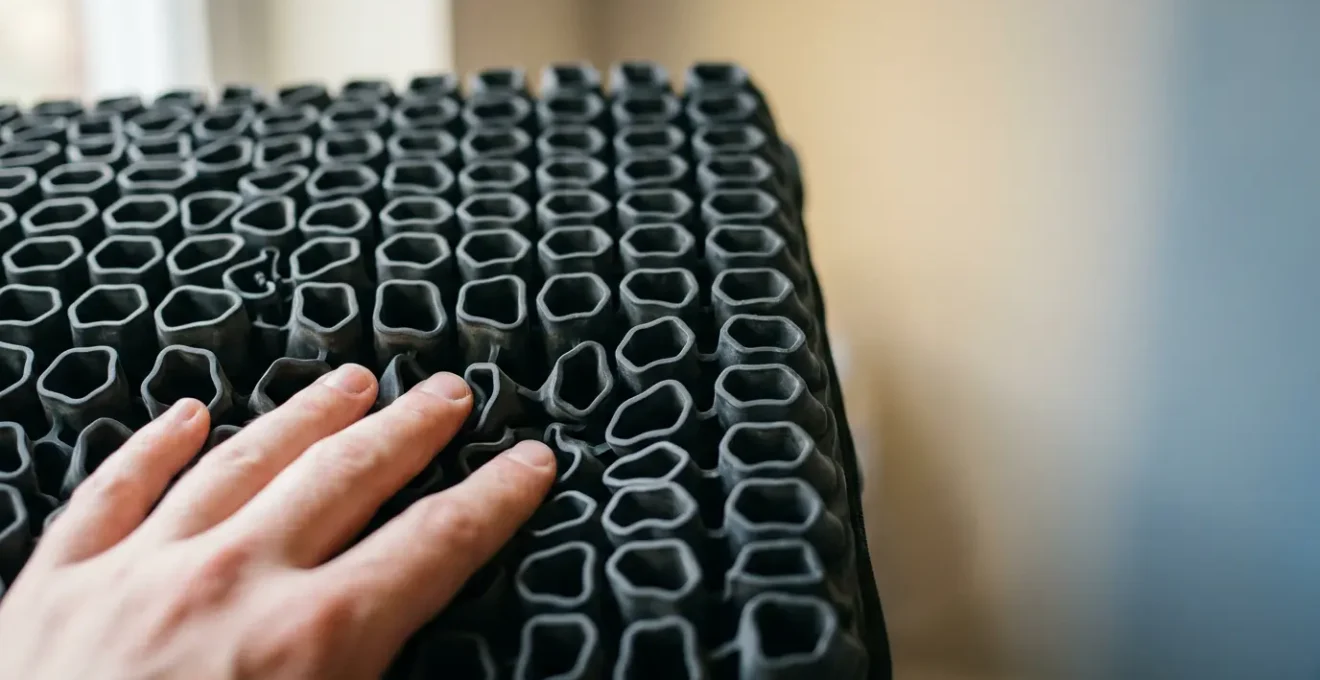
An incorrectly sized wheelchair is not a matter of comfort; it is a direct cause of serious, preventable medical harm like pressure sores.
- A chair that is too wide allows for poor posture, leading to shear forces and skin breakdown.
- A chair that is too narrow creates constant, high-pressure points on the hips and thighs.
Recommendation: Do not purchase a wheelchair without a professional clinical assessment. A free NHS assessment is the gold standard for ensuring safety and correct fit.
For many seniors and their families, the decision to use a wheelchair feels like a significant milestone. The immediate focus is often on restoring mobility for outings, but this urgency can lead to a critical, and dangerous, oversight: purchasing a chair « off the shelf » without professional guidance. It’s a common scenario, often driven by the fact that more than 70% of wheelchair users wait over three months for their equipment through official channels. This delay understandably pushes many to seek faster, private solutions. However, a wheelchair is not a simple commodity; it is a piece of medical equipment.
The common advice to « measure your hips » is a gross oversimplification of a complex clinical process. The consequences of a poor fit, particularly an incorrect seat width, are not just about discomfort. They are about the physics of pressure, friction, and shear forces acting on vulnerable skin. Within as little as three months, a seemingly small measurement error can initiate a cascade of health issues, starting with painful and hard-to-heal pressure sores (also known as pressure ulcers). The problem is so widespread that the NHS estimates that almost 500,000 people in the UK develop at least one pressure sore in any given year.
But what if the key wasn’t just finding a chair, but understanding the clinical reasoning behind the right fit? This guide moves beyond generic advice to provide a clinician’s perspective. We will deconstruct the critical decisions—from chair type and cushion material to navigating the NHS system—to reveal how each choice directly impacts health, safety, and independence. This is not just a buyer’s guide; it is a preventative strategy to avoid predictable harm.
This article will walk you through the essential clinical considerations for selecting a safe and effective mobility solution. By understanding the ‘why’ behind each recommendation, you will be empowered to make choices that protect health and preserve independence for the long term.
Summary: The Clinician’s Guide to Safe Wheelchair Selection and Use
- Self-Propel vs Transit Wheelchair: Which Preserves More Independence for Part-Time Users?
- How to Access a Free NHS Wheelchair Assessment Even If Your GP Says to Buy Your Own?
- Memory Foam vs Air Cushion: Which Wheelchair Seat Prevents Pressure Sores in Thin Seniors?
- The Footplate Folding Error That Scrapes Doorframes and Traps Toes
- When Should You Use a Wheelchair Without Giving Up on Walking Rehabilitation?
- Wooden Ramp vs Threshold Ramp vs Vertical Platform Lift: Which Works for a 3-Step Entrance?
- Aluminium Rollator vs Steel Rollator: Which Handles Cobblestones and Kerbs Better?
- Why Does a Single Step Become an Impassable Barrier After 80?
Self-Propel vs Transit Wheelchair: Which Preserves More Independence for Part-Time Users?
The first decision point in selecting a wheelchair is often the choice between a self-propel and a transit (or attendant-propelled) model. The visual difference is obvious: self-propel chairs have large rear wheels with hand rims, while transit chairs have smaller rear wheels and require a caregiver to push. The common assumption is that self-propel models are for the very active, and transit models are for those who are entirely dependent on assistance. This view, however, misses a crucial nuance for part-time users.
From a clinical standpoint, the goal is always to preserve function and independence. For a senior who can walk short distances but needs a chair for longer outings (e.g., shopping, park visits), a self-propel model offers significant benefits. The ability to make small positional adjustments, turn in a tight space, or move a few feet without asking for help is a powerful tool for maintaining autonomy and dignity. This is a form of active seating, which encourages upper body engagement and promotes better circulation.
Conversely, a transit chair, while lighter and often easier for a carer to fold and lift into a car, enforces passivity. For the part-time user, this can accelerate deconditioning of the upper body. The choice isn’t just about who provides the motive force; it’s about the user’s role. A self-propel chair allows the user to remain the operator, conserving their energy for walking when appropriate but still being in control when seated. A transit chair positions them as a passenger. For preserving independence, even the potential for self-propulsion is clinically significant.
How to Access a Free NHS Wheelchair Assessment Even If Your GP Says to Buy Your Own?
One of the most common and damaging pieces of misinformation is that if you can afford to buy a wheelchair, you should simply do so. Many GPs, facing time pressures, may even suggest this route. However, this advice bypasses the single most important step for ensuring safety and long-term health: a professional clinical assessment by an occupational therapist or physiotherapist from your local NHS Wheelchair Service. Accessing this service is a right, and it is the only way to ensure the chair you get is medically appropriate.
A clinical assessment is not just a measurement session. The therapist will evaluate your posture, skin integrity, physical strength, lifestyle, and home environment. They diagnose the root cause of your mobility issue and prescribe a solution. An incorrect chair width, for example, is a primary driver of pressure sores. A chair that is too wide fails to provide postural stability, allowing the pelvis to slide and creating shear forces that tear underlying tissue. A chair that is too narrow creates intense pressure points on the trochanters (bony points of the hip). A therapist is trained to specify a width that provides snug support without dangerous compression.

Even if your GP is unhelpful, you have a clear pathway. You can request a referral from another healthcare professional, or in many areas, refer yourself directly. This assessment is the gateway to a Personal Wheelchair Budget (PWB), which provides funding. You are not just getting a « free wheelchair »; you are receiving a prescribed piece of medical equipment tailored to prevent harm and maximize your quality of life.
Your action plan for securing an NHS assessment:
- Ask your GP, a physiotherapist, or hospital staff for a direct referral to your local wheelchair service for a formal assessment.
- Check with your local Integrated Care Board (ICB) as you may be able to refer yourself directly to the wheelchair service without needing to see a GP first.
- The wheelchair service will then conduct a thorough assessment to determine your eligibility and the most appropriate type of wheelchair for your specific clinical needs.
- If you are assessed as eligible, you will be offered a Personal Wheelchair Budget. This may be a notional budget for a fully NHS-funded chair or a voucher that you can use towards a private purchase if you wish to upgrade.
Memory Foam vs Air Cushion: Which Wheelchair Seat Prevents Pressure Sores in Thin Seniors?
Once the wheelchair frame is correctly sized, the single most important component for preventing pressure sores is the cushion. For a thin senior with reduced natural padding over bony prominences like the ischial tuberosities (sitting bones), the cushion is not an accessory; it is a critical medical device. The debate often centres on foam versus air, but the clinical choice depends entirely on the user’s specific needs, abilities, and the support available to them.
Memory foam or high-density foam cushions provide excellent stability and are very low-maintenance. They work by contouring to the body to increase the surface area of contact, which helps to distribute pressure. However, their primary failure mode is ‘bottoming out’. Over time, the foam compresses and doesn’t rebound, effectively leaving the user sitting on the hard seat base. This is particularly dangerous for a thin person who cannot easily shift their weight to relieve pressure.
Air cushions, typically made of interconnected cells, are the gold standard for pressure redistribution. They work by allowing the user to immerse into the cushion, with the air pressure providing constant, even support. This is ideal for full-time users or those with existing skin damage. However, their effectiveness is entirely dependent on correct inflation. An under-inflated cushion will bottom out, and an over-inflated one creates a hard, unstable surface that can actually increase pressure. They require diligent, regular maintenance, which may be a challenge for some users or their carers.
The following table breaks down the key clinical differences. As it shows, a third category, hybrid cushions (combining foam and gel or fluid), offers a compromise for those needing more pressure relief than foam but more stability and less maintenance than pure air.
This detailed comparison highlights why a professional assessment is crucial, as the wrong choice can have severe consequences. The data is drawn from guidance for selecting appropriate pressure management solutions.
| Cushion Type | Primary Failure Mode | Maintenance Required | Best For User Profile |
|---|---|---|---|
| Foam (Memory/High-Density) | ‘Bottoming out’ over time as foam compresses and loses shape; typically needs replacement every 6-18 months | Very low – no inflation checks; simply monitor for compression and replace when needed | Users who can shift weight independently; those needing stability and a low-maintenance solution |
| Air Cushions (Multi-Cell) | Improper inflation (over/under) renders cushion ineffective; requires regular pressure checks | High – requires daily/weekly air pressure checks and adjustments; pump needed | Full-time chair users or those with existing skin breakdown; users unable to reposition independently |
| Hybrid (Foam + Gel/Fluid) | Fluid displacement away from bony prominences; requires manual kneading before each use | Moderate – must manually redistribute gel/fluid by kneading cushion before sitting | Users spending 8-12 hours daily in chair; those needing pressure relief with more stability than pure air |
The Footplate Folding Error That Scrapes Doorframes and Traps Toes
While major components like seat width and cushions get the most attention, small, seemingly minor aspects of wheelchair use can lead to significant injury and frustration. One of the most common, yet easily avoidable, errors involves the footplates. A wheelchair’s footplates are designed to swing away and often fold up to allow the user to stand up from the chair or sit down safely. Forgetting this step is a frequent cause of accidents.
Firstly, there is the risk to the user. Attempting to stand up while the footplates are still in place creates a major trip hazard. The user’s feet are trapped behind the plates, forcing them into an unstable and awkward position. This is particularly dangerous during transfers (e.g., from wheelchair to bed or toilet), where stability is already compromised. Indeed, incorrect footplate positioning is a primary cause of falls during transfers, which can lead to fractures and a severe loss of confidence. The proper clinical procedure is always: brakes on, footplates swung away, then transfer.
Secondly, there is the damage to the environment and the chair itself. When a caregiver is pushing the chair through a doorway, leaving the footplates down effectively increases the chair’s overall length. This often leads to the front of the footplates scraping paint off doorframes and skirting boards. More seriously, if the user’s feet are on the plates, their toes are the first point of impact with any obstacle. This can cause crush injuries to the toes and feet. A simple habit of always folding or swinging footplates away when the chair is unoccupied or manoeuvring in tight spaces prevents this entirely. It’s a small detail that reflects a larger principle of safe wheelchair handling: always prepare the chair for the next action.
When Should You Use a Wheelchair Without Giving Up on Walking Rehabilitation?
A significant emotional barrier for many seniors considering a wheelchair is the fear that it represents « giving up » on walking. This all-or-nothing mindset is not only psychologically damaging but also clinically incorrect. When prescribed and used correctly, a wheelchair is not a replacement for walking but a strategic tool for energy conservation that can actually support and enhance a rehabilitation programme.
Think of physical energy as a daily budget. A person with reduced mobility due to arthritis, heart failure, or neurological conditions might spend their entire energy budget just getting washed, dressed, and preparing a meal. By the time they need to go to an appointment or a social event, they are already exhausted. Using a wheelchair for these longer-distance tasks preserves that precious energy. This means they arrive at their physiotherapy session with the strength to participate fully, or they have the stamina to practice walking with their frame in the garden. The wheelchair handles the « macro » mobility, allowing the user to focus their efforts on the « micro » mobility that constitutes their rehabilitation.
Ninety-five percent of all pressure sores are preventable! After spinal cord injury, your skin requires daily care and a lot of attention.
– Model Systems Knowledge Translation Center, Essential Guide To Prevent Pressure Sores – MSKTC
This principle of strategic use is backed by research and is a core tenet of modern rehabilitation, especially in complex cases like spinal cord injury where preventing secondary complications like pressure sores is paramount. The goal is to maintain functional independence in the most efficient way possible.
Case Study: Individualized Wheelchair Use in Rehabilitation
A study monitoring wheelchair users during rehabilitation after spinal cord injury found that there were no consistent, predictable patterns of in-seat movement or weight-shifting across different people. This demonstrated that a « one-size-fits-all » approach to wheelchair use is ineffective. The findings support the clinical concept of using wheelchairs as strategic tools for energy conservation, tailored to an individual’s specific recovery needs and energy levels, rather than viewing them as a uniform barrier to walking recovery.
Wooden Ramp vs Threshold Ramp vs Vertical Platform Lift: Which Works for a 3-Step Entrance?
A correctly specified wheelchair can restore mobility, but that mobility ends abruptly at the front door if the house is not accessible. For many older UK homes, an entrance with two or three steps is a common architectural feature and a significant barrier. Choosing the right solution depends on space, budget, and the user’s ability.
A wooden or modular aluminium ramp is a common solution. The critical factor here is the gradient. For an unassisted manual wheelchair user, the recommended maximum gradient is 1:12, meaning for every 1 inch of height, you need 12 inches of ramp length. A typical 3-step entrance might be 21 inches high, requiring a ramp 21 feet long. This is often impractical in terms of space and can be visually intrusive. For an assisted user, a steeper gradient of 1:8 might be acceptable, but this still requires a 14-foot ramp and significant effort from the carer.

A threshold ramp is a smaller, often rubber or fibreglass wedge designed to overcome a single kerb or door sill, typically up to 4-6 inches high. They are completely unsuitable for a 3-step entrance. Attempting to use multiple threshold ramps creates an unstable, dangerously steep, and non-compliant surface.
For a 3-step rise where a long ramp is not feasible, the most effective and safest solution is often a vertical platform lift (VPL). Also known as a porch lift, this is a small, self-contained elevator platform that moves vertically from the ground to the level of the door. It has a very small footprint, is easy to use, and is far safer than navigating a steep ramp, especially in wet or icy conditions. While the initial cost is higher, a VPL can be a more practical and dignified long-term solution, often funded through a Disabled Facilities Grant (DFG) following an occupational therapist’s assessment.
Aluminium Rollator vs Steel Rollator: Which Handles Cobblestones and Kerbs Better?
While this guide focuses on wheelchairs, it’s important to consider other mobility aids as part of a complete clinical picture. A rollator (a walker with wheels, a seat, and brakes) is often used to maintain walking independence for as long as possible. A common challenge for users in the UK is navigating uneven surfaces like cobblestones, cracked pavements, and kerbs. The choice between a lightweight aluminium model and a heavier steel one is not just about portability; it’s about performance and safety on rough terrain.
Aluminium rollators are prized for being lightweight, making them easy to lift into a car or carry up a step. However, this lack of mass can be a disadvantage on uneven ground. They tend to vibrate more, and the smaller wheels often found on budget models can get stuck in cracks or refuse to mount small obstacles, causing the rollator to stop abruptly and risk pitching the user forward.
Steel rollators are heavier, which makes them more stable. The extra weight helps to dampen vibrations from rough surfaces, providing a more comfortable and secure feel for the user. While heavier to lift, this stability can be a crucial safety feature for someone who is unsteady on their feet. More importantly, the key factor for handling cobblestones and kerbs is not the frame material but the wheel size and type. Larger wheels (8 inches or more) roll over obstacles more easily than smaller ones. Solid polyurethane (PU) wheels provide better shock absorption than hard plastic wheels, leading to a smoother ride.
The following table from NHS guidance illustrates how wheel and brake design are far more important than frame material for outdoor performance.
| Feature | Small Wheels (6-inch) | Large Wheels (8-inch+) | Brake Type Impact |
|---|---|---|---|
| Terrain Performance | Suitable for smooth indoor surfaces only; struggles on cobblestones, gravel, or uneven outdoor terrain | Superior performance on rough terrain; rolls over cobblestones, cracks, and kerbs more easily | Loop brakes (hand-operated) offer better control on slopes and rough ground for users with adequate grip strength |
| Wheel Material | Hard plastic wheels provide minimal shock absorption; vibration transfers to user | Solid PU (polyurethane) wheels absorb impact and provide smoother ride on uneven surfaces | Push-down brakes (easier for arthritis) may be less responsive on slopes; require user to bear weight to engage |
| Kerb Climbing | Cannot mount kerbs without significant lifting effort from user or caregiver | Easier to tilt and mount kerbs when combined with kerb-climber pedal feature | Loop brakes allow user to control speed during kerb descent; push-down brakes require stopping before kerb |
| Best Use Case | Indoor use in care homes, hospitals, or homes with level flooring | Outdoor urban environment, parks, shopping areas with mixed surfaces | Loop brakes: users with good hand strength on varied terrain; Push-down: arthritis sufferers on mostly level ground |
Key Takeaways
- A wheelchair is a clinical device; an incorrect fit, especially width, directly causes pressure sores through shear forces and high-pressure points.
- Do not buy a wheelchair without professional advice. A free NHS assessment is the gold standard for safety and is accessible even if a GP suggests a private purchase.
- The right equipment (cushions, ramps, rollators) must be chosen based on a clinical assessment of the user’s needs, abilities, and environment, not on price or convenience alone.
Why Does a Single Step Become an Impassable Barrier After 80?
For a healthy person, a single step is an unconscious action. For a person over 80, that same step can become a calculated, and often insurmountable, risk. This dramatic shift is not due to a single cause but a combination of age-related changes that erode the body’s physical reserves and automatic feedback systems. Understanding this helps to explain why proper mobility support becomes so critical.
The three key systems required for negotiating a step are strength, balance, and proprioception. As we age, we experience sarcopenia, a progressive loss of muscle mass and strength. Lifting a leg onto a step and then pushing the entire body’s weight up requires significant power from the quadriceps and glutes—power that may no longer be readily available. The energy cost of this single action can become prohibitively high.
Simultaneously, the systems that control balance decline. The vestibular system in the inner ear, which senses orientation and movement, becomes less sensitive. Vision may be impaired. Most importantly, proprioception—the body’s « sixth sense » that tells you where your limbs are in space without looking—deteriorates. The intricate network of nerves that once automatically adjusted your ankle to an uneven surface is now slower and less reliable. This combination of reduced strength and poor sensory feedback makes a fall not just possible, but statistically likely.

This is why a single step becomes an impassable barrier. It is no longer a simple movement but a complex physical problem that exposes the decline in multiple physiological systems. A correctly prescribed wheelchair or rollator is not a sign of failure; it is a logical, clinical response to this reality. It provides the external stability that the body’s internal systems can no longer guarantee, allowing for safe and confident mobility.
Ultimately, selecting a wheelchair is a healthcare decision, not a shopping trip. The risks of getting it wrong—pressure sores, falls, loss of independence—are severe and entirely preventable. The first and most important step is to engage with a professional who can assess the user’s complete clinical picture. Your local NHS Wheelchair Service is the definitive starting point for ensuring a safe, appropriate, and effective mobility solution. To put these principles into practice, your next action should be to initiate the referral process for a full clinical assessment.